


Vacation rental listing fees generally fall into two camps: fees guests pay at checkout (service charges, cleaning costs, taxes) and fees hosts pay to list and manage a property (subscriptions, commissions, management cuts). As of May 2025, the Federal Trade Commission’s Rule on Unfair or Deceptive Fees requires short-term lodging platforms to show the total price, mandatory fees included, before a guest commits to booking.
TL;DR:
- Mandatory fees such as cleaning, service, or resort charges must be disclosed upfront and included in the total price before checkout due to the new FTC rule.
- Guest-facing service fees typically range from mid-single to low-double digits as a percentage of the nightly rate, but larger properties and peak seasons tend to increase total costs.
- Comparing total prices across listings is essential, as hidden or layered fees through drip or partitioned pricing tactics can significantly inflate the final payment.
- Booking directly with owners avoids additional guest service fees and provides transparency, especially for long stays or off-season bookings.
- Hosts often raise prices to offset higher platform commissions, but the new regulations aim to make total costs clearer, favoring transparency over choosing platforms based solely on fee percentage differences.
Table of Contents
- How fee types work: host-side vs guest-side fees
- Typical fee amounts and examples
- How platforms present fees: what to check before booking
- What the FTC fee rule means for travelers and hosts
- How to reduce or avoid extra fees when booking
- Why fee transparency matters to us at Emerald Coast By Owner
- How listing fees shape pricing and profitability
- Comparing listing fees across vacation rental platforms
- How fees affect booking demand and guest satisfaction
- How vacation rental listing fees have changed
- Our take on where vacation rental fee transparency is headed
- Consider booking direct through an owner-direct marketplace
- FAQ
- Sources
How fee types work: host-side vs guest-side fees
Every vacation rental price has layers. The nightly rate is the base cost an owner sets for the property. On top of that sit mandatory fees, which a guest cannot decline and which must now be folded into the total price shown before checkout under the FTC rule. Optional fees, like travel insurance or early check-in, are add-ons a guest can skip. Taxes, usually occupancy or lodging tax set by state or local governments, apply on top of nearly everything.
On the guest side, the most common charges are:
- Service or booking fees: a percentage the platform keeps for processing the reservation and providing customer support.
- Cleaning fees: a flat charge covering the cost of preparing the property between stays.
- Resort or amenity fees: mandatory charges for pools, parking, or shared facilities, common at larger resort-style properties.
- Occupancy tax: a government-mandated percentage added to the total, separate from platform fees.
Hosts face a different set of costs that never appear on a guest’s invoice. A listing subscription is a flat fee to keep a property visible on a marketplace. A per-booking commission is a percentage a platform takes from each confirmed reservation. Owners using property management software often pay separate PMS or channel fees to sync calendars across sites, and many hire outside property management services that charge a percentage of booking revenue for day-to-day operations.
The mandatory versus optional distinction matters because it determines what has to be disclosed up front. A mandatory fee, cleaning, service, or resort fee that a guest cannot opt out of, must be included in the total price a platform advertises. An optional fee, like trip insurance, can be shown later in the booking flow without running afoul of federal fee disclosure rules.
Typical fee amounts and examples
Fee ranges vary widely by platform, property type, and season, so treat these as general guidance rather than fixed numbers.
Guest-facing service or booking fees commonly run in the mid-single to low-double digits as a percentage of the nightly rate, though the exact figure depends on the platform and the booking value. Cleaning fees are typically a flat per-stay charge that scales with property size, a studio condo costs far less to turn over than a six-bedroom beach house. Resort or amenity fees, when they apply, are usually a smaller flat add-on per night or per stay, such as those commonly detailed on Hotel Hot Tubs.
A self-managed owner paying only a platform commission will land at the lower end of total costs; a full-service manager handling everything from marketing to maintenance will land toward the higher end.
Worked example: Say a beach condo lists at $200 per night for a three-night stay. The nightly total is $600.
Several factors drive the swing between a low-fee booking and a high-fee one:
- Season: peak weeks often carry higher cleaning and service fees due to higher turnover demand.
- Property size: larger homes mean larger cleaning crews and higher flat fees.
- Platform policy: some marketplaces build service fees into the nightly rate instead of itemizing them separately.
How platforms present fees: what to check before booking
Drip pricing happens when a listing advertises a low nightly rate, then adds mandatory charges one step at a time through checkout, so the number a traveler sees in search results looks nothing like the number on the final receipt. Partitioned pricing is a close cousin: splitting a true cost into multiple smaller line items so no single fee looks large on its own. Both tactics increase the mental math a guest has to do to compare two listings fairly.
Fees tend to surface at three different points in a typical booking flow: the search results page (often just the nightly rate), the individual listing page (where some but not all fees appear), and the final checkout screen (where the full total, including tax, is finally visible). The FTC rule now requires that total price be shown clearly before a guest enters payment information, not buried at the last step.
Before confirming any reservation, run through this checklist:
- Open the booking summary and locate the total price, not just the nightly rate.
- Compare that total across two or three similar listings rather than comparing nightly rates alone.
- Read the fee breakdown for anything labeled “resort fee,” “amenity fee,” or “service fee” and confirm what it covers.
- Check the cancellation and refund terms tied to each fee, some are refundable, others are not.
- Screenshot the total price page before you pay.
Pro Tip: Keep a screenshot of the total-price screen with the date and time visible. If a fee later shows up that wasn’t disclosed, that image is your evidence.
What the FTC fee rule means for travelers and hosts
The Rule on Unfair or Deceptive Fees, effective May 12, 2025, requires that short-term lodging providers disclose the total price, including all mandatory fees, before a consumer commits to a reservation. The rule, formally 16 CFR Part 464, was built specifically to stop bait-and-switch pricing in live-event ticketing and short-term lodging, and it requires that the total price be the most prominent number a platform displays, not the smallest or least visible one.
What this means in practice:
- A platform can no longer advertise a nightly rate that excludes mandatory cleaning, service, or resort fees from the price you see before checkout.
- Optional charges, like trip protection, can still be presented separately as long as they are clearly optional.
- If a listing hides a mandatory fee until the final payment screen, that is the kind of practice the rule is designed to stop.
If you encounter a listing that appears to violate this, the practical steps are straightforward: document the total price shown at each stage of booking, note the date and platform, and report the listing through the platform’s customer service channel or to the FTC directly. For hosts, the rule is a reason to list total costs clearly from the start rather than relying on a platform’s fee structure to do that disclosure work.
How to reduce or avoid extra fees when booking
The most direct way to cut guest-facing fees is to book with an owner directly rather than through a marketplace that charges a service fee on top of the nightly rate. Owner-direct marketplaces exist specifically to remove that layer, since the owner, not a booking fee, is the only party being paid.
A few other tactics help lower your total:
- Compare listings by total price, not nightly rate, since a lower nightly rate with high fees can cost more than a higher rate with few fees.
- Favor listings with fees built into the rate or with cleaning fees that are flat and modest relative to property size.
- Ask about discounts for longer stays or off-season dates, since many owners are willing to waive or reduce cleaning fees for week-long bookings or slower months.
Booking off-platform or directly with an owner carries its own risks if you skip basic precautions. Always get a written rental agreement covering dates, total cost, and cancellation terms, use a traceable payment method rather than cash or wire transfer, and check for reviews or references before sending any deposit. Our guidance on avoiding Vrbo fees covers these tradeoffs in more detail, and a clear cancellation policy protects both sides of a direct booking.
Pro Tip: Ask the owner directly whether the quoted price includes cleaning and tax. A five-minute message can save you from an unpleasant surprise at checkout.
Why fee transparency matters to us at Emerald Coast By Owner
We started our marketplace in 2016 around a simple idea: travelers should be able to book vacation rentals directly from the owner without paying a traveler service fee stacked on top of the nightly rate. Our listing count has grown significantly to feature a wide selection of vacation rentals spanning the Gulf Coast, including Florida, Louisiana, and Texas.
We take the same transparency focus into our educational content. Our post on writing clear vacation rental descriptions walks through how upfront fee disclosure helps both guests and owners avoid disputes, and our breakdown of the Vrbo service fee explains exactly how that charge is calculated and what alternatives exist.
A direct-booking marketplace is a natural fit for the transparency standard the FTC now requires industry-wide: when an owner sets the price and a guest pays that price, there is no separate service fee layer to disclose or hide in the first place.
How listing fees shape pricing and profitability
Every fee a host pays, whether a flat subscription or a percentage-based commission, gets factored into how that host prices a property. A host absorbing a high commission rate often raises the nightly rate to protect their margin, which can push the advertised price above what a comparable, lower-fee listing charges for the same property type. Owners who pay a flat annual listing fee instead of a per-booking commission can price more predictably, since their cost doesn’t scale with every reservation.
Profitability also depends on how fees interact with occupancy. A high-commission platform might deliver more bookings through sheer visibility, but each booking nets the owner less. A flat-fee model trades some of that visibility for a lower per-booking cost, which can work better for owners with strong repeat guest bases or off-platform marketing. Either way, the fee structure a host chooses directly shapes both the sticker price guests see and the margin the owner keeps after a stay.

Comparing listing fees across vacation rental platforms
Fee structures differ meaningfully across the major booking channels. Industry reporting indicates that Vrbo has moved to roughly double its host commissions as it competes more directly with Airbnb’s pricing model, a shift toward host-paid commissions in the mid-teens range on some bookings, with guest-facing service fees varying by platform and changing over time.
| Fee model | Who typically pays | Common structure |
|---|---|---|
| Major OTA marketplaces | Host commission plus guest service fee | Percentage-based, varies by platform and policy |
| Owner-direct marketplaces | Host listing fee only | Flat subscription, no guest service fee |
| Full-service property managers | Host pays management fee | 10% of booking revenue |
The common thread is that someone always pays for the platform’s reach, the only question is whether that cost shows up as a host fee folded into the rate or a guest fee itemized separately at checkout.
How fees affect booking demand and guest satisfaction
High guest-facing fees tend to suppress bookings when travelers can see a lower total price elsewhere for a comparable property, which is exactly why the FTC rule requiring total-price display matters: once guests can compare true totals instead of just nightly rates, listings with heavy add-on fees lose a pricing advantage they previously held in search results. On the host side, properties with clear, modest fees tend to convert better because fewer guests abandon a booking after discovering a hidden charge at checkout.
Guest satisfaction follows a similar pattern. A guest who sees a fee breakdown up front and understands what each charge covers is far less likely to leave a negative review over “surprise” costs than one who discovers a resort fee only after paying. For hosts, that means transparent, itemized pricing is not just a regulatory requirement under the new FTC rule, it’s a retention and reputation tool.
How vacation rental listing fees have changed
Listing fee structures have shifted substantially since the short-term rental market matured in the mid-2010s. Early platforms often charged modest host commissions with no separate guest fee; as competition for bookings intensified, many major platforms introduced or raised guest-facing service fees to fund marketing and customer support, while keeping host commissions roughly steady.
More recently, that balance has started to shift again. Reporting from Skift notes platforms moving toward higher host-paid commissions, in some cases eliminating or reducing guest service fees in an effort to compete on headline price. Layered on top of these commercial shifts is the regulatory change: the FTC’s May 2025 rule now forces every short-term lodging platform, regardless of its underlying fee model, to show the same thing first, the total price a guest will actually pay.
Our take on where vacation rental fee transparency is headed
The conventional advice on this topic treats fee percentages as the whole story: shop by commission rate, compare service fee percentages, pick the cheapest-looking number. That advice misses the point the FTC rule itself makes. The structure of a fee matters less than whether it’s disclosed before you commit to paying it.
We think the real lesson from the current rules and market shifts is that total price, not fee architecture, is the only number worth comparing. A platform with a higher service fee but honest, upfront disclosure beats one with a lower advertised rate and a cleaning fee buried three screens into checkout. Shoppers who chase the lowest headline rate without checking the total are the ones most likely to get burned.
Prioritize this first: find the total price before you fall in love with a listing’s photos or its nightly rate. Everything else, which platform, which fee model, which cancellation policy, is a secondary decision once you know what a stay actually costs.
— Gail
Consider booking direct through an owner-direct marketplace
Booking a Gulf Coast stay through Emerald Coast By Owner means no traveler service fee gets added at checkout, since we connect you straight with the property owner instead of routing your payment through a commission-based middleman.
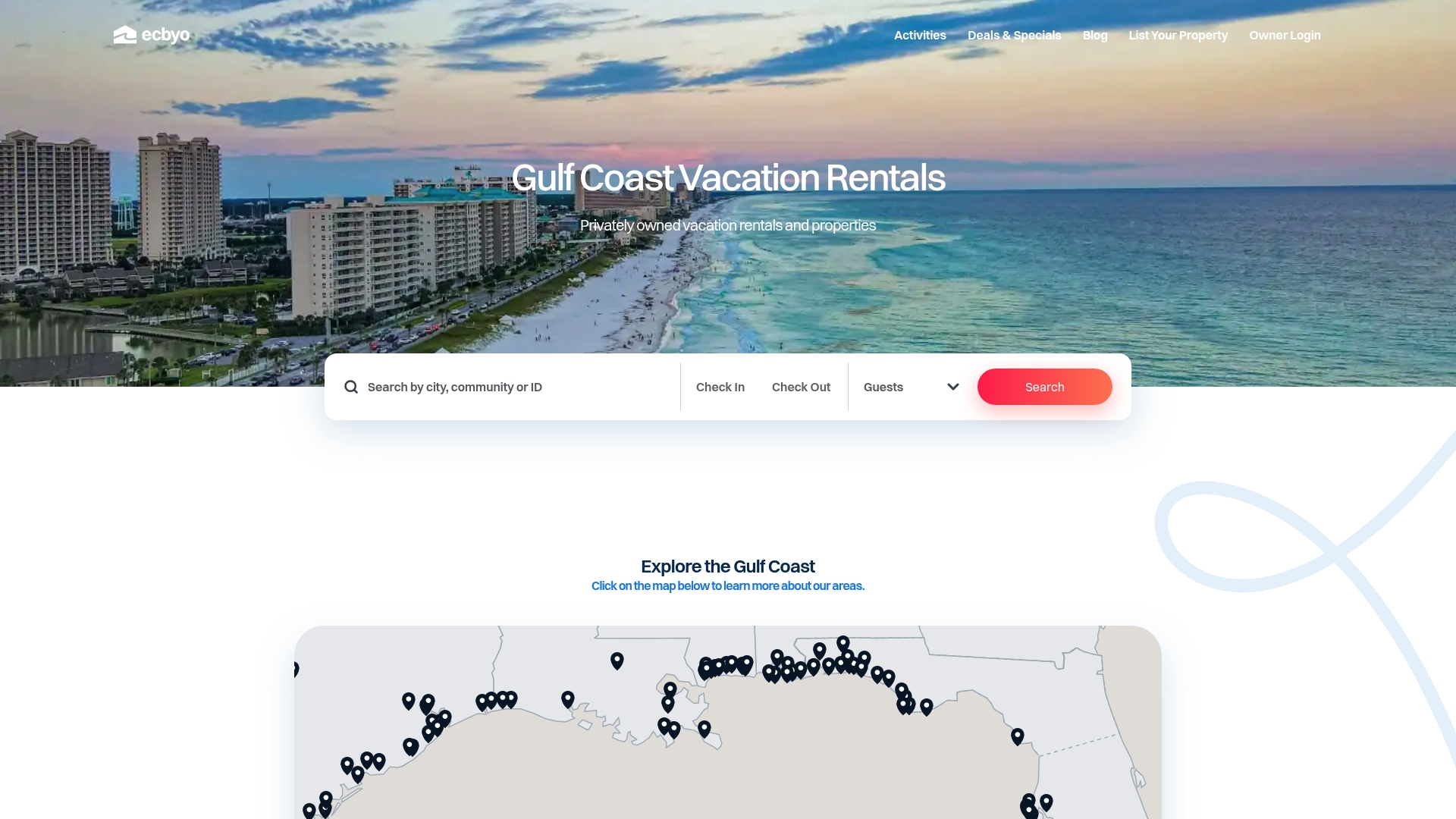
This approach works best for travelers planning a stay in Florida, Alabama, Mississippi, Louisiana, or Texas who want a beachfront condo, pet-friendly cottage, or family-sized home without an extra layer of guest fees stacked onto the price the owner actually set. It also works for owners who would rather pay one predictable annual cost than a percentage cut of every booking.
- Travelers search and message owners directly, with no guest booking or service fee added at checkout.
- Owners list a property for $499 per year instead of paying a per-booking commission.
- Current discounts for travelers are available on our deals and specials page.
If you’re ready to see what a fee-transparent Gulf Coast rental looks like, browse Florida, Alabama, Mississippi, Louisiana, or Texas vacation rentals and book directly from the owner’s listing.
FAQ
What is the 80/20 rule for Airbnb?
The 80/20 rule is a general hosting guideline suggesting that roughly 80% of a host’s booking revenue often comes from 20% of their listings or guests, encouraging hosts to focus marketing effort on their best-performing properties. It’s a rule of thumb rather than a documented platform policy, so treat it as a planning heuristic, not a fixed figure.
Is it cheaper to list on Vrbo or Airbnb?
Cost comparisons shift as platforms update their fee models, and recent industry reporting shows Vrbo moving toward higher host commissions to compete more directly with Airbnb’s structure. Rather than assuming one platform is permanently cheaper, compare current commission rates and guest fee policies directly on each platform before listing.
What is the average vacation rental management fee?
Property management fees for short-term rentals commonly fall within a range of booking revenue percentages depending on the services provided, depending on how many services, cleaning, guest communication, pricing, the manager handles. Owners managing their own properties and paying only a listing or platform fee typically land well below that range.
How much does it cost to list a property on Vrbo?
Vrbo’s exact listing costs depend on the commission structure and any subscription options active at the time of listing, and those terms have recently shifted as the platform raises host commissions. Check Vrbo’s current host fee page directly, since commission rates are subject to change and are not fixed industry-wide.
Recommended
- Avoid Hidden Fees: Gulf Coast Vacation Rental Descriptions + FTC Rule
- Verify Ownership: Book Gulf Coast Owner Managed Rentals Direct No Fees
- What Is the Vrbo Service Fee, and Can You Avoid It?
- 10 Questions Before Booking a Gulf Coast Vacation Rental
 |
About the AuthorGail Greiner of the Emerald Coast by Owner Editorial Team creates destination guides, vacation-planning resources, and local travel content focused exclusively on Gulf Coast vacation rentals. Our team researches beach communities, vacation rental trends, family travel planning, local attractions, and direct-booking best practices across Florida, Alabama, Mississippi, Louisiana, and Texas. Every guide is written to help travelers make more informed booking decisions while avoiding unnecessary third-party guest service fees. Since launching in 2016, Emerald Coast by Owner has helped connect travelers directly with verified vacation rental hosts across the Gulf Coast. This article was reviewed for accuracy and updated using local destination research and current vacation rental market insights. |


