


A trustworthy vacation rental description tells you the sleeping layout, shows clear photos of every room, states the full price including mandatory fees, gives an exact location or distance to nearby attractions, and lists any accessibility features up front. If a listing is missing one of these, treat it as a gap to investigate rather than a detail to assume. The sections below walk through each nonnegotiable so you can check a listing in minutes, not hours.
TL;DR:
- Listings should clearly specify bed types, room arrangements, and maximum occupancy to prevent surprises related to sleeping capacity or extra fees.
- Accurate, detailed photos of each room, outdoor space, and amenities are essential to verify the property’s layout and features; vague images can hide issues.
- The total price, including mandatory fees like cleaning and service charges, must be disclosed upfront according to FTC rules, helping travelers compare true costs.
- Accessibility features should be described with concrete details such as step-free entry or grab bars, not just vague labels like “wheelchair friendly.”
- Direct-owner listings often provide more accurate, current information since the owner responds to questions about layout, fees, and seasonal changes.
Table of Contents
- What the headline and overview should tell you
- What the sleeping layout and room details should confirm
- Reading the amenity list without getting misled
- How to confirm the real total price before you book
- How to judge photos, video, and floor plans
- How to verify a listing and spot the warning signs of a scam
- Sample descriptions that show the right level of detail
- What a trustworthy host or marketplace should provide
- Writing style and tone that actually engage renters
- Legal and regulatory considerations behind the description
- How the best listings highlight what makes them different
- Updating descriptions for seasons and local events
- What travelers and hosts should each take from this
- How Emerald Coast By Owner keeps Gulf Coast listings direct and clear
- Sources
- FAQ
What the headline and overview should tell you
A strong headline earns your click by doing real work, not just sounding appealing. It should name the property type, state how many guests it sleeps, and mention one standout amenity, something like “Beachfront 3-Bedroom Condo, Sleeps 8, Private Pool.” Vague headlines that lean on adjectives like “amazing” or “cozy” without a single concrete detail are usually a sign the overview will be thin too.
Once you’re past the headline, the overview paragraph should confirm those same basics in plain language before it starts selling you on atmosphere. Treat the overview as a quick filter:
- Property type and layout should be stated clearly, not implied (“3-bedroom cottage” versus just “beach getaway”).
- Occupancy limits should match the bed count you’ll verify later in the listing.
- One or two headline amenities should be specific (“private hot tub,” not just “great amenities”).
- Contact details for the owner or manager should be visible or easy to request, which often signals a direct-owner listing with fewer added fees.
Listings that skip these basics in favor of pure marketing language deserve a slower read, not a fast booking.
What the sleeping layout and room details should confirm
The overview gets you interested, but the room-by-room breakdown is where you confirm the property actually fits your group. This is the section most likely to trip up families, groups splitting bathrooms, or travelers with mobility needs, so check it line by line.
- Bed types and counts per room, including whether a “sleeps 8” claim relies on a sofa bed or air mattress rather than real beds.
- Maximum occupancy as a hard number, not a range, so you know if extra guests trigger added fees.
- Bathroom access, specifically whether each bedroom has an ensuite or shares a hallway bathroom with other rooms.
- Square footage and floor plan, which tells you how bedrooms are arranged relative to shared spaces and stairs.
- Accessibility features, such as step-free entry, roll-in showers, or grab bars, described with specifics rather than a generic “accessible” label.
That last point matters more than most listings acknowledge. Federal accessibility guidance for lodging expects providers to describe detailed accessible features rather than rely on a single checkbox, and reservation staff should be able to answer specific questions about room layouts and shower types. If a listing only says “wheelchair friendly” with no detail, ask before you book. Our guide to accessible Gulf Coast rentals breaks down the specific features worth confirming.
Pro Tip: Ask the host for exact stair counts and door widths if anyone in your group uses a wheelchair or walker. Photos rarely show this clearly enough to judge.
Reading the amenity list without getting misled
Amenity lists are where vague marketing language causes the most disappointment. A single word like “pool” or “wifi” can mean very different things depending on the property, so it pays to read past the checkmark.
- Pool and hot tub claims should specify private versus shared, and heated versus seasonal, since a seasonal unheated pool in cooler months is not the same amenity implied by a sunny listing photo.
- Wifi claims should include a bandwidth estimate or at least a note about reliability if you plan to work remotely; “wifi included” says nothing about whether a video call will hold up.
- Kitchen details matter beyond “full kitchen,” since a listing with a stovetop, oven, dishwasher, and coffee maker is a very different cooking experience than one with a microwave and mini-fridge.
- Laundry access should specify in-unit versus shared or off-site, which changes how much you pack.
- Pet policies should state any pet fee amount, weight or breed restrictions, and whether pets are allowed at all, since this is one of the most common sources of last-minute surprises.
When an amenity claim feels vague, message the host directly and ask for specifics before you book. A direct-owner listing usually makes this easier, since you’re talking to the person who actually knows the property rather than a call center reading from a database.
How to confirm the real total price before you book
Vacation rental pricing gets confusing fast because of the layers stacked on top of the nightly rate: cleaning fees, service fees, taxes, and sometimes a resort or amenity fee. Some of these are avoidable, but most cleaning and service fees are mandatory and get added automatically once you start booking.
The good news is that disclosure rules have caught up with the industry. The FTC’s Rule on Unfair or Deceptive Fees, which took effect in May 2025, requires short-term lodging advertisers to disclose the total price upfront, including most mandatory fees, rather than revealing them only at checkout. The FTC’s own FAQ on the rule gives cleaning fees and resort fees as examples of charges that must be folded into the advertised total rather than sprung on you later.
To confirm the real cost before you commit:
- Start the booking flow far enough to see the itemized total, even if you don’t complete payment.
- Ask the host directly for a full fee breakdown if the listing only shows a nightly rate.
- Compare the “total for your stay” figure, not the nightly rate, when weighing two properties against each other.
Roughly 55% of short-term rental listings charge a mandatory cleaning fee, and 68% of guests consider excessive cleaning fees unfair, according to AHLA’s 2022 data on resort fees. That gap between common practice and guest sentiment is exactly why upfront disclosure matters.
How to judge photos, video, and floor plans
Photos are the closest thing you get to seeing the property before you arrive, so a thin or evasive photo set is one of the clearest warning signs available. A complete listing should include images of the exterior, every bedroom, the kitchen, the main living area, each bathroom, and any outdoor space like a patio, pool, or beach access.
Watch for these red flags as you scroll:
- Repeated angles of the same one or two rooms, which usually means the host is hiding a less appealing space.
- Inconsistent style or lighting across photos, which can indicate stock images mixed in with real ones.
- No photo of a room mentioned in the description, such as a “bonus room” or “den” with zero visual evidence.
- Suspiciously professional real estate-style shots that look staged for a sale rather than a rental, which sometimes get lifted from listing sites without permission.
Video walkthroughs and floor plans add a layer of confidence that photos alone can’t, since they show how rooms connect and how far the primary bedroom is from noisy shared spaces. If a listing doesn’t include one, it’s reasonable to request a short video from the host directly, and most legitimate owners will happily provide it. Our breakdown of vacation rental photography covers what accurate, well-lit listing photos should look like from the host’s side.
Pro Tip: If a listing’s photos look identical to another property you’ve seen elsewhere online, that’s worth a direct question to the host before you go any further.
How to verify a listing and spot the warning signs of a scam
Most vacation rental listings are legitimate, but the ones that aren’t tend to share a specific set of tells. A few minutes of verification before you pay can save you from a costly mistake.
- Run a reverse image search on the main listing photo to check whether it appears on other sites under a different property name or price.
- Confirm the address against a mapping service or municipal record rather than trusting the listing’s stated location alone.
- Check the review timeline for a pattern of recent, detailed reviews rather than a handful of generic five-star comments posted all at once.
- Ask for a live photo or short video with a visible date if anything about the listing feels inconsistent.
- Pay through a traceable method, a credit card or the platform’s own payment system, and avoid wiring money or using prepaid gift cards.
FTC guidance on rental listing scams points to the same core warning signs: prices that seem too good to be true, contact information that shifts between messages, and pressure to move the conversation or payment off the platform. None of these guarantee a scam on their own, but two or more together are reason enough to walk away and look elsewhere.
Sample descriptions that show the right level of detail
The best way to spot a strong listing is to know what one actually reads like. Here are three short examples that hit the essentials without drifting into filler.
- Beach condo: “2-bedroom, 2-bath condo, sleeps 6 (king, queen, queen sofa bed). Private balcony overlooking the Gulf, heated pool on-site, in-unit washer and dryer. 200 feet to beach access. Cleaning fee and taxes shown at checkout.”
- Family home: “4-bedroom, 3-bath house, sleeps 10. Each bedroom has its own bathroom except the two bunk rooms, which share a hall bath. Full kitchen, private unheated pool, fenced yard. 10-minute drive to downtown shops.”
- Accessible cottage: “1-bedroom cottage, sleeps 4 (queen bed, queen sofa bed). Step-free entry, roll-in shower with grab bars, wide doorways throughout. Shared laundry on-site. Half a mile to the nearest grocery store.”
Use this quick checklist against any listing you’re considering:
- Bed types and counts match the stated occupancy.
- Photos show every room mentioned in the text.
- Total price, including fees, is visible before checkout.
- Distance to key attractions is stated in minutes or miles, not “close by.”
- Any accessibility claim comes with a specific detail.
If a listing is missing two or more of these, send the host a short message asking for the gaps directly. Our direct-booking listing guide shows the kind of specific, search-friendly copy that tends to accompany a well-maintained listing.
What a trustworthy host or marketplace should provide
A listing is only as good as the habits behind it. Owners and marketplaces that take description quality seriously tend to share a few practices in common.
- Amenity lists get updated whenever a pool heater breaks, a hot tub goes offline, or a policy changes, rather than sitting stale for years.
- Fees are disclosed as a total price, not buried until checkout.
- Photo sets are current and complete, covering every room and outdoor space rather than a curated handful.
- Direct contact with the owner or manager is easy, so questions get answered by someone who actually knows the property.
The marketplace has a model focused on direct connections between travelers and Gulf Coast property owners across several states, without adding traveler fees on top of bookings. That direct line between guest and owner tends to produce more accurate, current listings, since the person answering your question is the person who set the price and knows whether the hot tub is actually working this week.
Writing style and tone that actually engage renters
The listings that convert browsers into bookers rarely rely on superlatives. Phrases like “amazing views” or “once-in-a-lifetime stay” say nothing a reader can verify, while a line like “wraparound deck facing the sunset side of the bay” gives them something to picture and trust.
Good rental copy reads like a knowledgeable friend describing the place, not an ad trying to close a sale. Short, specific sentences work better than long, adjective-stacked ones: “Sleeps 6 across three bedrooms, two blocks from the boardwalk” beats a paragraph of scene-setting that never gets to the facts. Save the atmosphere for a single sentence near the top, then let the specifics carry the rest.
Tone matters too. A warm, direct voice that answers likely questions before they’re asked, parking, check-in time, whether the dock is private, builds more confidence than a wall of exclamation points. Consistency also counts: a listing that switches between formal legal language for the house rules and casual slang for the description reads as unpolished, even if every fact in it is accurate. The goal is a single, approachable voice that treats the reader as someone making a real decision, not a prospect to be won over.
Legal and regulatory considerations behind the description
Listing descriptions aren’t just marketing copy; they’re a form of advertising, and advertising rules apply. The clearest example is pricing: the FTC’s fee disclosure rule requires that ads for short-term lodging show the total price upfront rather than advertising a low nightly rate and adding mandatory fees later. A listing that hides cleaning or service fees until the final checkout step isn’t just bad practice; it may run afoul of that rule.
Accessibility claims carry their own weight. Under ADA lodging guidance, transient lodging providers are expected to describe accessible features specifically, room layouts, shower types, and available equipment, rather than using a single generic label. A vague “accessible” tag with no detail behind it doesn’t meet that standard and leaves travelers with mobility needs guessing until arrival.

Beyond pricing and accessibility, hosts and platforms are also expected to describe the property truthfully in every other respect: occupancy limits, amenity availability, and location claims all fall under general truth-in-advertising principles. For travelers, the practical upshot is simple: a listing that discloses total price clearly and describes accessibility with real specifics is more likely to follow the rules that already govern how rentals can be advertised, and more likely to match what you find when you arrive.
How the best listings highlight what makes them different
Every property has at least one detail that sets it apart, but the strongest listings lead with specifics instead of adjectives. “Steps from the beach” is a claim; “200 feet from a public beach access point with no road to cross” is proof. The second version does more to earn trust because it can be checked.
The most effective unique selling points tend to fall into a few categories: a location advantage stated in exact distance, a rare amenity like a private dock or a heated pool in the off-season, or a layout feature that solves a specific problem, such as a ground-floor bedroom for a guest who can’t manage stairs. Whichever it is, the detail belongs near the top of the description, not buried under three paragraphs of scene-setting.
It also helps to think about who the detail matters to. A private hot tub might be the deciding factor for a couple’s getaway but irrelevant to a family of six looking for bunk space. Framing the standout feature around the traveler it serves best, rather than listing it as one more bullet among many, makes the description feel written for a real person rather than generated from a template. That specificity is also what separates a listing that gets read closely from one that gets skimmed and passed over.
Updating descriptions for seasons and local events
A description that was accurate in June can be misleading by December if the pool is unheated, the outdoor shower gets shut off, or a local festival triples traffic near the property. Seasonal accuracy matters as much as the initial write-up.
Hosts should revisit amenity claims at least once each season: confirm whether the pool is heated and available, note if outdoor furniture or a hot tub is stored away for colder months, and update any claim about walkability if a seasonal closure changes foot traffic nearby. Event-based updates matter just as much. A property near a marina hosting a fishing tournament or a downtown strip during a festival weekend should mention the added noise or parking changes upfront rather than letting guests discover it on arrival.

For travelers, this means an off-season booking is worth an extra question: ask directly whether pool heating, outdoor amenities, or nearby businesses are seasonal before you assume the listing photos reflect what you’ll find in January. A quick message to the host, especially a direct owner rather than a large management company, usually gets you a fast, specific answer. That kind of update discipline is also a strong signal of a well-maintained listing overall, since a host who tracks seasonal details closely is likely tracking the rest of the description just as closely.
What travelers and hosts should each take from this
As a traveler, my rule of thumb is simple: if a listing answers my questions before I ask them- sleeping layout, total price, exact distance to what I care about- I trust it more than one that only sounds appealing. As a host, the checklist is just as short: update amenities every season, show the total price upfront, and answer questions directly rather than making a guest dig for the answer. Both sides win when the description does the work the marketing copy usually skips.
— Joe
How Emerald Coast By Owner keeps Gulf Coast listings direct and clear
Direct-owner listings tend to have an edge when it comes to description accuracy, since the person writing the listing is the same person who can answer your question about the hot tub or the parking situation. That’s the model Emerald Coast By Owner is built on: Gulf Coast vacation rentals listed by the owners themselves, with no traveler booking or service fees added on top.
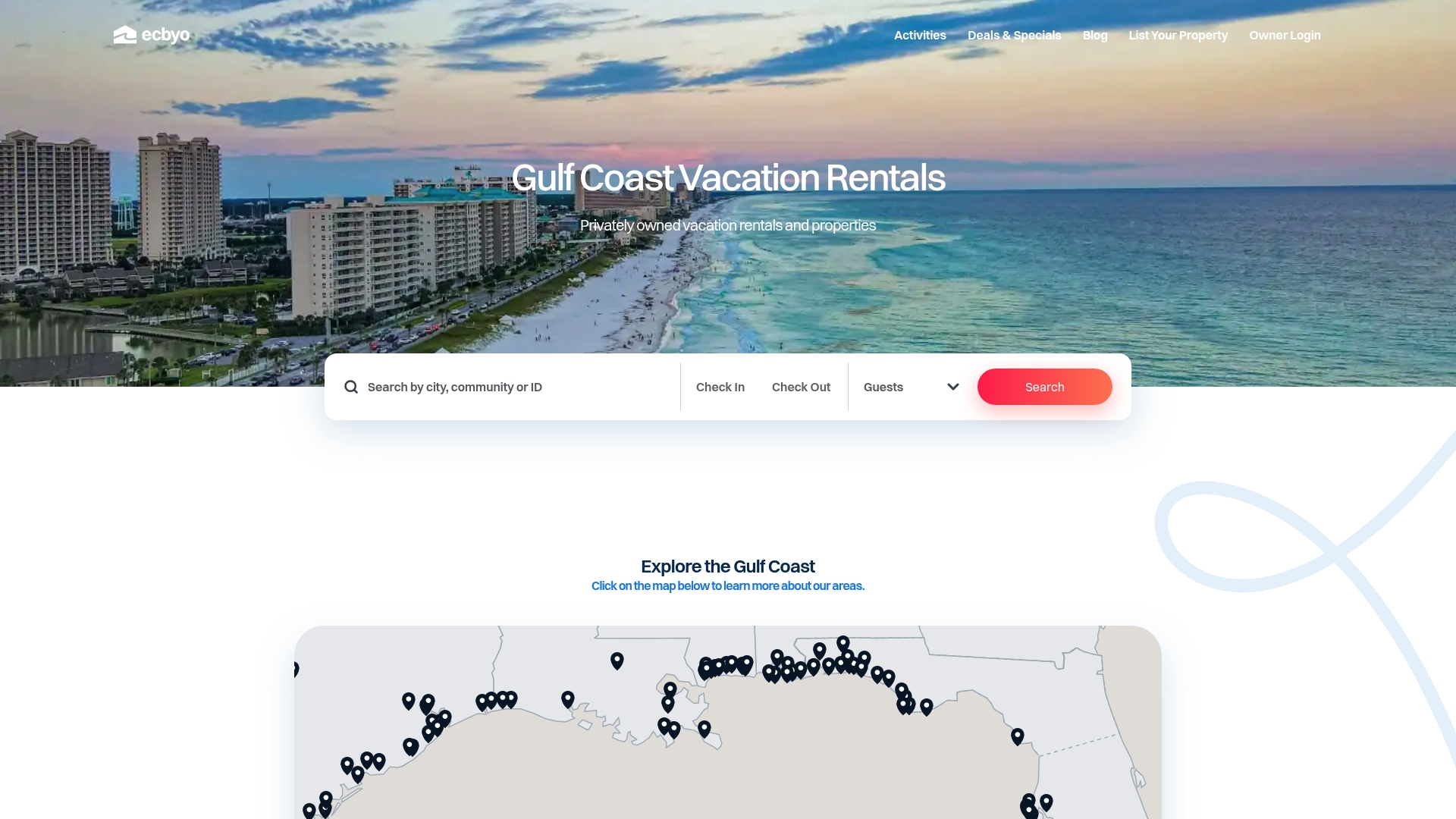
Whether you’re looking at Florida, Alabama, Mississippi, Louisiana, or Texas rentals, every listing connects you straight to the owner for questions about layout, fees, or seasonal amenities. If you own a Gulf Coast property and want your listing to reach travelers directly, you can list your property on Emerald Coast By Owner for $499 per year.
Sources
- FTC press release: Rule on Unfair or Deceptive Fees
- Resort Fees at a Glance | AHLA
- Rental listing scams | Consumer Advice
FAQ
How do you write a property description for rent?
Start with the essentials: property type, occupancy, bed layout, and total price including mandatory fees, then add one or two specific standout features. Keep the tone direct and factual rather than relying on generic adjectives, since specifics like exact distances and room counts are what readers actually use to decide.
How do I advertise my short-term rental effectively?
List accurate, current photos of every room, disclose your total price upfront rather than adding fees at checkout, and make direct contact with you easy to find. The FTC’s fee disclosure rule requires total-price advertising for short-term lodging, so building that habit early keeps your listing compliant.
Can you give an example of a description for a room for rent?
A solid short example reads like: “Private queen bedroom in shared 3-bedroom home, ensuite bathroom, shared kitchen and living room. Street parking available, 10-minute walk to the nearest bus line.” It states the sleeping setup, bathroom access, and location without extra filler.
What should a detailed vacation rental description include?
It should cover sleeping layout and occupancy, full pricing with fees included, exact location or distance to key attractions, complete photos of every space, and specific accessibility details when relevant. Listings missing these basics are harder to evaluate and more likely to lead to surprises on arrival.
Are cleaning fees usually included in the advertised price?
Cleaning fees are common but not always shown in the headline rate. Under current FTC rules, short-term lodging ads must include mandatory fees like cleaning charges in the total price shown, and AHLA data shows about 55% of listings charge one.
Recommended
- Avoid Fines and Booking Suspensions: Gulf Coast Rental Agreement
- Save 8–18%: Find Gulf Coast Rentals Direct From Owners Safely
- Save 12–18% When You Book Direct Gulf Coast Rentals Safely
- What Is the Vrbo Service Fee, and Can You Avoid It?

About the Author
Joe Godar of the Emerald Coast by Owner Editorial Team creates destination guides, vacation-planning resources, and local travel content focused exclusively on Gulf Coast vacation rentals.
Our team researches beach communities, vacation rental trends, family travel planning, local attractions, and direct-booking best practices across Florida, Alabama, Mississippi, Louisiana, and Texas. Every guide is written to help travelers make more informed booking decisions while avoiding unnecessary third-party guest service fees.
Since launching in 2016, Emerald Coast by Owner has helped connect travelers directly with verified vacation rental hosts across the Gulf Coast.
This article was reviewed for accuracy and updated using local destination research and current vacation rental market insights.


