


Red tide status on the Florida Panhandle changes by beach and by day, so there is no single yes or no answer for the whole region right now. Some stretches of sand may show patchy blooms while others nearby stay clear, often depending on wind direction and currents. Before you head out, check beach-level updates from NOAA, the Florida Fish and Wildlife Conservation Commission, and your county health department, and take extra care if you have asthma or you are traveling with pets.
TL;DR:
- Red tide blooms on the Florida Panhandle are patchy and depend on wind, currents, and local conditions, so beach-by-beach updates are essential.
- Checking NOAA forecasts, water sample maps from the FWC, and local health advisories before visiting ensures accurate, real-time beach conditions.
- Brevetoxin inhalation can cause irritation and respiratory issues, especially for vulnerable groups like asthmatics, children, and pets.
- Immediate actions for exposure include relocating indoors, rinsing with fresh water, and seeking medical or veterinary advice if symptoms persist or worsen.
- Red tide typically occurs from August to October and lingers for weeks or months, with impacts on marine life and shellfish safety leading to local harvest closures.
Table of Contents
- Where to check beach-level red tide status
- Health effects of brevetoxin exposure
- What to do if you or a pet are exposed
- When red tide season hits the Panhandle and what causes it
- Wildlife, fisheries, and shellfish safety
- Travel-planning tips for red-tide-aware Panhandle trips
- A practical view on red tide and your Panhandle trip
- Book a Panhandle rental that fits your plans
- FAQ
- Sources
Where to check beach-level red tide status
Three sources give you the full picture, and each one tells you something different.
NOAA’s Gulf Coast respiratory forecast predicts the likelihood of airborne respiratory irritation at specific beaches, updating every three hours out to a 30-hour window when active. It’s a forecast, not a lab result, built from wind patterns and known bloom locations.
The Florida Fish and Wildlife Conservation Commission runs the water sampling side. Its maps and tables sort results into concentration categories: background, very low, low, medium, and high. These numbers come from actual water samples, so they lag behind real-time wind shifts but confirm what’s truly in the water.
Local county Department of Health advisories come last in the sequence because they translate both of the above into a plain beach-level warning or closure notice, often posted after a cluster of complaints or a lab sample confirms a bloom.
Before you leave for the shore, run through this:
- Check the NOAA forecast for your exact beach, not just the county.
- Cross-reference the FWC sample map for the nearest sampling point.
- Look up your destination county’s Department of Health page for an active advisory.
Pro Tip: Bookmark all three sites on your phone before your trip. Conditions can shift between the night before and the morning you arrive.
Health effects of brevetoxin exposure
Red tide produces a toxin called brevetoxin, and when waves break, it becomes airborne in sea spray. Most people who breathe it in get coughing, sneezing, and watery or burning eyes, along with throat and nasal irritation, according to the Florida Department of Health. Less commonly, people report headaches or a tight feeling in the chest.
People with asthma or chronic lung disease face a higher risk of a serious reaction and should take red tide advisories especially seriously.
- Children, older adults, and anyone immunocompromised are also more vulnerable to irritation lasting longer or hitting harder.
- Pets, especially dogs, can inhale the same toxin or lick it off their fur after swimming, leading to coughing, drooling, head shaking, or disorientation.
The Florida Department of Health recommends leaving the beach and finding air-conditioned shelter if symptoms appear, a step that typically resolves mild irritation within a short time (Florida DOH).
What to do if you or a pet are exposed
Acting quickly keeps a mild irritation from turning into a miserable day.
- Leave the shoreline and head indoors or into an air-conditioned car as soon as you notice coughing, sneezing, or eye irritation.
- Rinse off with fresh water and change out of salty, spray-exposed clothing.
- Watch for symptoms that don’t ease once you’re away from the spray, especially breathing trouble or any sign of confusion or weakness.
- Call a doctor if respiratory symptoms persist, and call a veterinarian right away if a pet shows ongoing drooling, vomiting, or disorientation after beach time.
Prevention matters as much as reaction. Check the forecasts before you go, and avoid the shoreline when wind is blowing onshore, since that’s when spray carries furthest inland. Florida’s own occupational exposure guidance for red tide points to onshore wind and spray as the main exposure routes, which applies just as well to a family on the sand as to someone working the shoreline. Sensitive travelers may want to pack a basic mask for windy days.
Pro Tip: Pack a red-tide-aware beach bag: extra fresh water for rinsing, wipes, a change of clothes, a backup indoor activity plan, and pet supplies if your dog is along for the trip.

When red tide season hits the Panhandle and what causes it
Blooms tend to start somewhere between August and October and can linger for weeks or months into winter, though the timing shifts year to year, according to NOAA. The organism behind it, Karenia brevis, grows when nutrients, water temperature, currents, and wind patterns line up in its favor, and storm runoff can add fuel to an existing bloom.
The Panhandle sees red tide far less consistently than Southwest Florida, where blooms are almost an annual fixture. Here, blooms tend to be patchy, often offshore, and triggered by specific wind and current events rather than a predictable yearly pattern. That unevenness is exactly why a beach-by-beach check beats a blanket regional assumption every time, whether you’re planning a trip this fall or checking conditions mid-winter.
Wildlife, fisheries, and shellfish safety
Red tide blooms can starve the water of oxygen and poison fish directly, leading to fish kills along affected shorelines, and marine mammals can strand when toxin levels climb. Local Panhandle sampling has turned up low to moderate concentrations in spots like St. Andrews Bay and Mexico Beach during past events, confirming that these impacts are tracked at the local level, not just assumed.
- Never eat recreationally harvested clams, oysters, or mussels from waters under a red tide advisory, since shellfish can concentrate brevetoxin in their tissue.
- The Florida Department of Health and FWC post shellfish harvest closures tied to active blooms.
- Commercially sold shellfish is tested and regulated separately, so it remains a safer choice during an advisory than anything pulled from the water yourself.
Travel-planning tips for red-tide-aware Panhandle trips
Once you know which beach is affected, the next move is simple: shift your stay toward a town with clearer conditions or build flexibility into your plans, using resources like the Coastal Area Guide to find alternative activities away from affected beaches. Checking beach-level status daily lets you decide, morning by morning, whether to swim, walk the shore, or spend the day inland.

When you search for a rental, look for places with reliable air conditioning, comfortable indoor space, and a cancellation or date-change policy that gives you room to adjust. Our Florida vacation rental listings let you filter by these features across the Panhandle, and if your travel dates are flexible, our Deals & Specials page often has last-minute options worth a look. If you’re weighing timing more broadly, our guide to visiting Panama City Beach breaks down seasonal patterns worth factoring into your plans.
A practical view on red tide and your Panhandle trip
Red tide deserves respect, not panic. Checking conditions daily and staying flexible protects your health without wrecking your vacation. We built our marketplace around exactly that kind of flexibility: direct booking with property owners, so you can adjust plans without extra fees eating into the trip.
— Tayler
Book a Panhandle rental that fits your plans
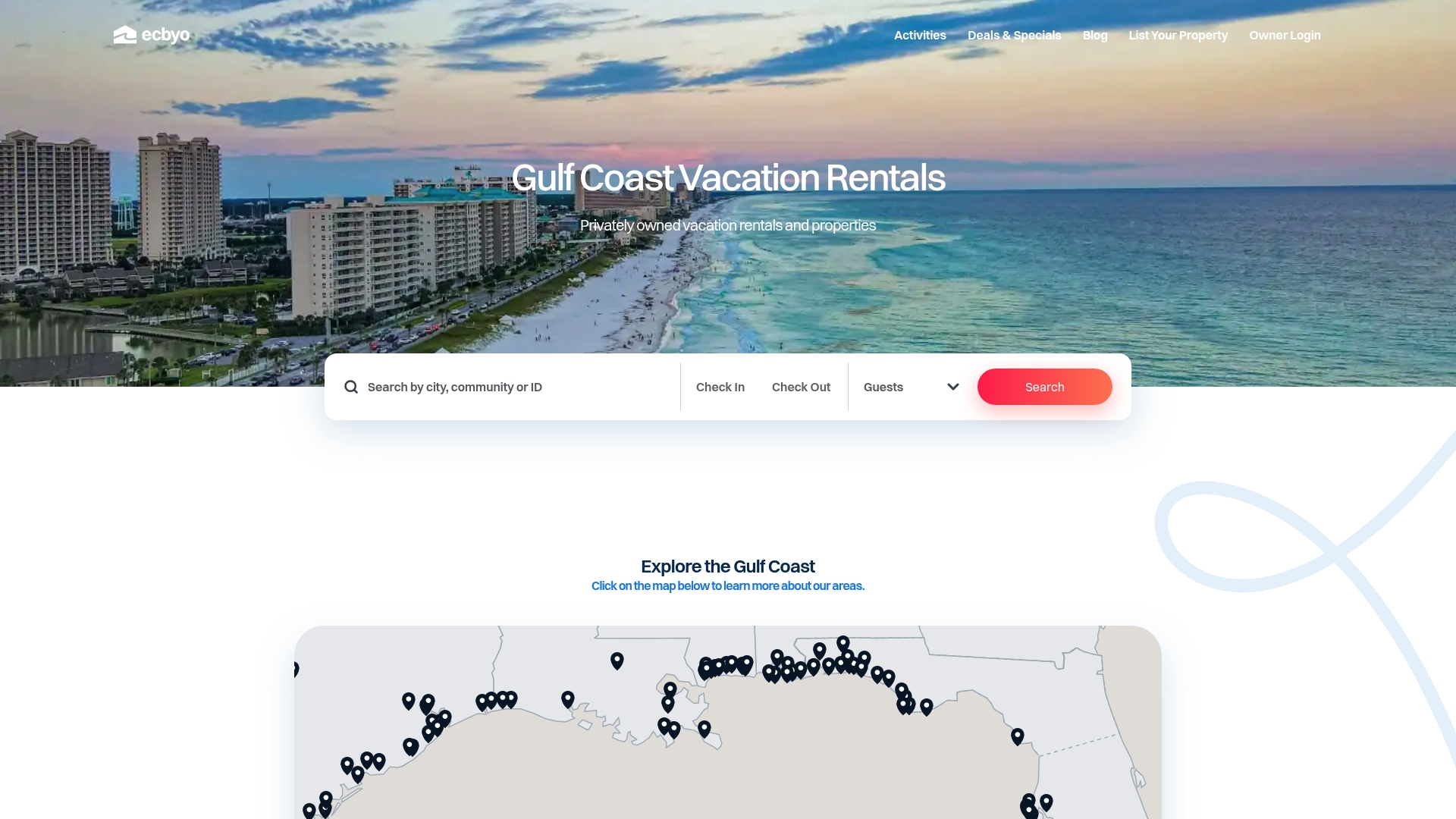
We connect you directly with Gulf Coast property owners, so there are no traveler booking or service fees standing between you and a flexible place to stay. If a red tide advisory has you weighing a different town, our Florida vacation rental listings by owner cover beaches across the Panhandle, and you can search for the exact features that matter for a trip like this.
- Filter for air conditioning and easy indoor space in case a beach day turns into an indoor one.
- Look for pet-friendly rentals if you’re traveling with a dog, since our pet-friendly rental guide covers what to ask owners directly.
- Check our Deals & Specials page for flexible or last-minute listings if your dates need to shift.
Browse Gulf Coast vacation rentals and book direct with an owner who can answer your questions before you commit.
This article is general information, not a substitute for advice from a qualified doctor. Consult a qualified healthcare professional about your own circumstances before acting on anything here.
FAQ
Is there red tide in the Gulf of Mexico right now?
Conditions vary by beach and change with wind and currents, so there is no single answer for the whole Gulf Coast at any given time. Check the NOAA Gulf Coast respiratory forecast and your local county health department for the specific beach you plan to visit.
Is there currently red tide in Jacksonville, Florida?
Jacksonville sits on Florida’s Atlantic coast, while red tide caused by Karenia brevis is a Gulf Coast phenomenon tracked separately by NOAA and the Florida Fish and Wildlife Conservation Commission. Check Gulf-side sources if you’re asking about Panhandle or Southwest Florida beaches instead.
What month does red tide occur in Florida?
Blooms most often begin sometime between August and October and can persist for weeks or months afterward, according to NOAA. Timing shifts from year to year, so a beach-level check is more reliable than relying on the calendar alone.
Is there red tide in Sarasota now?
Sarasota sits in Southwest Florida, where red tide blooms occur more consistently than in the Panhandle, but status still varies by beach and by week. The FWC sample maps and local Department of Health advisories are the most reliable places to confirm current conditions there.
Are shellfish safe to eat during a red tide bloom?
Recreationally harvested clams, oysters, and mussels can concentrate brevetoxin and should not be eaten from waters under an active advisory, per the Florida Department of Health. Commercially sold shellfish goes through separate testing and stays a safer choice during a bloom.
Sources
- Gulf Coast - NCCOS - National Centers for Coastal Ocean Science
- Harmful Algal Blooms - Florida Department of Health
Recommended
- Panama City Beach: Pick Neighborhoods, Book Direct, Check Certificate
- Redington Shores Florida Vacation Rentals
- What Is the Florida Panhandle Known For: Travel Guide
- Best Time to Visit Panama City Beach for Warm Water or Low Crowds

About the Author
Tayler Jaeger of the Emerald Coast by Owner Editorial Team creates destination guides, vacation-planning resources, and local travel content focused exclusively on Gulf Coast vacation rentals.
Our team researches beach communities, vacation rental trends, family travel planning, local attractions, and direct-booking best practices across Florida, Alabama, Mississippi, Louisiana, and Texas. Every guide is written to help travelers make more informed booking decisions while avoiding unnecessary third-party guest service fees.
Since launching in 2016, Emerald Coast by Owner has helped connect travelers directly with verified vacation rental hosts across the Gulf Coast.
This article was reviewed for accuracy and updated using local destination research and current vacation rental market insights.


