


A fishing pier rental nearby is a vacation home, condo, or cottage you can book that puts you within a short walk or easy drive of a public or private fishing pier. Start your search with a map-based tool and a phrase like “walk to pier” or “pier access” for your target town. Emerald Coast By Owner lists Gulf Coast properties this way, and towns near landmarks like Kure Beach Pier often bundle pier access right into the listing description. Forbes notes that vacation rentals give anglers more room and flexibility than hotels for early mornings and gear.
Pro Tip: Before you book, message the owner and ask about pier hours, fees, and whether the pier is public or private. Rules vary by town and by pier.
Key Takeaways
The most reliable way to book a pier-adjacent Gulf Coast rental is to verify walking distance and pier rules directly with the owner before paying any deposit.
| Point | Details |
|---|---|
| Define the target clearly | A fishing pier rental nearby means a home, condo, or cottage within easy walking or driving distance of a pier. |
| Verify before you pay | Confirm walking time, parking, and pier rules directly with the owner using a short message template. |
| Time your booking | Book 3 to 6 months ahead for peak season and reconfirm details a month before travel. |
| Prioritize gear logistics | Look for parking for trailers, outdoor rinse areas, and clear fish-cleaning rules. |
| Book direct to save fees | Emerald Coast By Owner connects travelers with owners directly across the Gulf Coast with no traveler service fees. |
Table of Contents
- Why Choose a Vacation Rental Near a Fishing Pier Over a Hotel?
- How Do You Find Rentals Truly Near a Fishing Pier?
- What Should You Ask the Owner Before Booking?
- What Can You Expect at a Gulf Coast Fishing Pier?
- When Should You Book, and What Drives the Price?
- What Should You Pack, and How Do You Prep the Property?
- How Does the Booking Process Actually Work?
- What Terms Should You Expect in a Rental Agreement?
- Why Book Your Pier-Adjacent Rental With Emerald Coast By Owner?
- A Publisher’s Take on Booking Near the Pier
- Sources
- FAQ
Why Choose a Vacation Rental Near a Fishing Pier Over a Hotel?
A house or condo near the pier gives you room to spread out gear, prep bait, and come and go on your own schedule. Hotels rarely offer that. Forbes’ comparison of rentals versus hotels points to space and flexibility as the deciding factors for travelers who need early access and equipment storage, and that applies directly to anglers packing rods, coolers, and tackle boxes.
A rental near the pier typically beats a hotel room in a few concrete ways:
- More parking, often enough for a truck and trailer, without valet restrictions
- A private kitchen to clean and store bait, or cook the catch that night
- Flexible check-in hours that don’t box you into a lobby schedule
- Room to rig rods and dry gear without disturbing other guests or housekeeping
Property managers who work these markets say anglers prize the independence a rental gives them: leaving at 5 a.m. for the pier, using a real kitchen, and staging gear on a porch instead of a hotel hallway.
How Do You Find Rentals Truly Near a Fishing Pier?
Finding a listing that says “near the pier” is easy. Finding one that’s actually walkable takes a bit more legwork. Here’s a search flow that works:
- Start with a map-based search on a Gulf Coast platform and drop a pin on the pier you want.
- Verify the distance using satellite view. A quarter mile might be a five-minute walk on flat sidewalks or a fifteen-minute walk through beach access dunes.
- Read the listing notes carefully. Some waterfront listings mention shared docks or temporary closures due to repairs, which changes the whole equation.
- Contact the owner directly to confirm current access before you pay a deposit.
A few search terms tend to surface the right properties on Gulf Coast sites: “pier access,” “walk to pier,” “private pier,” and “dock access.” Pair those with your destination name for tighter results.
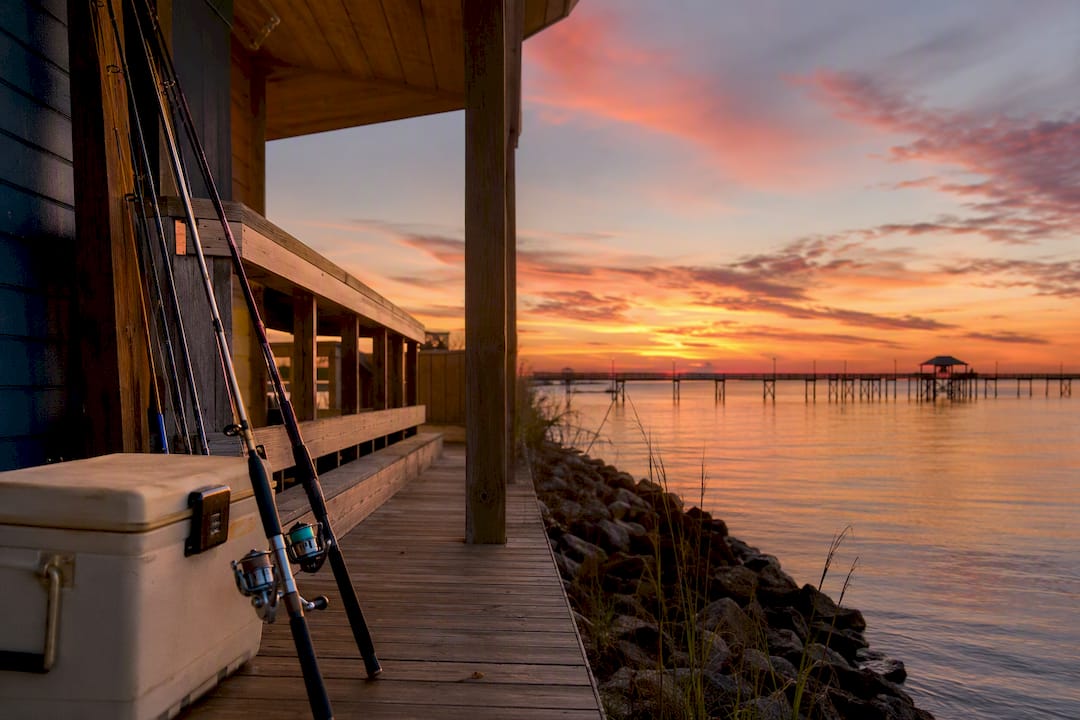
Photos and floor plans matter more than most travelers realize. Look for exterior shots that show the pier in the background, porch or ground-floor storage for gear, and any mention of beachfront access in the description. ECBYO’s guidance on beachfront access rentals breaks down exactly what to check before booking. If a listing shows the pier from a balcony but the map shows it’s across a busy road, that’s worth a follow-up question, not an assumption.
What Should You Ask the Owner Before Booking?
A short message before you book saves you from bad surprises on arrival day. Confirm these points directly with the owner:
- Exact walking time to the pier, and whether that path crosses any private property or busy roads
- Whether the pier is private to the rental or a shared/public structure
- Parking capacity for trucks, trailers, or boats
- Rules on cleaning fish at the property, and where that’s allowed
- Pier fees, permits, or a fishing license requirement
- Boat launch or dock access, if you’re bringing a vessel
- Early-access or early check-in flexibility for sunrise fishing trips
A simple message template works: “Hi, we’re planning a fishing trip and want to confirm walking distance to [pier name], parking for a truck and trailer, and whether early check-in is possible for a sunrise start. Thanks!”
Parking questions matter more than they seem. A trailer that doesn’t fit changes your entire arrival plan. Look for owners who reply with specifics, house rules already written down, and real photos of parking and storage areas. That responsiveness is often the clearest trust signal you’ll get before booking.
Pro Tip: If an owner takes more than two days to answer a direct access question, treat that as a signal about how responsive they’ll be if something goes wrong during your stay.
What Can You Expect at a Gulf Coast Fishing Pier?
Most public piers come with a small set of amenities: bait and tackle shops, fish-cleaning stations, covered seating, and sometimes a snack stand. Some piers, like the one profiled in guides to Surf City Pier, even rent rods and reels and sell fishing licenses on-site, which helps if you’re traveling light.
Rules vary by pier, so check before you go:
- Posted hours, which often start before sunrise and close after dark
- Catch-and-keep limits and any local size restrictions
- Pier admission fees, separate from any state fishing license requirement
- Safety features like railings, life rings, and posted weather-closure policies
Piers like Kure Beach Pier draw steady foot traffic from sunrise anglers through evening walkers, and that activity pattern shapes what staying nearby actually feels like. A rental a block or two inland tends to be quieter than one sitting right on the pier parking lot, where experienced renters note foot traffic and noise run higher.
When Should You Book, and What Drives the Price?
Gulf Coast demand peaks in the warmer months and around holiday weeks, and pier-adjacent listings in those windows go first. A simple timeline keeps you ahead of it:
- As soon as your dates are set (ideally 3 to 6 months out for peak season), start comparing listings and message owners with your access questions.
- One month before travel, confirm the booking details, parking arrangements, and any pier rule changes.
- The week of travel, check the forecast and reconfirm early-access plans with the owner.
Price premiums on these rentals usually track a few factors: private pier access, a waterfront view, peak-season demand, and dedicated parking for boats or trailers. Because Gulf Coast weather can shift a trip on short notice, flexible cancellation terms are worth paying attention to, not just the nightly rate.
What Should You Pack, and How Do You Prep the Property?
Pack with both the trip and the rental in mind: rods and rod tubes, a tackle box, waterproof bags, a portable scale, a cooler, bait storage, quick-dry clothing, and a basic first-aid kit.
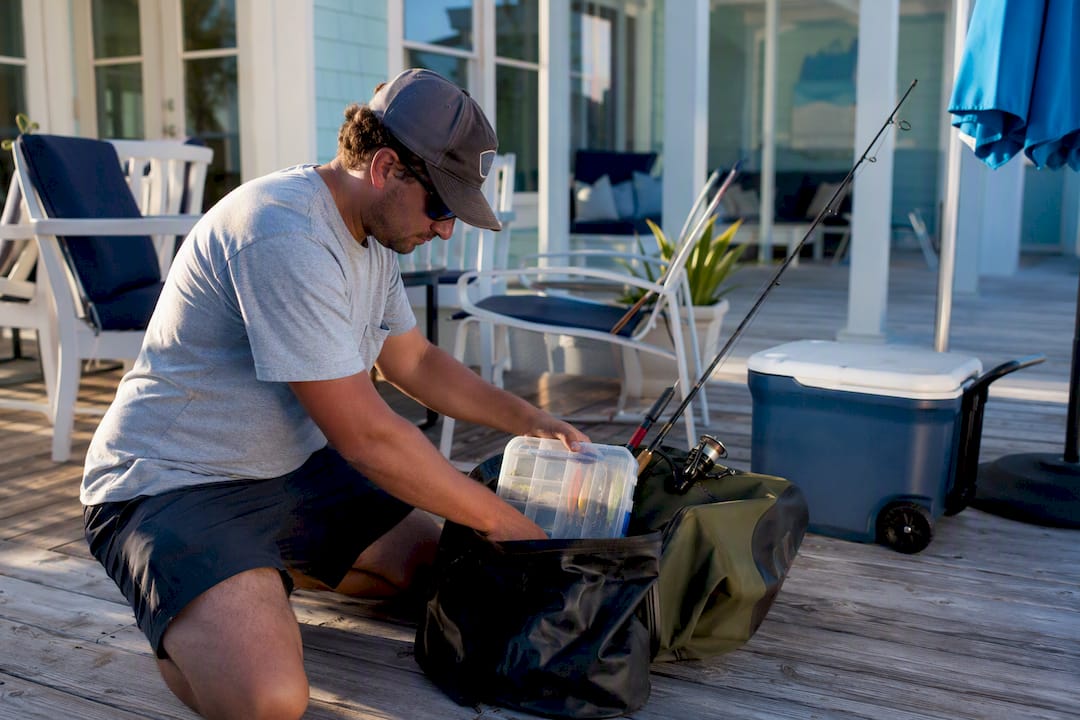
Before you clean a single fish, confirm the property’s rules. Ask specifically about rod storage, an outdoor rinse area, and whether fish cleaning is allowed on-site at all. Some owners have a dedicated station; others ask you to use the pier’s cleaning station instead.
A few habits keep you on good terms with the owner:
- Clean fish only where the owner permits, never in an indoor sink
- Rinse gear outdoors before bringing it inside
- Bag bait and catch separately to control smell in shared trash areas
Pro Tip: Look for listings that mention an outdoor shower or a dedicated mudroom for gear. A porch with a hose is good; a real rinse station is better.
How Does the Booking Process Actually Work?
Two paths exist for locking in a pier-adjacent rental: booking directly with the owner or going through a large third-party platform. Direct booking, the model ECBYO built its marketplace around, connects you straight to the property owner with no traveler service fee added on top of the nightly rate.
Here’s how a direct booking typically moves:
- Search by location, using a map tool to center results on your target pier.
- Review the owner’s profile and listing details, including house rules and photos.
- Message the owner with your dates and your access questions from the checklist above.
- Confirm pricing and terms, including deposit amount and cancellation policy.
- Pay through the platform’s secure system or the owner’s stated payment method, usually a deposit followed by a balance due closer to arrival.
- Get written confirmation with check-in instructions and any pier-specific notes.
Third-party platforms sometimes add service fees on top of the nightly rate, which can push the total cost up without adding any benefit for anglers. Direct-owner platforms skip that layer, so the price you see is closer to the price you pay. Payment security matters either way: legitimate platforms process payments through their own system rather than asking for wire transfers or off-platform payment, which is a common red flag worth watching for.
What Terms Should You Expect in a Rental Agreement?
Every legitimate vacation rental booking comes with a written agreement, even a short one. Reading it before you pay a deposit saves headaches later.
| Term | What It Typically Covers |
|---|---|
| Check-in/check-out times | Exact hours, and whether early check-in is possible for sunrise fishing plans |
| Deposit and payment schedule | Amount due at booking versus balance due before arrival |
| Cancellation policy | Refund windows and whether weather-related cancellations are covered |
| Occupancy limits | Maximum guests allowed, which affects group fishing trips |
| House rules | Fish-cleaning policy, parking limits, pet policy, quiet hours |
| Damage policy | Security deposit terms and what counts as normal wear versus damage |
Pay close attention to the cancellation policy specifically. Gulf Coast weather can turn a planned trip upside down with little notice, and a flexible or moderate policy protects you far better than a strict one when a storm forecast rolls in the week of travel. Also confirm who’s responsible for storm-related closures at the pier itself, since that’s separate from your rental agreement entirely.
Why Book Your Pier-Adjacent Rental With Emerald Coast By Owner?
Emeraldcoastbyowner cuts out the extra layer that third-party platforms add to your total cost. Because Emerald Coast By Owner connects you directly with the property owner, you skip traveler service fees entirely and can ask pier-specific access questions before you commit to anything.
What started as a marketplace of roughly 350 listings in 2016 has grown into thousands of properties spanning Florida, Alabama, Mississippi, Louisiana, and Texas. That growth means more pier-adjacent options in more towns, not just the well-known ones. The map-based search lets you center results on a specific pier, and owner profiles let you read house rules and photos before you ever send a message.
To find a pier-adjacent stay, search the Florida vacation rentals landing page, filter for waterfront or beachfront features, and message owners directly about pier access. If Texas or Louisiana piers fit your trip better, the Texas and Louisiana landing pages work the same way. Check current promotions on the deals page before you finalize dates, and start your search today by browsing listings near the pier you want to fish.
A Publisher’s Take on Booking Near the Pier
Most guides treat “near the pier” as a marketing phrase instead of something you should verify. That’s backwards. The gap between a listing photo showing a pier in the distance and an actual five-minute walk is where most bad bookings happen, and it’s entirely avoidable with two or three direct questions to the owner.
Gear storage is the detail I see anglers overlook most. A rental with a gorgeous view but nowhere to rinse a cooler or stage wet gear turns into a daily hassle. Property managers who work these markets consistently point to the same thing: anglers value independence more than luxury finishes. A sunrise departure without waking anyone, a real kitchen to handle bait, a porch to dry gear. That’s the actual value proposition, and it’s worth prioritizing over square footage or decor when you’re comparing listings on ECBYO.
Sources
- Vacation rentals vs hotels: what to choose?
FAQ
What Does “Fishing Pier Rental Nearby” Actually Mean?
It means a vacation home, condo, or cottage you can book that sits within easy walking or short driving distance of a public or private fishing pier, not equipment or pier-pass rentals.
How Close Should a Rental Be to Count as “Near” a Pier?
A short walk, generally under a half mile on flat, direct paths, is a reasonable target; always verify distance on a map rather than trusting the listing description alone.
Are There Extra Fees for Booking Near a Pier?
Pier admission fees and fishing licenses are separate from your rental cost and vary by location; booking through a direct-owner platform like Emerald Coast By Owner also means no added traveler service fees.
How Far in Advance Should I Book a Pier-Adjacent Rental?
Book 3 to 6 months ahead for peak season and holiday weeks, since pier-adjacent listings with parking and private access tend to book first.
What’s the Biggest Mistake Travelers Make Booking These Rentals?
Assuming a listing photo showing a pier means easy walking access, without confirming actual distance, parking, and pier rules directly with the owner first.
Recommended
- Beach Time! An ECBYO blog about all things Gulf Coast
- Gulfport Mississippi Vacation Rentals | ECBYO
- Deals & Specials | Emerald Coast By Owner
- Types of Gulf Coast Beach Rentals: Your 2026 Guide | ECBYO

About the Author
Joe Godar of the Emerald Coast by Owner Editorial Team creates destination guides, vacation-planning resources, and local travel content focused exclusively on Gulf Coast vacation rentals.
Our team researches beach communities, vacation rental trends, family travel planning, local attractions, and direct-booking best practices across Florida, Alabama, Mississippi, Louisiana, and Texas. Every guide is written to help travelers make more informed booking decisions while avoiding unnecessary third-party guest service fees.
Since launching in 2016, Emerald Coast by Owner has helped connect travelers directly with verified vacation rental hosts across the Gulf Coast.
This article was reviewed for accuracy and updated using local destination research and current vacation rental market insights.


