


Most travel insurance policies will reimburse your prepaid, nonrefundable vacation rental costs if you cancel or cut your trip short for a covered reason. What they usually won’t do automatically is cover accidental damage you cause to the property. That requires a separate rental-damage add-on, and only a handful of U.S. plans offer one explicitly.
Here’s what to look for before you book:
- Trip cancellation/interruption coverage protects your nonrefundable rental payment if illness, a family emergency, or a named storm forces you to cancel or leave early.
- A rental-damage rider reimburses the host for accidental physical damage or a withheld security deposit, up to the policy limit.
- Cancel For Any Reason (CFAR) gives you flexibility when no covered reason applies, though it typically reimburses only 50%–75% of trip costs and must be purchased within a short window after your initial deposit.
One-sentence verdict: Buy a comprehensive travel policy with a rental-damage add-on when your rental is expensive, luxurious, or fully nonrefundable. For shorter, lower-cost stays, solid trip cancellation and medical/evacuation limits are the priority.
Pro Tip: Travel Guard and Trawick International’s Stay Secure are the two plans that most explicitly name vacation rental protection and damage benefits on their product pages — start your quotes there.
Key Takeaways
Buy vacation rental travel insurance early, document the property at check-in, and add a rental-damage rider whenever your stay is expensive, luxury, or fully nonrefundable.
| Point | Details |
|---|---|
| Buy within days of deposit | Pre-existing condition waivers and CFAR both require purchase within 14–21 days of your initial deposit. |
| Base cost is modest | Travel insurance typically costs 4%–6% of trip cost; CFAR adds roughly 50% to that premium. |
| Damage riders are narrow | Rental-damage add-ons cover accidental physical damage only; parties and negligence are excluded. |
| Document everything | Timestamped photos at check-in are the primary evidence insurers require for damage claims. |
| Emeraldcoastbyowner listings | Book Gulf Coast rentals direct from owners, confirm cancellation terms and host insurance before paying any nonrefundable deposit. |
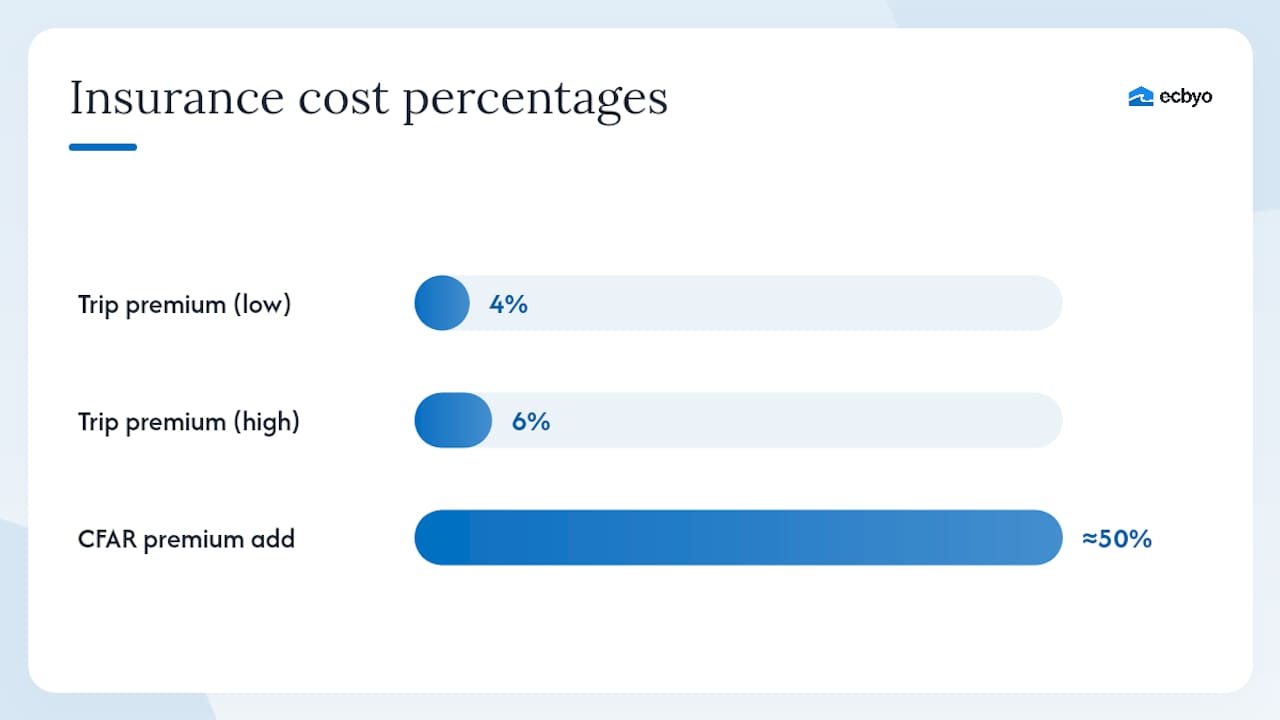
Table of Contents
- What does vacation rental travel insurance actually cover?
- What travel insurance generally does NOT cover for vacation rentals
- What rental damage protection options are available to you?
- Which U.S. travel insurance plans explicitly support vacation rental needs?
- How much does travel insurance cost, and when should you buy it?
- How to choose the right policy for your rental trip
- Why homeowner and host protections often leave travelers exposed
- A Gulf Coast traveler’s perspective on booking and insurance
- Plan your Gulf Coast rental with Emeraldcoastbyowner
- Sources
- FAQ
What does vacation rental travel insurance actually cover?
Standard travel insurance for vacation rentals covers four main areas. Understanding each one helps you match the right policy language to your actual financial exposure.
Trip cancellation reimburses prepaid, nonrefundable rental costs when you cancel before departure for a covered reason: illness, injury, death of a family member, jury duty, or a natural disaster that makes the destination uninhabitable. If you paid $4,000 upfront for a Gulf Coast beach house and your child breaks a leg the week before, this benefit gets that money back.
Trip interruption covers unused nights when you have to leave early. Say a hurricane evacuation order forces you out on day three of a seven-night stay. Interruption coverage can reimburse the remaining prepaid nights and the cost of getting home.
Trip delay kicks in when your travel is delayed beyond a policy threshold, typically 6–12 hours, covering meals, replacement lodging, and transport. Less dramatic than cancellation, but genuinely useful when a connecting flight strands you overnight.
Emergency medical and evacuation is the coverage most travelers undervalue on rental trips. Hotels have concierge staff; a remote beach house does not. Medical evacuation from a rural Gulf Coast location can cost tens of thousands of dollars without coverage.
Baggage loss and delay rounds out most comprehensive plans, covering lost luggage or delayed gear.
Travel insurance typically costs about 4%–6% of total trip cost, making a $250–$300 policy on a $5,000 rental a reasonable baseline. That figure rises when you add riders.
What travel insurance generally does NOT cover for vacation rentals
Knowing the exclusions is just as important as knowing the benefits. Several common vacation rental scenarios fall outside standard policy language.
- Host cancellations and listing disputes. If the owner cancels your booking or the property looks nothing like the photos, travel insurance won’t help. That’s a platform dispute, not an insured loss.
- Dissatisfaction or loss of enjoyment. A noisy neighborhood, a smaller-than-advertised pool, or a disappointing view are not covered reasons to cancel.
- Pre-existing medical conditions are excluded unless you purchase a waiver, which requires buying the policy within 14–21 days of your initial deposit.
- Named-storm exclusions. Once a hurricane is named, most policies stop offering new coverage for that storm. Buying travel insurance hurricane coverage after a storm is already named is too late.
- Intentional damage, negligence, and unauthorized events. Rental-damage add-ons cover accidents, not parties. Damage caused by events the host didn’t authorize is typically excluded.
- Ordinary wear and tear. A scratched countertop that was already scratched when you arrived is not a claim.
A Lloyd’s survey found that 97% of consumers believe platforms provide protection but only 28% inspected the coverage details, which means most travelers overestimate what booking-platform guarantees actually do. Platform “host guarantees” are discretionary, not contractual insurance, and they protect the host, not the guest.
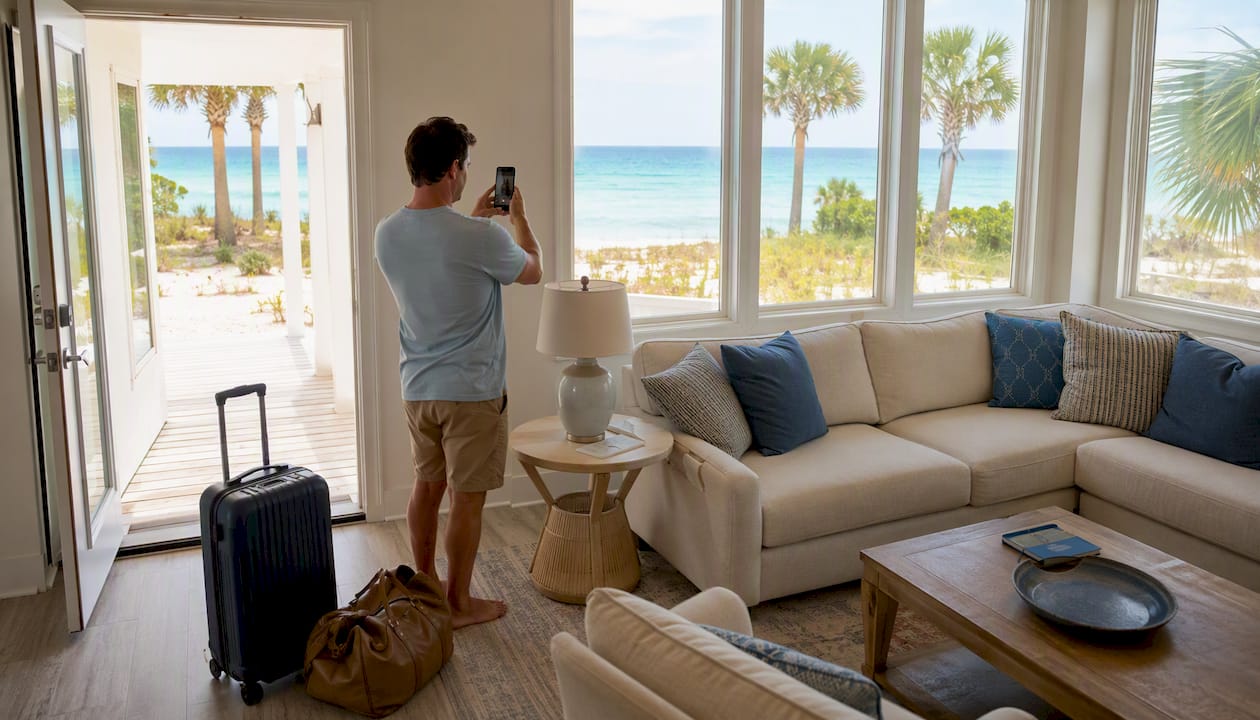
Pro Tip: Take timestamped photos and a short video walkthrough of the property within the first hour of check-in. Send a written message to the host through the platform noting any pre-existing damage. That documentation is your primary defense if a damage dispute arises.
What rental damage protection options are available to you?
Rental damage protection comes in several forms, and they don’t all work the same way.
- Dedicated rental-damage rider on a travel policy. This is the cleanest option. Plans like Trawick International’s Stay Secure include an explicit Damage Protection benefit that reimburses accidental physical damage to the rental up to a stated limit. Coverage is narrow: it applies to accidents during the stay, not negligence, unauthorized events, or damage caused by guests not listed on the policy.
- Security deposit reimbursement. Some policies reimburse a withheld security deposit up to the policy limit. This is distinct from paying the host directly for damage; it covers what the host keeps from your deposit.
- Host-required event or party insurance. Some owners require guests to purchase a separate event policy for gatherings. This is not travel insurance; it’s liability coverage for the event itself.
- Credit card protections. A handful of premium travel cards offer limited rental damage protection, but limits are typically low and coverage terms vary widely. Read the card’s benefits guide carefully.
- Platform guarantees. Booking platforms may offer host-protection programs, but these are discretionary and protect the property owner, not the traveler.
When CFAR matters most. Cancel For Any Reason coverage is worth the extra cost when you’re booking during hurricane season, making a large nonrefundable deposit months in advance, or simply want flexibility. The trade-off is real: CFAR typically adds roughly 50% to the base premium and reimburses only 50%–75% of trip costs, not the full amount. It also has a strict purchase window, usually 10–21 days after your initial deposit. Miss that window and the option disappears.
Matching the damage limit to the rental class matters: a modest condo stay may be adequately protected at $1,500–$2,000, while a luxury Gulf Coast villa often warrants $3,000–$5,000 or more.
Which U.S. travel insurance plans explicitly support vacation rental needs?
Four providers stand out in consumer roundups for explicitly addressing vacation rental scenarios, either through dedicated plan pages, damage riders, or both.
A note on state availability. Add-ons like CFAR and rental-damage riders are not available in every state. New York, in particular, has restrictions that affect several optional benefits. Always check the insurer’s state-specific certificate or “Description of Coverage” (DOC) document before purchasing.
Travel Guard’s dedicated vacation rental insurance page is one of the clearest in the industry for explaining what the plan covers and what add-ons are available. Trawick’s Stay Secure is the most explicit about naming a Damage Protection benefit with stated limits, making it a strong starting point for travelers whose primary concern is accidental damage liability.
How much does travel insurance cost, and when should you buy it?
Travel insurance for vacation rentals typically runs 4%–6% of total trip cost. On a $5,000 rental, that’s $200–$300 for a base comprehensive plan.
- Adding CFAR raises the premium by roughly 50%, bringing a $250 base policy to approximately $375. You get back only 50%–75% of trip costs if you cancel, so on a $5,000 trip, the maximum CFAR reimbursement is $3,750.
- Rental-damage riders add a modest amount to the premium relative to the protection they provide, particularly for high-value rentals.
Purchase windows that matter:
- Pre-existing condition waiver: Must be purchased within 14–21 days of your initial trip deposit. Miss this window and any pre-existing medical condition is excluded.
- CFAR purchase window: Typically 10–21 days after the initial deposit, depending on the insurer. This is the most commonly missed deadline.
- Named-storm/hurricane timing: Coverage for a specific storm stops being available once that storm is named. For Gulf Coast travel during June through November, buy before the season heats up.
Generali Global Assistance notes that plans can be purchased up to 18 months before travel, which means there’s no reason to wait if you’ve already paid a deposit on a Gulf Coast rental.
Quick pricing example:
| Scenario | Trip Cost | Base Policy (~5%) | With CFAR (about 6%) |
|---|---|---|---|
| Standard beach condo | $3,000 | ~$125 | ~$300 |
| Gulf Coast vacation home | $5,000 | ~$250 | ~$375 |
| Luxury beachfront villa | $10,000 | ~$250–$300 | ~$375 |
How to choose the right policy for your rental trip
A short, ordered checklist makes the shopping process faster and avoids the most common coverage gaps.
- Confirm the rental qualifies. Ask the insurer whether your specific booking type (private owner, platform listing, condo, villa) is covered under the policy’s definition of “prepaid travel arrangements.”
- List all travelers on the policy. Rental-damage add-ons typically require all occupants to be named. A policy covering only the primary traveler may deny a damage claim caused by another guest.
- Check the damage limit against the rental value. A $1,000 damage limit on a $10,000-per-week luxury villa is inadequate. Match the limit to the property class.
- Verify CFAR availability and the purchase window. If you want CFAR, confirm it’s available in your state and buy within 10–21 days of your deposit.
- Ask the host about their cancellation policy. A strict “no refunds” policy makes trip cancellation coverage more valuable. A flexible cancellation window reduces urgency.
- Ask the host whether the property carries commercial short-term rental insurance. This matters if a structural issue (burst pipe, fire) makes the property uninhabitable on arrival.
Red flags to watch for:
- Vague damage wording that doesn’t specify “accidental physical damage” or a dollar limit
- No documentation requirement in the policy (legitimate insurers require receipts and photos)
- Platform-only “discretionary” refund promises with no written policy terms
- A host who refuses to confirm their cancellation terms or insurance status in writing
At booking and check-in:
- Screenshot the listing description, photos, and cancellation terms before paying.
- Document the property condition with photos and video within the first hour.
- Keep all receipts for prepaid costs; insurers require them for cancellation claims.
Why homeowner and host protections often leave travelers exposed
There’s a widespread assumption among travelers that either the host’s insurance or the booking platform’s guarantee will cover any problems that arise. The research says otherwise.
Standard homeowners insurance policies commonly exclude short-term rental activity because accepting paying guests converts the property into a business use, triggering business-activity exclusions. A host whose property is damaged during a guest stay may find their homeowners claim denied entirely. Industry analysis confirms that owners operating short-term rentals should notify their insurer and often need a commercial or short-term rental endorsement to avoid coverage gaps.
For travelers, this creates a practical risk: if the host’s policy doesn’t cover rental activity, there may be no insurer on the host’s side to coordinate with when something goes wrong. A burst pipe that makes the property uninhabitable, a structural issue, or a fire could leave both parties unprotected if the host assumed their standard homeowners policy was sufficient.
Pro Tip: Ask the host directly whether the property is covered by a commercial short-term rental policy, not a standard homeowners policy. For high-value rentals or long stays, request a certificate of insurance. A host who can’t answer this question is a meaningful signal about how the property is managed.
A Gulf Coast traveler’s perspective on booking and insurance
Gulf Coast vacation rentals, from the sugar-white beaches of Destin to the bayous of Louisiana, carry a specific set of risks that make insurance timing especially important. Hurricane season runs June through November, overlapping with peak summer travel. A nonrefundable deposit paid in April for a July beach house in Florida is exposed to six months of storm season before you ever pack a bag.
The practical advice here is straightforward: buy your travel policy within two to three weeks of paying your deposit. That preserves both the pre-existing condition waiver and the CFAR purchase window. If you’re booking a Gulf Coast rental in May or June, CFAR is worth the extra cost simply because the storm forecast is genuinely uncertain.
When booking through Emeraldcoastbyowner, contact the property owner directly before paying a large nonrefundable deposit. Ask about their cancellation terms, whether they require event insurance for gatherings, and what their policy is if the property becomes uninhabitable before arrival. Owners on the 30A marketplace and across the Gulf Coast are generally accessible and willing to answer these questions. Getting answers in writing, through the platform’s messaging system, protects both parties.
Plan your Gulf Coast rental with Emeraldcoastbyowner
Travelers booking Gulf Coast vacation rentals directly through Emeraldcoastbyowner skip the traveler service fees that major platforms charge, which means more budget left for the right travel insurance policy. The marketplace connects guests with property owners across Florida, Texas, and Louisiana, with direct owner communication built into every listing.
Before you pay any deposit, run through this short checklist on any Emeraldcoastbyowner listing:
- Confirm deposit and cancellation terms with the owner in writing before paying.
- Ask the owner whether the property carries commercial short-term rental insurance and request a certificate for high-value stays.
- Verify maximum occupancy and pet rules so your travel insurance policy covers all guests.
- Note the listing’s hurricane/storm cancellation policy if you’re traveling June through November.
Start your search on the Gulf Coast marketplace and message the owner directly with your insurance questions before committing to a nonrefundable deposit.
Sources
These sources cover policy language, insurer features, and regulator guidance for vacation rental travel insurance in the U.S.:
- PSA: Homeowners Insurance Doesn’t Cover Short-Term Rentals
- Short-Term Rentals and Homeowners Insurance outlook (Triple-I)
- Vacation Rental Travel Insurance Plans | Travel Guard
- Vacation rental insurance: what it covers and costs (InsureYonder)
- Does Travel Insurance Cover Vacation Rentals? - LegalClarity
How to use these sources: Pull up the insurer’s “Description of Coverage” (DOC) document for your specific state before purchasing. State-specific availability notices, particularly for New York, will appear in the certificate or a separate state endorsement page.
This article is general information, not a substitute for advice from a qualified financial advisor. Consult a qualified financial professional about your own circumstances before acting on anything here.
FAQ
Does travel insurance cover vacation rental cancellations?
Yes. Most comprehensive travel insurance plans reimburse prepaid, nonrefundable vacation rental costs when you cancel for a covered reason, such as illness, injury, or a natural disaster. Host-initiated cancellations and listing disputes are not covered.
How much is travel insurance for a $10,000 trip?
A base comprehensive policy typically costs 4%–6% of trip cost, so about $200–$300 on a $5,000 rental. Adding CFAR raises the premium by roughly 50%, and reimbursement is capped at 50%–75% of trip costs if you cancel.
Should you buy vacation rental insurance for every trip?
It’s most valuable when the rental deposit is large, fully nonrefundable, or booked far in advance during hurricane season. For short, low-cost stays with flexible cancellation terms, the calculus is closer, but medical and evacuation coverage alone often justifies the cost.
What are the most common vacation rental insurance claims?
Trip cancellation due to illness or injury is the most frequent claim type. Trip interruption from weather events, including hurricane evacuations along the Gulf Coast, is also common. Damage claims are less frequent but tend to involve accidental breakage of furnishings or appliances.
Can you add rental damage protection after booking?
Yes, but only within the insurer’s purchase window. CFAR must typically be added within 10–21 days of your initial deposit. Rental-damage riders can usually be added at any point before departure, though some insurers require purchase within a set number of days of booking. Check the specific plan’s terms.
Recommended
- Sarasota Vacation Rentals: Your 2026 Complete Guide | ECBYO
- Best Galveston Vacation Rentals: Your 2026 Planning Guide | ECBYO
- Marco Island Vacation Rentals: 2026 Complete Guide | ECBYO
- Types of Coastal Vacation Rental Properties: 2026 Guide | ECBYO

About the Author
Joe Godar of the Emerald Coast by Owner Editorial Team creates destination guides, vacation-planning resources, and local travel content focused exclusively on Gulf Coast vacation rentals.
Our team researches beach communities, vacation rental trends, family travel planning, local attractions, and direct-booking best practices across Florida, Alabama, Mississippi, Louisiana, and Texas. Every guide is written to help travelers make more informed booking decisions while avoiding unnecessary third-party guest service fees.
Since launching in 2016, Emerald Coast by Owner has helped connect travelers directly with verified vacation rental hosts across the Gulf Coast.
This article was reviewed for accuracy and updated using local destination research and current vacation rental market insights.


