



Snowbird season on the Panhandle runs roughly November through March, with January through March the busiest stretch. Afternoons sit in the low to mid 60s, mornings run cooler, and Gulf water stays in the low to mid 60s, so it’s better for a stroll than a swim. The one rule that matters most: line up monthly or seasonal rentals in spring or summer, because the best January arrivals get booked out well before fall.
TL;DR:
- Booking well in advance, ideally six months or more, ensures availability of desirable rental units and the best pricing, especially for beachfront properties.
- Inland RV sites near Milton or Pensacola offer larger, calmer spaces at lower monthly rates compared to costly beachfront parks during peak season.
- The peak snowbird months run from January to March, with January and February being the most active, and rates tend to be lower immediately after the holiday surge.
- Utilities at RV parks are usually metered separately, so the cost can spike during cold snaps or heavy use, and asking about caps before booking is essential.
- Joining senior centers or clubs early in the season enhances social integration, with organized activities like bingo, golf, and outings available across the region.
Table of Contents
- When Is Snowbird Season in the Panhandle?
- Which Panhandle Town Fits Your Snowbird Style?
- What Lodging Options Work Best for a Winter Stay?
- How Do Snowbirds Build a Social Calendar Down Here?
- What Does a Panhandle Snowbird Season Actually Cost?
- What Should You Pack and Prep Before You Arrive?
- What Emeraldcoastbyowner Sees Across a Panhandle Snowbird Season
- Ready to Book Your Panhandle Winter Stay?
- Where to Verify Schedules and Local Details
- Sources
- FAQ
When Is Snowbird Season in the Panhandle?
The Panhandle’s snowbird calendar has three distinct phases, and knowing where you land in that cycle changes everything from what to pack to how much you’ll pay. Early arrivals trickle in around November, mid-season regulars dominate January through March, and a smaller wave lingers into April before the summer tourist crowd takes over.
November and early December offer a quieter transition. Highs still reach the upper 60s to low 70s, hotels and rentals haven’t hit peak pricing, and the crowds from summer tourism have thinned out. This is a smart window for anyone easing into the Panhandle winter lifestyle for the first time.
Then comes the holiday surge. Family visitors flood in for Christmas and New Year’s, rental rates tick up for about two weeks, and traffic around Destin and Panama City Beach picks up noticeably. It settles back down fast once the calendar turns.
January through March is peak snowbird territory. This is when senior centers report their fullest activity calendars, when Panama City Beach Senior Center sees its heaviest winter resident rush, and when the community feel of the season is most obvious. Golf courses stay busy, restaurants keep steady midweek crowds, and the social calendar fills with club events.
Here’s what to expect month by month:
A few practical implications follow from those numbers:
- Gulf swimming is a warm-afternoon activity at best during peak season; most snowbirds rely on heated community pools instead.
- Mornings often call for a light jacket even when the afternoon feels comfortable in a T-shirt.
- Daylight runs shorter than most snowbirds expect coming from northern states, so outdoor plans work best scheduled for midday.
- March is the sweet spot for anyone who wants the social scene without December’s price spike.
The Panhandle trades the reliably warm water of South Florida for lower monthly rates and far smaller crowds, and for a lot of retirees, that trade is the whole point of choosing this stretch of coast over the peninsula.
Which Panhandle Town Fits Your Snowbird Style?
Every Panhandle community handles snowbird season a little differently, and picking the wrong one can mean months of driving farther than you’d like for groceries or activities. Here’s how the main options stack up.
Destin draws the most active crowd. It has the densest concentration of restaurants, golf courses, and charter fishing outfits on this stretch of coast, and its walkable harbor district gives retirees something to do without getting in the car. If you want a lively food scene and don’t mind slightly higher rental rates, Destin fits the bill. The Destin Snowbird Club runs one of the most organized seasonal calendars in the region, with sports leagues, fishing trips, and cruises scheduled straight through winter.
Panama City Beach has arguably the strongest senior-center infrastructure on the coast. The Panama City Beach Senior Center operates weekdays from 9 a.m. to 3 p.m. with a packed calendar, and local news coverage has documented a genuine rush of returning winter residents each January. If community programming is your top priority, this is the town built for it.
Pensacola and Navarre suit snowbirds who want city-level services without city-level chaos. Pensacola has a larger hospital system, more specialist medical offices, and a bigger box-store footprint than the smaller beach towns. Navarre sits quieter and closer to the water, making it a good hybrid for someone who wants Pensacola’s services within a short drive but a calmer home base.
Niceville and Fort Walton Beach are the Panhandle’s quieter snowbird enclaves, both known for consistent senior programming rather than tourist buzz. The Niceville Senior Center posts monthly activity calendars covering arts, bingo, dance, and exercise classes. Fort Walton Beach’s senior programs go further, listing tai chi, ceramics, and a full activities schedule for residents age 60 and up. Neither town has Destin’s nightlife, and that’s the point for many retirees.
For RVers, inland bases near Milton or the outskirts of Pensacola often beat beachfront parks on space and price. Beachfront RV sites are scarce and expensive during peak months, while inland parks typically offer bigger, calmer sites at a lower monthly premium, with a short drive to reach the coast whenever you want it.
A quick summary of fit:
- Destin — best for food, golf, and an active social calendar.
- Panama City Beach — best for senior-center programming and a documented winter community.
- Pensacola/Navarre — best for healthcare access and city services.
- Niceville/Fort Walton Beach — best for quiet living with steady club activity.
- Inland RV bases (Milton area) — best for space and value over beachfront premiums.
What Lodging Options Work Best for a Winter Stay?
Snowbirds on the Panhandle generally choose between three lodging paths: monthly vacation rentals, seasonal leases, and RV park sites. Each has its own contract structure, cost pattern, and booking rhythm, and picking the wrong one can cost you real money or leave you stuck without a spot.
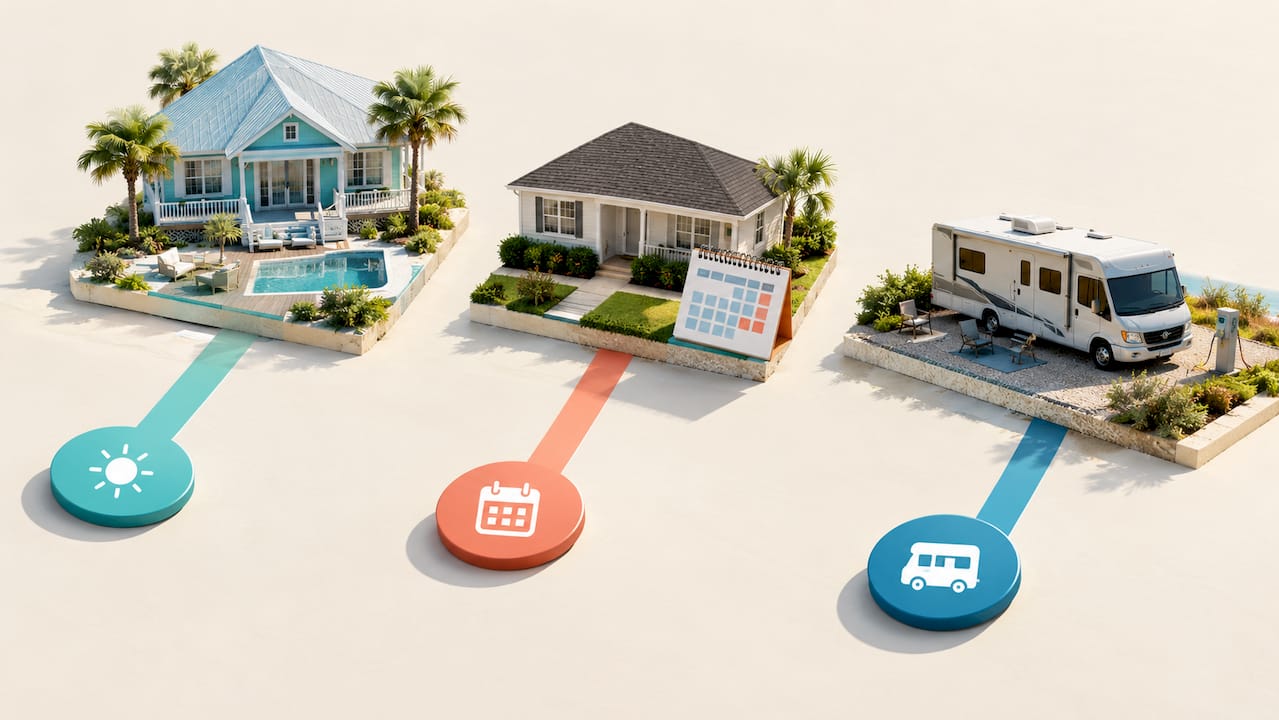
Monthly vacation rentals work well for retirees who want a furnished condo or house without signing a long-term lease. Most owners offer month-to-month terms during the winter season, and many bundle utilities into the rate up to a set usage cap, then bill overage separately. Ask exactly how that cap works before you sign anything.
Seasonal leases typically run three to six months and often come with a lower per-month rate than a single month booked alone. They suit anyone who’s already decided this town is the one for the whole winter, and they usually require a deposit larger than a standard monthly rental.
RV parks split into monthly and seasonal sites, and the difference matters. A monthly site usually includes water and sewer in the base rate but meters electricity separately, billed either flat or by usage. Beachfront hookup sites fill first and cost the most; inland parks near Milton or Pensacola tend to have more availability and calmer surroundings for the same or lower price.
The booking timeline is where most first-time snowbirds trip up. RV parks and rental owners both recommend booking months ahead for winter stays, ideally in spring or early summer of the same year. Waiting until October for a January arrival routinely means settling for a worse location, a smaller unit, or no availability at all in the popular parks and buildings.
Here’s how the three options compare on the factors that matter most:
| Factor | Monthly Rental | Seasonal Lease | RV Park Site |
|---|---|---|---|
| Typical commitment | 1 month | 3 to 6 months | 1 month or full season |
| Furnished | Usually yes | Usually yes | N/A (bring your own) |
| Utility structure | Often capped, overage billed | Often included | Electricity usually metered separately |
| Deposit size | Moderate | Higher | Low to moderate |
| Best booking window | 4 to 6 months ahead | 6 or more months ahead | months ahead |
Before committing to any option, run through this checklist with the owner or park manager:
- Ask exactly how utilities are billed and whether there’s a cap before overage charges apply.
- Confirm the cancellation policy and whether the deposit is refundable if plans change.
- Ask about parking, especially if you’re bringing a second vehicle or a boat trailer.
- Verify internet speed and reliability if remote work is part of your plan.
- Ask whether pets are allowed and what fees or deposits apply.
- Confirm the exact move-in and move-out dates in writing, since Panhandle winter turnover often runs tight between departing and arriving snowbirds.
- For RV sites, ask about the site’s electrical amperage and whether it fits your rig without an adapter.
A marketplace that connects you directly with the property owner makes these questions easy to ask upfront, since you’re negotiating terms with the person who actually sets them rather than a call center reading from a script.
How Do Snowbirds Build a Social Calendar Down Here?
Snowbird season on the Panhandle isn’t a quiet retreat. It’s a genuinely social stretch of the year, built around senior centers, dedicated clubs, and a steady rotation of outdoor activities that stay open even when the water’s too cool to swim.
Senior centers form the backbone of daily programming. The Panama City Beach Senior Center runs weekday hours with bingo, dance, crafts, and lunch programs, and local news has covered the seasonal rush of returning winter residents filling its January calendar. The Niceville Senior Center posts its own monthly schedule of arts and exercise classes, and Fort Walton Beach runs a parallel lineup with tai chi and ceramics added to the mix.
Beyond the centers, dedicated snowbird clubs give newcomers a fast way to meet people who’ve been making this migration for years. The Destin Snowbird Club publishes a full seasonal calendar covering sports leagues, group fishing trips, and cruises, with new events announced throughout the winter months.
State parks round out the activity list for anyone who wants fresh air without a crowd. St. Andrews State Park stays open through winter with trails and beach access even when swimming season is over. Camp Helen State Park and Eden Gardens State Park offer quieter garden and trail walks that suit the cooler months better than the height of summer.
A short list of what a typical snowbird week can look like once you’re plugged in:
- Monday morning bingo or crafts at the local senior center.
- Midweek golf round, with tee times easier to get than during summer’s tourist rush.
- A club-organized fishing trip or group cruise through the Destin Snowbird Club.
- A weekend walk at a nearby state park while the weather sits in the mild 60s.
- Evening potlucks or dance nights, common at several senior centers during peak season.
Pro Tip: Join a senior center or club within your first two weeks, not your first two months. Returning snowbirds tend to build their friend groups early in the season, and catching that first round of events makes it much easier to get folded into the group.
What Does a Panhandle Snowbird Season Actually Cost?
Budgeting for a Panhandle winter comes down to one central number: monthly rates are generally significantly cheaper than booking the same stay night by night, whether you’re renting a condo or reserving an RV site. That gap is the entire financial case for committing to a month or a season instead of piecing together short stays.
Beyond the base rate, a few line items catch first-timers off guard. Electricity at RV parks is usually metered separately from the site fee, so a mild month can run cheap while a cold snap that keeps the heater running spikes the bill. Vacation rentals sometimes charge a cleaning fee on top of the monthly rate, and pet fees or deposits are common if you’re traveling with an animal. Always ask for the full breakdown before you commit, not just the headline monthly figure.
A few ways to keep costs down without sacrificing comfort:
- Book a full season rather than piecing together consecutive single months; many owners shave the rate for longer commitments.
- Look inland toward Milton or similar communities for RV sites, where space tends to be larger and rates lower than scarce beachfront hookups.
- Arrive just after the December holiday surge instead of during it, since rates typically ease back down in early January.
- Ask directly whether utilities are included or capped before signing, since that single detail can shift your real monthly cost by a meaningful margin.
What Should You Pack and Prep Before You Arrive?
A little logistics work before you leave home saves a week of scrambling once you’re settled into your Panhandle rental.
Start with clothing. Panhandle winters call for layers rather than heavy coats: a light jacket for cool mornings, short sleeves for mild afternoons, and closed shoes for evenings that dip into the 40s. Leave the heavy northern winter gear at home.
Healthcare needs a plan before you leave, not after you arrive. Transfer prescriptions to a pharmacy chain with a location near your rental, and if you take maintenance medications, ask your doctor for a refill that covers the full length of your stay plus a buffer.
Remote workers should confirm internet speed with the rental owner or park manager directly, not just trust a listing description. A backup mobile hotspot is worth the small monthly cost as insurance against a slow connection or a weather-related outage.
Here’s a short pre-departure checklist worth running through:
- Confirm your vehicle registration and insurance cover you for extended time in Florida.
- Pack layered clothing rather than heavy winter gear.
- Transfer or refill prescriptions to cover the full stay plus a two-week buffer.
- Locate the nearest pharmacy and urgent care clinic to your rental before you arrive.
- Confirm internet speed with the owner and bring a mobile hotspot as backup.
- Gather pet vaccination records if you’re traveling with an animal, since some parks and rentals require proof on arrival.
- Save the owner’s or park manager’s direct contact information for arrival day questions.
What Emeraldcoastbyowner Sees Across a Panhandle Snowbird Season
Booking a winter stay directly with a property owner changes the whole experience, and that’s the model Emeraldcoastbyowner was built around. Because Emerald Coast By Owner (ECBYO) connects travelers straight to the people who own the property, questions about utility caps, pet policies, or exact move-in dates get answered by someone with real authority to change the terms, not a booking platform reading from a script.
That direct line matters more during snowbird season than any other time of year, because the terms of a month-long or season-long stay are far more negotiable than a weekend booking… The destination pages built around Florida Panhandle communities exist specifically to help winter travelers compare towns, check availability windows, and start a conversation with an owner before the peak booking rush hits in early fall.
… What holds true across every Panhandle town covered here is the same principle: whoever books earliest and asks the most specific questions ends up with the best combination of location, price, and peace of mind for the season.
— Tayler
Ready to Book Your Panhandle Winter Stay?
A direct booking model offers a way to avoid traveler service fees on rental rates and provides direct contact with property owners who control terms such as utility caps, pet policies, and move-in flexibility.
Start by searching Florida vacation rentals and filtering for monthly or extended stays, then narrow down to the towns covered here. If Destin’s active scene appeals to you, the Destin listings page is a fast starting point. If Panama City Beach’s senior-center community sounds like your fit, check the Panama City Beach rentals page directly. Message owners now to confirm monthly pricing and utility terms before the fall booking rush, and check the deals and specials page for seasonal discounts that can stretch your winter budget further.
Where to Verify Schedules and Local Details
A handful of primary sources make it easy to double-check anything covered here before you commit to a season. The Panama City Beach Senior Center and Niceville Senior Center both post current activity calendars directly on their sites, while Fort Walton Beach’s senior programs page lists its own seasonal schedule and newsletter.
For club life, the Destin Snowbird Club’s activities page shows the season’s sports, fishing, and cruise schedule. Outdoor options are covered on the official St. Andrews State Park, Camp Helen State Park, and Eden Gardens State Park pages.
RV travelers should review Splash RV Resort’s snowbird planning guidance for booking timing and monthly rate expectations, and the WJHG/WECP report on the Panama City Beach Senior Center’s snowbird rush offers a real snapshot of how packed the season gets by January.
Sources
- RV Parks for Snowbirds: Plan Your Panhandle Winter — Splash RV Resort
- Panama City Beach Senior Center
- Destin Snowbird Club — Club activities
- Panama City Beach senior center sees snowbird season rush — WJHG/WECP
FAQ
When Do Snowbirds Typically Leave Florida?
Most Panhandle snowbirds head home in late March or April, once temperatures up north start climbing back into a comfortable range. Some stretch their stay into early April if their lease or rental allows it, but the bulk of the winter population thins out noticeably after March.
Where Is the Cheapest Place to Be a Snowbird?
Inland RV bases near Milton and similar communities outside Pensacola tend to offer the lowest monthly rates on the Panhandle, since beachfront sites carry a premium that inland parks don’t charge. For vacation rentals, quieter towns like Niceville and Fort Walton Beach generally run cheaper than Destin’s more tourist-driven market.
Where Is the Best Place in Florida to Go Snowbirding?
It depends on what you want: Destin suits an active social and food scene, Panama City Beach offers the strongest senior-center community, and Pensacola or Navarre work well for anyone prioritizing healthcare access and city services. Emeraldcoastbyowner lists rentals across all of these Panhandle communities so you can compare directly.
Is 2026 the Last Year for Snowbirds?
No. There’s no indication the Panhandle’s snowbird migration is ending. The season remains an established, growing part of the regional economy, with senior centers and clubs continuing to expand programming to meet a returning winter population each year.
What Does It Cost to List a Property on Emeraldcoastbyowner?
An ECBYO subscription for property owners is $499 per year, covering a listing on the marketplace with no traveler fees charged to guests. Details are available on the property listing page.
Recommended
- Winter Rentals in Florida for Snowbirds: 2026 Guide
- South Walton Vacation Rentals: Book Direct and Save
- Panama City Beach: Pick Neighborhoods, Book Direct, Check Certificate
- Senior Friendly Gulf Coast Vacation

About the Author
Tayler Jaeger of the Emerald Coast by Owner Editorial Team creates destination guides, vacation-planning resources, and local travel content focused exclusively on Gulf Coast vacation rentals.
Our team researches beach communities, vacation rental trends, family travel planning, local attractions, and direct-booking best practices across Florida, Alabama, Mississippi, Louisiana, and Texas. Every guide is written to help travelers make more informed booking decisions while avoiding unnecessary third-party guest service fees.
Since launching in 2016, Emerald Coast by Owner has helped connect travelers directly with verified vacation rental hosts across the Gulf Coast.
This article was reviewed for accuracy and updated using local destination research and current vacation rental market insights.


