


The fastest route to a Gulf Coast winter base is simple: pick your subregion first, then book a month or season-long stay 6 to 9 months ahead. Skip the nightly-rate hunt. Use a direct-owner marketplace like Emeraldcoastbyowner to cut booking fees and talk straight to the person holding the keys.
TL;DR:
- Booking 6 to 9 months in advance is essential for securing preferred Gulf Coast properties, especially in popular Florida towns that often require a year-long lead time for peak months.
- Direct owner rentals through platforms like Emeraldcoastbyowner can save significantly on fees and provide clearer communication about monthly costs and policies.
- Expect to pay a discounted monthly rate, with additional costs such as cleaning fees, utilities, taxes, pet fees, and parking, which can add up over the base rent.
- Confirm key utilities, hookups, parking limits, pet policies, and site conditions before arriving to avoid surprises and ensure the property suits your needs.
- Map healthcare options and local laws, including vehicle registration and pet regulations, since access to hospitals and rules vary across Gulf Coast subregions.
Table of Contents
- Which Accommodation Fits Your Snowbird Season?
- When Should You Book Your Gulf Coast Stay?
- What Will Your Monthly Gulf Coast Budget Look Like?
- How Do You Get South and Get Settled Without Surprises?
- How Do You Find Community and Activities as a Seasonal Resident?
- How Do You Score and Compare Your Top Gulf Coast Options?
- What Healthcare Access Should You Expect on the Gulf Coast?
- What Local Laws and Regulations Should Seasonal Residents Know?
- How Do You Manage Gulf Coast Heat and Humidity Beyond Hurricane Season?
- How Does the Gulf Coast Compare on Cost of Living?
- How Do You Keep Your Primary Residence in Order While You’re Away?
- What Local Services Help Snowbirds Settle In?
- What Emerald Coast By Owner Sees Every Season
- Book Your Gulf Coast Season Directly With the Owner
- Sources
- FAQ
Which Accommodation Fits Your Snowbird Season?
Three lodging types dominate Gulf Coast winter stays, and each one suits a different kind of traveler. Monthly vacation rentals (houses, condos, cottages) give you the most privacy and the closest thing to a real home base. Long-stay condo or house rentals booked directly from owners often beat hotel-style extended stays on price once you get past 30 days. RV parks and resorts serve the coach-and-trailer crowd who want a community feel baked into the site itself.
Before signing anything, confirm these details with the owner or park:
- Minimum stay length — many owners set a 28 or 30-day floor to avoid short-term rental taxes and rules.
- Pet policies and fees — some properties charge a flat pet fee, others charge per pet per month.
- Parking and vehicle limits, especially if you’re towing a second car or hauling a boat.
- Full hookups and 50-amp service for RV sites. Winter RV comfort depends on getting these confirmed before you arrive, not after.
- Level, paved pads if you’re bringing a larger rig.
Booking direct from an owner, rather than through a fee-heavy platform, changes two things: your total cost and your communication line. Emeraldcoastbyowner connects guests straight with Gulf Coast property owners with no traveler booking or service fees, which matters more over a 90-day stay than it does over a weekend. You can also browse types of Gulf Coast beach rentals to see how amenities differ by property style before you commit.
When Should You Book Your Gulf Coast Stay?
Timing separates snowbirds who get their first choice of property from those scrambling for whatever is left in October. The booking window that gives you real selection runs 6 to 9 months ahead of your travel date, and the busiest Florida Gulf Coast towns often demand reservations 9 to 12 months out for peak winter months. Alabama, Mississippi, and Louisiana parks generally give you a little more breathing room.
Work the calendar this way:
- Late spring — research subregions, climates, and property types while everyone else is still thinking about summer.
- Early summer — narrow your list to two or three towns and start contacting owners or park offices directly.
- Midsummer — request current monthly rates in writing and ask what’s included versus billed separately.
- Early fall — lock in your reservation with a deposit before the peak booking rush hits.
Florida’s snowbird season runs roughly November 1 through April 30, and that stretch is when Gulf Coast demand peaks hardest.
What Will Your Monthly Gulf Coast Budget Look Like?
Nightly rates are a trap for snowbird budgeting. A property advertised at $150 a night looks nothing like its actual monthly cost once you apply the seasonal, long-stay discount most owners build into 30-day-plus bookings. Think in monthly totals from day one, and build in every recurring line item, not just the base rent.
Costs shift with location, season, and property type, but plan for these categories:
- Base monthly rent, typically discounted well below the sum of 30 nightly rates.
- Cleaning fee, usually charged once per stay rather than per week.
- Local occupancy taxes, which some owners fold into the quote and others add separately.
- Utilities, especially metered electricity during heavy air-conditioning months.
- HOA or community fees, common in condo buildings and gated communities.
- Pet fees and refundable security deposits.
- Parking fees, particularly at beachfront condos with limited spots.
Many monthly rental guides push travelers to calculate the true all-in monthly figure before comparing properties, because two listings with similar rent can land $300 apart once fees are added.
Pro Tip: Ask every owner for a written monthly quote broken into line items before you send a deposit. A verbal “it’s about $2,200 a month” often turns into $2,600 once cleaning, tax, and utilities show up on the final invoice.
| Budget Item | What Drives the Cost |
|---|---|
| Base rent | Location, property size, proximity to beach |
| Utilities | Season length, AC usage, metered vs. included |
| Taxes and fees | Local occupancy tax rates, HOA rules |
| Deposits | Property value, pet policy, owner discretion |
How Do You Get South and Get Settled Without Surprises?
Travel timing matters almost as much as booking timing. Head south after the worst of the northern winter storms clear but before the peak snowbird traffic clogs I-10 and I-75. A common Gulf Coast route runs west to east along I-10, connecting bases like Rockport in Texas, Lake Charles in Louisiana, and Panhandle communities near Milton, Florida.
Once you arrive, work through a short checklist before you unpack:
- Confirm hookups, orientation, and site rules with the RV park office, or walk the rental property with the owner if possible.
- Set up mail forwarding or a local mailbox before you leave, not after.
- Save the owner’s or park manager’s direct phone number in your contacts.
- Verify your health insurance network covers Gulf Coast providers, and carry a printed insurance card.
- Check vehicle or RV insurance for any state-specific requirements and confirm parking permits if your community requires them.
How Do You Find Community and Activities as a Seasonal Resident?
A great property in a lonely town gets old fast. Gulf Coast snowbird communities range from quiet and low-key to packed with clubs, potlucks, and organized outings, and matching that energy level to your own preference matters more than most people plan for.
Look for these resource types when you scout a town:
- Snowbird clubs, which often run biking groups, golf leagues, tennis meetups, and fundraisers for local causes.
- County senior services offices, which post activity calendars and transportation resources.
- Local newspapers and community bulletin boards, still a reliable source for potlucks and church suppers.
- Community centers, which frequently host card games, birding walks, and holiday events.
Walton County’s snowbird club illustrates the scale some of these groups reach: it draws roughly 600 members for a $20 registration fee, and the club organizes biking, golf, and tennis while raising money for local causes. That kind of membership fee is common across Gulf Coast snowbird clubs, and it’s one of the fastest ways to meet neighbors before you’ve unpacked a single box.
How Do You Score and Compare Your Top Gulf Coast Options?
Comparing two or three towns side by side works better with a simple scoring system than with a gut feeling. Score each candidate from 1 to 5 on these seven factors, then total the columns.
- Winter weather profile — average highs, humidity, and rainy stretches.
- Medical access — distance to hospitals and specialists you actually use.
- Monthly cost — your all-in total, not the advertised nightly rate.
- Community and activity level — clubs, calendars, and social pace.
- Hurricane risk and exit plan — evacuation routes and how far inland you’d need to drive.
- Pet rules — fees, breed restrictions, and leash ordinances.
- Direct-booking clarity — how easily you can reach the owner and how clear the lease terms are.
A property that scores a 4 or 5 on medical access and community but a 2 on cost might still beat a cheaper option that leaves you isolated for four months.
Pro Tip: Ask owners if they’ll hold a unit with a small, refundable deposit while you finish comparing other towns. Most owners would rather lock in a serious renter for one week than lose you entirely, and a refundable hold costs you nothing if you walk away.
What Healthcare Access Should You Expect on the Gulf Coast?
Healthcare access varies more across Gulf Coast subregions than most first-time snowbirds expect. Larger metro areas like Pensacola, Mobile, and coastal Louisiana hubs carry full hospital systems with specialists, while smaller beach towns often rely on urgent care clinics and a longer drive for anything beyond routine visits.
Before you commit to a property, map the drive time to the nearest hospital and to any specialist you see regularly, whether that’s cardiology, oncology, or dialysis. Many Gulf Coast counties also run senior health resources through their county services offices, worth a call before you arrive.
If you take regular medications, confirm your pharmacy chain has a location near your rental, and ask your home pharmacy about transferring prescriptions temporarily for the season. Telehealth has also become a practical bridge for snowbirds who want to keep seeing their regular primary care doctor back home while living seasonally on the coast. Renters choosing between two similar towns should weigh medical access as heavily as beach proximity, especially past age 70, when a 45-minute drive to a specialist stops being a minor inconvenience and starts shaping which town actually works.
What Local Laws and Regulations Should Seasonal Residents Know?
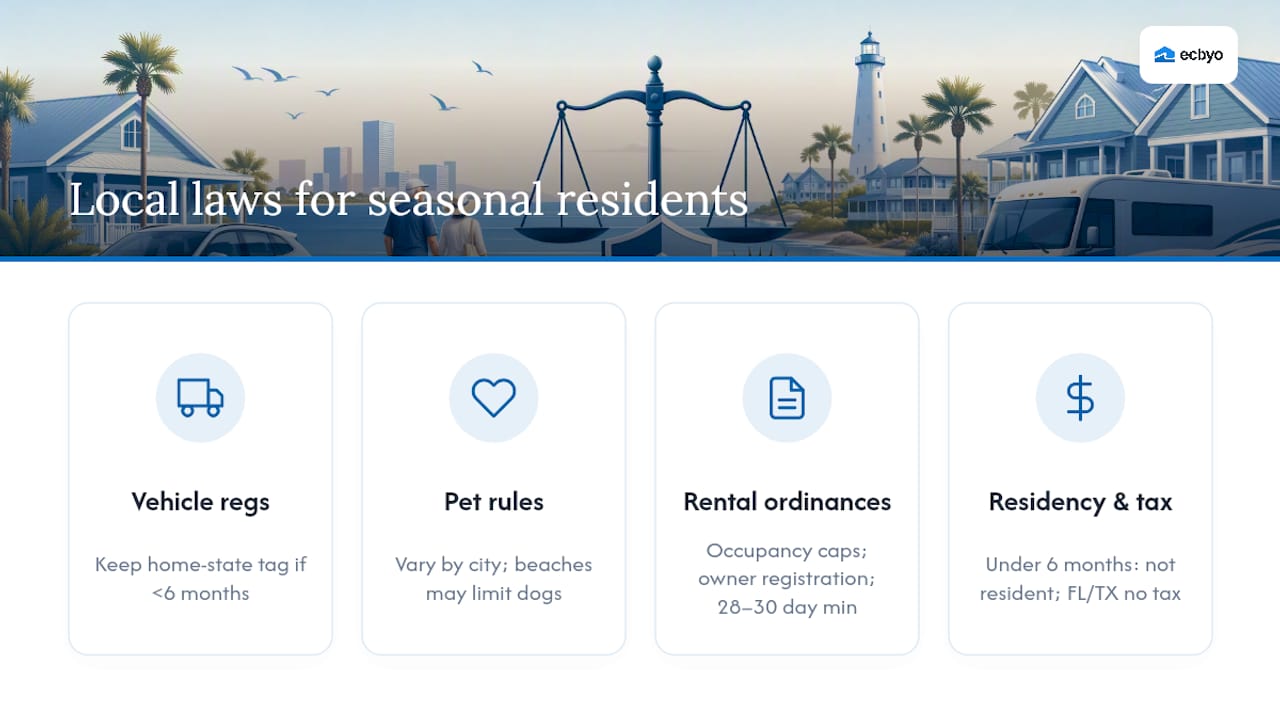
Rules that never crossed your mind at home can trip up a seasonal stay on the Gulf Coast. Vehicle registration is one of the first: seasonal residents generally keep their vehicle registered in their home state, since Gulf Coast states don’t require snowbirds staying under six months to re-register, but always confirm the specific rule with your rental state’s motor vehicle department if your stay runs long.
Pet regulations vary by city and county, not just by property. Some beach communities restrict dogs on public beaches entirely or limit access to certain hours, and leash laws are enforced more strictly in tourist-heavy zones than you might expect. Short-term rental ordinances also affect you directly: many coastal cities cap how many unrelated adults can occupy a rental or require owners to register with the city, which is part of why so many properties set that 28 to 30-day minimum stay.
Residency requirements matter mainly for tax purposes. Staying under six months a year in a Gulf Coast state generally does not establish residency, but if you’re weighing a permanent move, Florida and Texas offer no state income tax, a detail that shapes plenty of snowbird decisions over time. Always confirm current local ordinances directly with the county clerk’s office, since rules shift year to year and vary by municipality even within the same state.
How Do You Manage Gulf Coast Heat and Humidity Beyond Hurricane Season?
Hurricane season gets most of the attention, but humidity is the daily challenge that catches new snowbirds off guard. Gulf Coast winters run mild, but shoulder-season months, October, and again in April, can swing hot and sticky fast, especially inland from the immediate coastline.
Run your air conditioning consistently rather than switching it off when you step out, since Gulf Coast humidity left unchecked for even a few days can invite mildew and musty odors into a closed-up rental. Check your rental’s dehumidifier situation before you sign a lease. Some owners include one, others expect you to bring or buy your own for a longer stay.
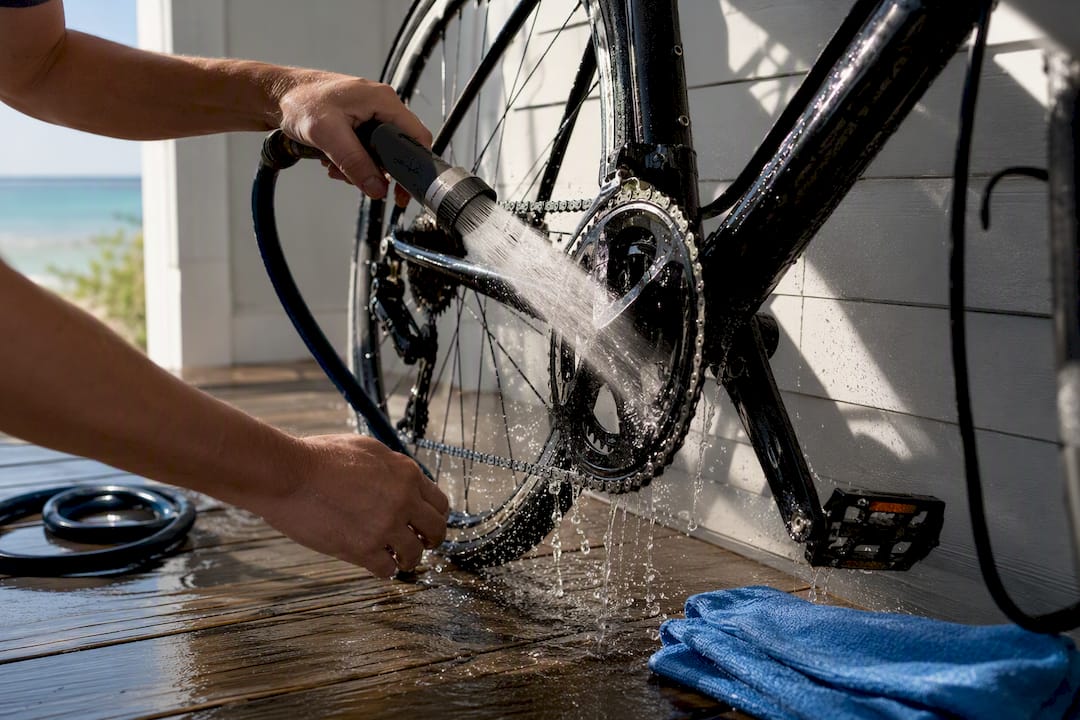
Salt air accelerates corrosion on vehicles, bikes, and outdoor furniture faster than most snowbirds expect coming from drier climates. Rinse bikes and beach gear with fresh water regularly, and keep an eye on any exposed metal fixtures. Sun exposure also runs stronger near open water than most people anticipate, even on overcast days, so reef-safe sunscreen and shaded outdoor seating are worth prioritizing when you’re comparing properties, not just amenities like pools or proximity to sand.
How Does the Gulf Coast Compare on Cost of Living?
Cost of living swings noticeably across Gulf Coast subregions, and that gap often matters more to a season-length budget than the difference in weather. Florida’s Gulf Coast, especially the stretch from Destin through 30A, runs higher on housing costs than comparable towns in Alabama, Mississippi, or the Louisiana coast, largely because tourism demand pushes up both purchase prices and monthly rental rates.
Grocery and dining costs track fairly close to national averages across most Gulf Coast towns, though beachfront tourist zones charge a premium at restaurants during peak season. Alabama and Mississippi coastal towns tend to offer the most budget-friendly combination of lodging and daily expenses, which is part of why budget-conscious snowbirds increasingly look past Florida toward those states for comparable winter weather at a lower monthly cost.
Building your comparison spreadsheet across two or three towns, rather than judging cost from a single property listing, gives you a much clearer read on where your money actually goes each month.
How Do You Keep Your Primary Residence in Order While You’re Away?
Leaving a home empty for months at a time creates its own set of risks, from burst pipes to a break-in nobody notices for weeks. Arrange for a trusted neighbor, family member, or paid house-sitting service to check your property every week or two, not just once a month.
Set your thermostat to a moderate temperature rather than turning off heating entirely, since a home left too cold in northern climates risks frozen pipes. Unplug non-essential electronics, and consider a smart water sensor near your water heater and washing machine, which can alert you by phone the moment a leak starts rather than after months of damage.
Notify your homeowner’s insurance carrier that the home will sit vacant for an extended period. Some policies require this disclosure, and skipping it can jeopardize a claim later. Hold your mail through the postal service or forward it to your seasonal address, and set timers on a few interior lights to make the home look occupied. A rental agreement checklist built for vacation properties offers a useful template for thinking through the fine print you should also apply to protecting your own home while you’re gone.
What Local Services Help Snowbirds Settle In?
A handful of practical services make the difference between a smooth seasonal transition and a monthlong scramble. Mail forwarding through the U.S. Postal Service handles most snowbirds’ needs, but many Gulf Coast towns also have private mailbox services that accept packages when you’re not home to sign for a delivery, which matters more than it sounds once online orders start arriving.
Package handling becomes a bigger issue at condos and gated communities, where front desks or leasing offices often hold deliveries for residents. Ask about this policy before you book, especially if you order groceries or prescriptions online regularly.
Seasonal vehicle storage matters for snowbirds who leave a second car, boat, or golf cart behind at their northern home, or who want to store a car locally rather than drive it back north each spring. Several Gulf Coast towns have storage facilities that cater specifically to seasonal residents, some offering climate-controlled units for anything sensitive to humidity swings. Ask locals or check with your rental owner directly. Owners who host repeat seasonal guests often know exactly which storage lots, mailbox services, and handyman contacts work best in their specific neighborhood.
What Emerald Coast By Owner Sees Every Season
Owners on Emeraldcoastbyowner consistently favor guests who reach out early and ask specific questions about utilities and monthly billing, not just availability. The two biggest snowbird mistakes we see repeat every year: waiting until October to book December, and skipping the local Facebook group or club check that would’ve told them the town’s social pace didn’t match what they wanted.
— Joe
Book Your Gulf Coast Season Directly With the Owner
Emeraldcoastbyowner is the direct-booking alternative to fee-heavy rental platforms for snowbirds planning a Gulf Coast season. Because ECBYO connects you straight with the property owner, you avoid traveler service fees and get real answers about monthly billing, pet policies, and minimum stays before you ever send a deposit.
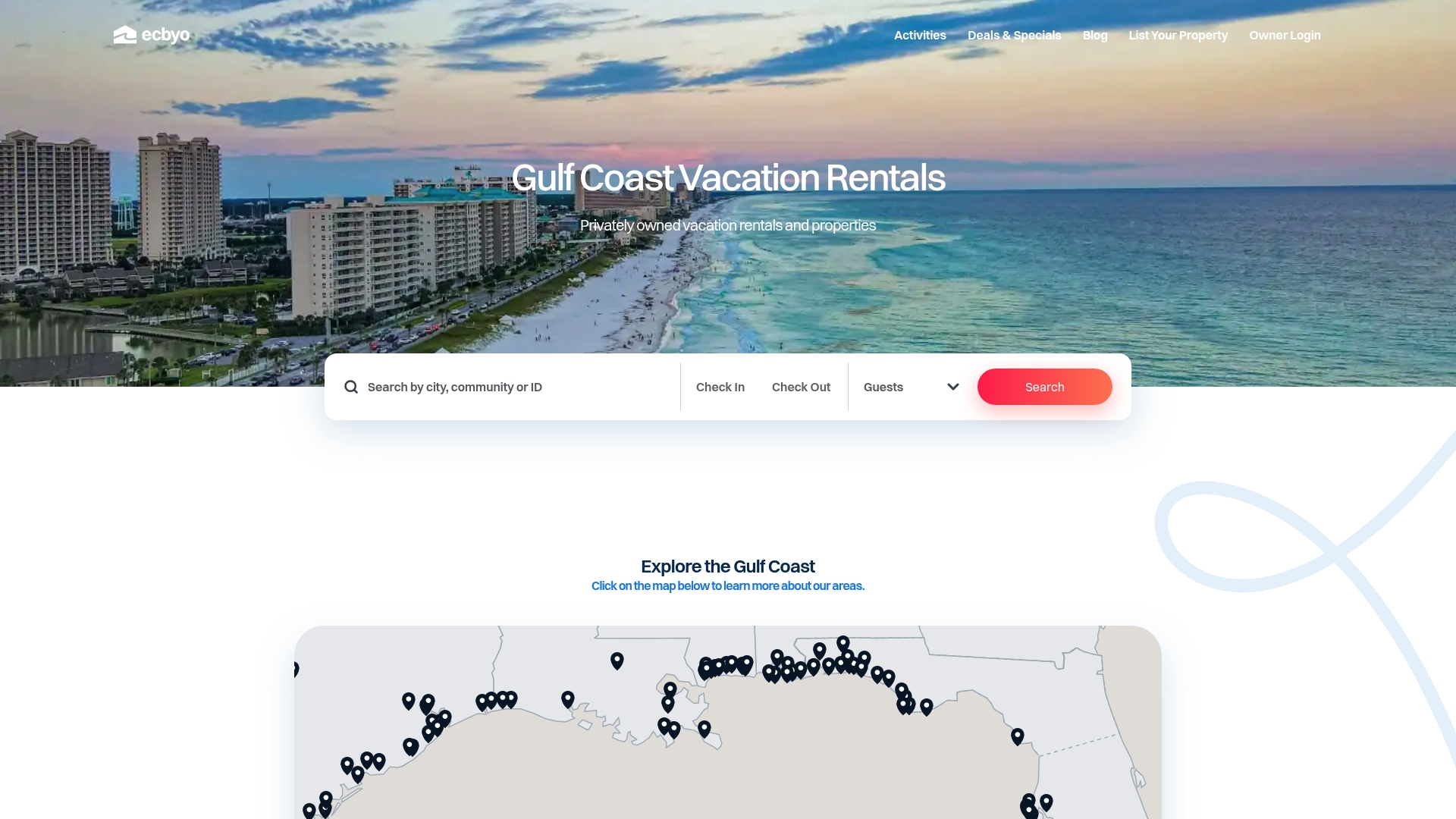
Search filters let you narrow results by month-long availability, pet-friendly properties, and location across the entire Gulf Coast footprint. If you already know your subregion, jump straight to the Florida Gulf Coast listings for the Panhandle’s beach towns, Alabama’s coastal rentals for a quieter, lower-cost option, or Texas Gulf Coast properties if you’re migrating from the western states. Property owners looking to reach seasonal guests directly can list through the ECBYO subscription for $499 per year. Start your search now and message an owner directly about their monthly rate before the 6 to 9-month booking window closes on your top choice.
Sources
- Walton County snowbirds find community, winter escape — WJHG/WECP
- The Snowbird RV Guide: Wintering the Gulf Coast Route — RJourney
- Florida snowbird RV 2026-2027 — PickRV
- Southern migration planning guide — LearnToRV
FAQ
How far ahead should I book a Gulf Coast winter rental?
Book 6 to 9 months ahead for the best selection across most of the Gulf Coast. Popular Florida Gulf Coast towns often need 9 to 12 months of lead time for peak winter months, while Alabama, Mississippi, and Louisiana generally allow more flexibility.
What’s the difference between an RV park and a monthly rental?
An RV park charges a site fee for hookups and community amenities, geared toward travelers with their own coach or trailer. A monthly rental is a full house, condo, or cottage rented directly from an owner, offering more privacy and typically requiring a minimum stay of 28 to 30 days.
Does Emerald Coast By Owner charge traveler fees?
No. Emeraldcoastbyowner connects guests directly with Gulf Coast property owners with no traveler booking or service fees, which can meaningfully lower the total cost of a month-long or season-long stay.
When does Gulf Coast snowbird season typically run?
Florida’s snowbird season commonly runs from November 1 through April 30, and most other Gulf Coast states follow a similar window based on winter weather patterns up north.
Do I need to re-register my vehicle as a seasonal resident?
Generally no, if your stay runs under six months, most Gulf Coast states do not require seasonal residents to re-register a vehicle from their home state. Always confirm the exact threshold with the state’s motor vehicle department before you travel, since rules can shift.
Recommended
- Winter Rentals in Florida for Snowbirds: 2026 Guide
- Book 6 to 12 Months Ahead for Group Beach Rentals: Reunion Checklist
- Southwest Florida Vacation Rentals: Book Direct, Save on Fees
- Skip Booking Fees: Where U.S. Travelers Stay on Anna Maria Island

About the Author
Joe Godar of the Emerald Coast by Owner Editorial Team creates destination guides, vacation-planning resources, and local travel content focused exclusively on Gulf Coast vacation rentals.
Our team researches beach communities, vacation rental trends, family travel planning, local attractions, and direct-booking best practices across Florida, Alabama, Mississippi, Louisiana, and Texas. Every guide is written to help travelers make more informed booking decisions while avoiding unnecessary third-party guest service fees.
Since launching in 2016, Emerald Coast by Owner has helped connect travelers directly with verified vacation rental hosts across the Gulf Coast.
This article was reviewed for accuracy and updated using local destination research and current vacation rental market insights.


