


The quietest beaches in the Florida Panhandle are found at protected state parks and low-density coastal communities: Dr. Julian G. Bruce St. George Island State Park, T.H. Stone Memorial St. Joseph Peninsula State Park near Cape San Blas, Alligator Point, and Old Carrabelle Beach. These spots stay peaceful because undeveloped shoreline, state park protections, and small local populations keep crowds away. Below, we break down what makes each one special and how to plan a visit.
TL;DR:
- St. George Island State Park has about nine miles of undeveloped shoreline, but many access points lack lifeguards, so check conditions before swimming.
- Alligator Point has about eight miles of low density shoreline and few nearby stores or restaurants, so bring food, water, and sun protection.
- Visit on a weekday in spring or fall and arrive before 9 a.m.; sunny weekend parking lots fill quickly, especially at state parks.
- Accessible features vary by entrance, and storms can shift beach terrain; call the state park visitor center to confirm ramps, routes, restrooms, and beach wheelchairs.
- Check the flag at your specific access: green signals calm conditions, yellow moderate surf or currents, red high hazard, and purple dangerous marine life.
Table of Contents
- 1. Top quiet beaches in the Florida Panhandle
- 2. What to expect and staying safe on secluded beaches
- 3. Planning tips: best times, parking and how to avoid crowds
- 4. How booking direct with a Gulf Coast owner makes it easier to stay near quiet beaches
- 5. Accessibility options and facilities for people with disabilities at quiet beaches
- 6. Nearby dining, lodging, and other amenities for visitors
- 7. Activities available at quiet beaches beyond swimming
- 8. How to maintain beach quietness and etiquette tips for visitors seeking tranquility
- 9. A personal pick and one last tip
- 10. Find and book quiet Panhandle rentals on Emerald Coast By Owner
- FAQ
- Sources
1. Top quiet beaches in the Florida Panhandle
Each of these destinations earns its reputation for solitude in a different way, from protected acreage to sheer geographic isolation.
Dr. Julian G. Bruce St. George Island State Park offers about nine miles of largely undeveloped Gulf shoreline across roughly 1,962 acres, with four miles along the main park drive and five more in a special-use area set aside for primitive camping and extended seclusion, according to Friends of Florida State Parks. Many beach accesses here have no lifeguard on duty, which suits the long walkers, shell collectors, and stargazers who come for quiet rather than crowds.
T.H. Stone Memorial St. Joseph Peninsula State Park, home to the Cape San Blas beaches, stretches across roughly 10 miles of white sand backed by some of the tallest dunes in Florida, according to Florida State Parks. Development on the peninsula stays minimal, so sunsets here feel private even in peak season.
Alligator Point runs about eight miles of narrow, low-density beach with very limited commercial development, as noted by Mycarrabelle. There are few stores or restaurants nearby, so visitors should bring their own food, water, and sun protection.

Old Carrabelle Beach sits apart from the more amenity-rich public parks in downtown Carrabelle, offering sheltered, calmer water and a quieter stretch of sand. Carrabelle itself includes several public beach parks spaced about a half-mile apart, giving visitors a choice between a fuller-service beach day and a more secluded one just a short drive away.
Beyond these four, the broader Forgotten Coast region holds smaller, lesser-known accesses worth a look if your top picks feel busier than expected:
- Grayton Beach State Park, part of a roughly 2,227-acre preserve with coastal dune lakes, per Florida DEP’s coastal segment report.
- Topsail Hill Preserve State Park, known for extensive dunes and protected habitat that limit development along the shore.
- Smaller, unmarked accesses along County Road 30A and the Apalachicola Bay side of St. George Island, which see far less traffic than the main park entrance.
2. What to expect and staying safe on secluded beaches
Quiet beaches often mean fewer services, so a little preparation goes a long way. Florida’s statewide beach warning flag program uses four colors to communicate conditions at public beaches: green for calm and safe, yellow for moderate surf or currents, red for high hazard, and purple for dangerous marine life such as jellyfish. Because many secluded Panhandle beaches have no lifeguard on duty, checking the posted flag at your specific access point matters even more than it would at a resort beach with staff watching the water.
Pro Tip: Download a tide chart before you go. Calm mornings at undeveloped beaches can turn choppy by afternoon, and there’s often no one posted to warn you.
A few habits keep a visit both safe and respectful of the coastline:
- Swim near other people when possible, since help can be farther away on an undeveloped stretch.
- Stay off dunes and marked nesting areas, which protect fragile vegetation and wildlife.
- Avoid shining lights toward the beach at night during sea turtle nesting season, which runs May through October along the Panhandle.
Shorebirds and sea turtles nest heavily on these same undeveloped stretches, which is part of why the shoreline has stayed wild enough to feel quiet in the first place.
3. Planning tips: best times, parking and how to avoid crowds
Timing your visit matters almost as much as choosing the right beach. Here’s how to stack the odds in your favor:
- Visit on a weekday in spring or fall, when school schedules and holiday travel thin out even the popular access points.
- Arrive before 9 a.m., especially at state parks, since afternoon parking lots fill fast on sunny weekends.
- Check for park alerts or entrance fees ahead of time, and use Reserve Florida if your trip includes camping or a paid access area.
- Choose a lesser-known access point over the main entrance when a park has multiple, since foot traffic concentrates near the biggest parking lot.
- Pack for a beach with no facilities: shade, water, trash bags, a basic first-aid kit, and a written note of emergency contacts in case cell service is spotty.
Pro Tip: If a park website lists multiple entrances, the one farthest from the main highway is almost always the quietest.
4. How booking direct with a Gulf Coast owner makes it easier to stay near quiet beaches
Staying close to a quiet beach often matters more than the beach itself. Travelers booking rentals directly from Gulf Coast property owners avoid traveler booking or service fees, and direct communication with owners allows asking questions that matter: how far the walk to the sand really is, whether the access point sees much foot traffic, and where to park once you arrive.
A few ways this helps when you’re targeting a quiet stretch of coast: For more options and insights, check out strandvakanties vergelijken to find and compare beach vacations that suit your preferences.
- Search listings near St. George Island or Cape San Blas for homes with private beach access or fewer neighboring units.
- Browse the Forgotten Coast region for rentals near Alligator Point and Carrabelle, where density is already low.
- Message the owner directly about on-site parking and the nearest uncrowded access, details that rarely show up in a standard listing description.
Our guide to St. George Island rentals walks through what to look for if you’re new to booking direct in this part of the Panhandle.
5. Accessibility options and facilities for people with disabilities at quiet beaches
Several quiet Panhandle beaches offer accommodations for visitors with mobility needs, though facilities vary widely since these are largely undeveloped stretches rather than resort beaches. Cape San Blas includes some beach accesses with ADA accommodations alongside a mix of accesses that remain more rustic, according to Visit Florida. Travelers who need accessible parking, ramps, or beach matting should confirm which specific access point offers those features before planning a visit, since one park entrance may differ significantly from another a few miles down the road.

State parks generally provide more consistent accessibility than unmarked local accesses. Visitor centers at St. George Island and St. Joseph Peninsula state parks can confirm current accessible routes, restroom facilities, and any beach wheelchairs available for loan. Calling ahead or checking the park’s own page before a trip is the most reliable way to avoid an unpleasant surprise, since beach terrain can shift after storms and accessible mats are not always in place year round.
For travelers planning a longer stay, renting a home with a ground-level entry and a short, level path to the beach often solves accessibility concerns that the public park facilities cannot. Asking a property owner directly about the terrain between the house and the sand is one of the simplest ways to confirm a stay will work before booking.
6. Nearby dining, lodging, and other amenities for visitors
Quiet beaches don’t mean isolated trips. Small towns near each of these destinations offer enough dining and lodging to support a comfortable stay without the density of a resort strip. Apalachicola, a short drive from both St. George Island and the Cape San Blas area, has a walkable downtown with local seafood restaurants, bakeries, and shops built around its fishing-village history. Carrabelle offers a smaller but genuine set of local restaurants and a marina area worth a stop before or after a beach day.
Port St. Joe serves as the main hub for the Cape San Blas area, with grocery stores, casual restaurants, and services that make a longer stay practical even though the beaches themselves stay undeveloped. Alligator Point has the least in the way of amenities among these destinations, so most visitors base themselves in Carrabelle or nearby St. Teresa and drive the short distance out to the point for the day.
For lodging, vacation homes and cottages tend to outnumber hotels in these smaller communities, which fits the quiet, low-density character of the area. Many properties sit within walking distance of a beach access, letting visitors skip a daily parking search entirely.
7. Activities available at quiet beaches beyond swimming
Swimming is only part of what draws people to these shores. The calm, sheltered waters around St. George Sound and Carrabelle make for easy kayaking and paddleboarding, especially for visitors who prefer flat water over Gulf-side surf. Fishing is a major draw across the Forgotten Coast, with both surf fishing directly from the beach and boat access to nearby bays and inlets for redfish, trout, and flounder.

St. Joseph Peninsula State Park includes hiking trails through its dune and scrub habitat, giving visitors a way to explore beyond the sand and often spot wildlife along the way. Birding is especially rewarding at St. George Island and St. Joseph Peninsula, both known as productive nesting and migration stops for shorebirds, according to Florida State Parks. Shelling is another quiet-beach staple, with the undeveloped stretches at St. George Island and Cape San Blas producing better finds than more heavily walked beaches simply because fewer people have passed through before you.
8. How to maintain beach quietness and etiquette tips for visitors seeking tranquility
The same qualities that make these beaches peaceful can disappear quickly if visitors don’t treat them with care. Keeping noise low, especially near dawn and dusk when wildlife is most active, helps preserve the calm that drew you there in the first place. Packing out all trash, including cigarette butts and food wrappers, matters even more on undeveloped beaches where no staff does a daily cleanup sweep.
Staying off dune vegetation protects the natural barrier that keeps these beaches from eroding and developing in the first place. Giving nesting shorebirds and sea turtle nests a wide berth, and never approaching marked nesting areas, keeps the habitat intact for future visitors as well as the wildlife itself. Choosing a smaller rental over a large group house, and spacing out beach chairs rather than clustering near one access point, both help spread visitor impact more evenly across a stretch of coast.
A simple rule covers most of it: leave each beach a little quieter and cleaner than you found it, and the next visitor gets the same peaceful experience you did.
9. A personal pick and one last tip
If pressed to choose one beach, we’d point to the special-use area of St. George Island State Park, where the walk-in access thins the crowd down to almost nobody on a weekday morning. Our one insider tip: book a weekday stay and get to the sand before 9 a.m., before the day’s heat and the day’s visitors both arrive.
— Tayler
10. Find and book quiet Panhandle rentals on Emerald Coast By Owner
Finding a home near these quiet stretches works best when you can talk directly to the person who owns it. Travelers can connect directly with Gulf Coast property owners without traveler booking or service fees added on top of the rental, so the price seen reflects what the owner charges.
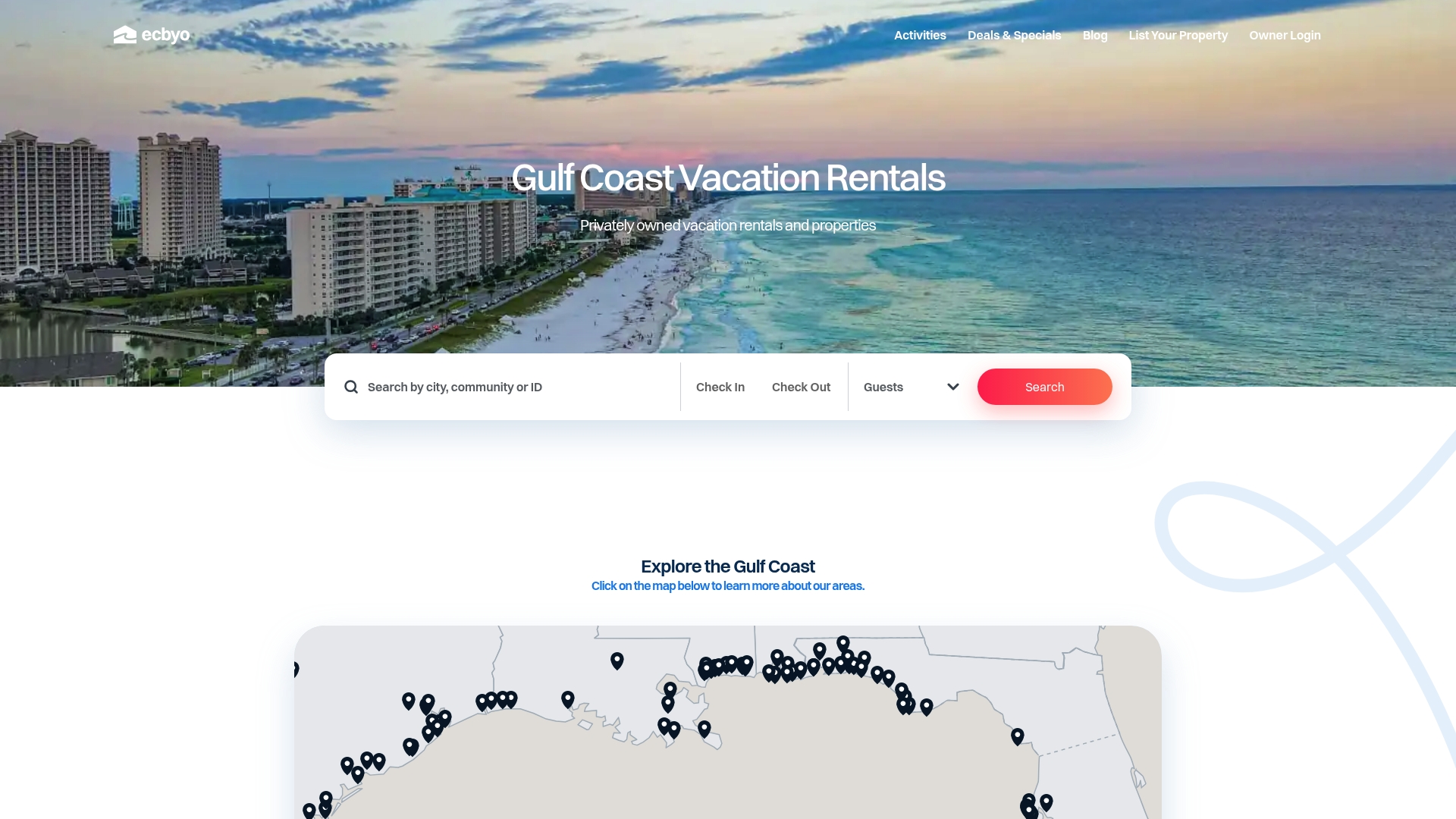
A few starting points if you’re ready to look:
- Browse Florida Vacation Rentals for listings across the Panhandle and beyond.
- Check St. George Island rentals or Cape San Blas rentals for homes near the state parks covered above.
- Explore the Forgotten Coast region for properties near Alligator Point and Carrabelle.
Our guide on cost, amenities, and pet-friendly options can help narrow down a property that fits your trip. Start your search on Emerald Coast By Owner and message an owner directly about the quiet beach you have in mind.
FAQ
What is the #1 beach in Florida?
Rankings vary by year and source, so there is no single agreed-upon answer. T.H. Stone Memorial St. Joseph Peninsula State Park has previously been ranked the top beach in the country by Dr. Beach, and it remains one of the most highly regarded beaches in the Florida Panhandle today, according to Florida State Parks.
What are some quiet beaches on the Florida Gulf Coast?
Dr. Julian G. Bruce St. George Island State Park, T.H. Stone Memorial St. Joseph Peninsula State Park near Cape San Blas, Alligator Point, and Old Carrabelle Beach all offer undeveloped or low-density shoreline. These spots tend to stay quieter than resort-lined beaches because of state park protections or small local populations.
Where is the clearest water on the Florida Panhandle?
Sheltered areas like St. George Sound near Carrabelle and the bay side of St. George Island tend to have calmer, clearer water than open Gulf beaches with more surf. The Panhandle’s fine quartz sand also helps keep shallow water looking bright and clear along much of the coast.
What are the top five prettiest beaches in Florida?
Preferences vary, but the Panhandle beaches most often praised for their scenery include St. George Island, Cape San Blas, Grayton Beach, Topsail Hill, and the beaches of St. Joseph Peninsula. Each combines white quartz sand with either tall dunes or protected coastal dune lakes.
Do I need a reservation to visit these state parks?
Day visits generally do not require a reservation, but camping or certain special-use areas may need one booked in advance through the park system. Checking the specific park’s page before you go is the simplest way to confirm current requirements.
Sources
- Beaches at St. Joseph | Florida State Parks
- Dr. Julian G. Bruce St. George Island State Park — Friends of Florida State Parks
- Beach warning flag program — Florida Department of Environmental Protection
- Beach guide: Cape San Blas — Visit Florida
Recommended
- Florida Panhandle Vacation Rentals by Owner: Cost, Amenities & Pet-Friendly Options
- Panama City Beach: Pick Neighborhoods, Book Direct, Check Certificate
- 8 Destin Beach Accesses: Parking, Henderson Reservation, Best Rentals
- What Is the Florida Panhandle Known For: Travel Guide

About the Author
Tayler Jaeger of the Emerald Coast by Owner Editorial Team creates destination guides, vacation-planning resources, and local travel content focused exclusively on Gulf Coast vacation rentals.
Our team researches beach communities, vacation rental trends, family travel planning, local attractions, and direct-booking best practices across Florida, Alabama, Mississippi, Louisiana, and Texas. Every guide is written to help travelers make more informed booking decisions while avoiding unnecessary third-party guest service fees.
Since launching in 2016, Emerald Coast by Owner has helped connect travelers directly with verified vacation rental hosts across the Gulf Coast.
This article was reviewed for accuracy and updated using local destination research and current vacation rental market insights.


