


TL;DR: Pensacola Beach
Pensacola Beach combines sugar-white sand, emerald Gulf water, family-friendly attractions, outdoor recreation, and historic sites on Santa Rosa Island. Plan 4–7 nights to explore the beach, Pensacola Beach Boardwalk, fishing pier, Fort Pickens, Gulf Islands National Seashore, water sports, and local dining. Families may prefer quieter areas near Quietwater Beach and Fort Pickens, while travelers seeking restaurants and nightlife should stay near Casino Beach and the Boardwalk. Spring and fall offer a strong balance of weather, value, and smaller crowds. Booking a vacation rental directly can provide more space, full kitchens, direct host communication, and no traveler service fees.
Pensacola Beach sits on Santa Rosa Island, a narrow barrier island off Florida’s northwest coast, where the sand is genuinely sugar-white and the Gulf water runs a clear emerald green. This is one of the best beaches in Pensacola’s broader coastal stretch, and it rewards visitors who plan ahead and respect the island’s firm rules. The single most important thing to know before you arrive: no glass containers, no open fires, and everything you bring to the sand must leave with you by sunset.
At a glance:
- Best for: Families, beach lovers, history and nature seekers (Fort Pickens, Gulf Islands National Seashore)
- Closest airport: Pensacola International Airport (PNS), roughly 10 miles from the beach
- Non-negotiable rules: No glass, no open flames, tents under 10’ x 12’ only, remove all personal items by sunset
- Recommended stay: 4–7 nights to cover the beach, Fort Pickens, and the Boardwalk without rushing
- Best booking approach: Direct vacation rental listings save traveler fees and give you direct owner contact
For most trip types, a beachfront vacation rental booked directly through a marketplace like Emeraldcoastbyowner beats a hotel on both space and value, especially for families or groups.
Table of Contents
- What makes Pensacola Beach worth understanding before you go
- Top things to do on Pensacola Beach
- Where to stay: neighborhoods, lodging types, and how to book
- How to get to Pensacola Beach and move around the island
- Beach laws, safety rules, and conservation you must follow
- When to visit: seasons, weather, and crowd trade-offs
- Budget expectations, trip length, and practical tips
- Major events and when to time your visit
- Dining and nightlife on Pensacola Beach
- Local shopping and souvenir spots
- History and cultural significance of Pensacola Beach
- Key Takeaways
- Why direct vacation rentals work better here than most people expect
- Pensacola Beach vacation rentals, booked direct
- Useful sources and official contacts
- FAQ
What makes Pensacola Beach worth understanding before you go
Pensacola Beach occupies a thin strip of Santa Rosa Island, roughly 8 miles long, connected to the mainland by the Bob Sikes Bridge. The island has two distinct personalities depending on which end you choose.
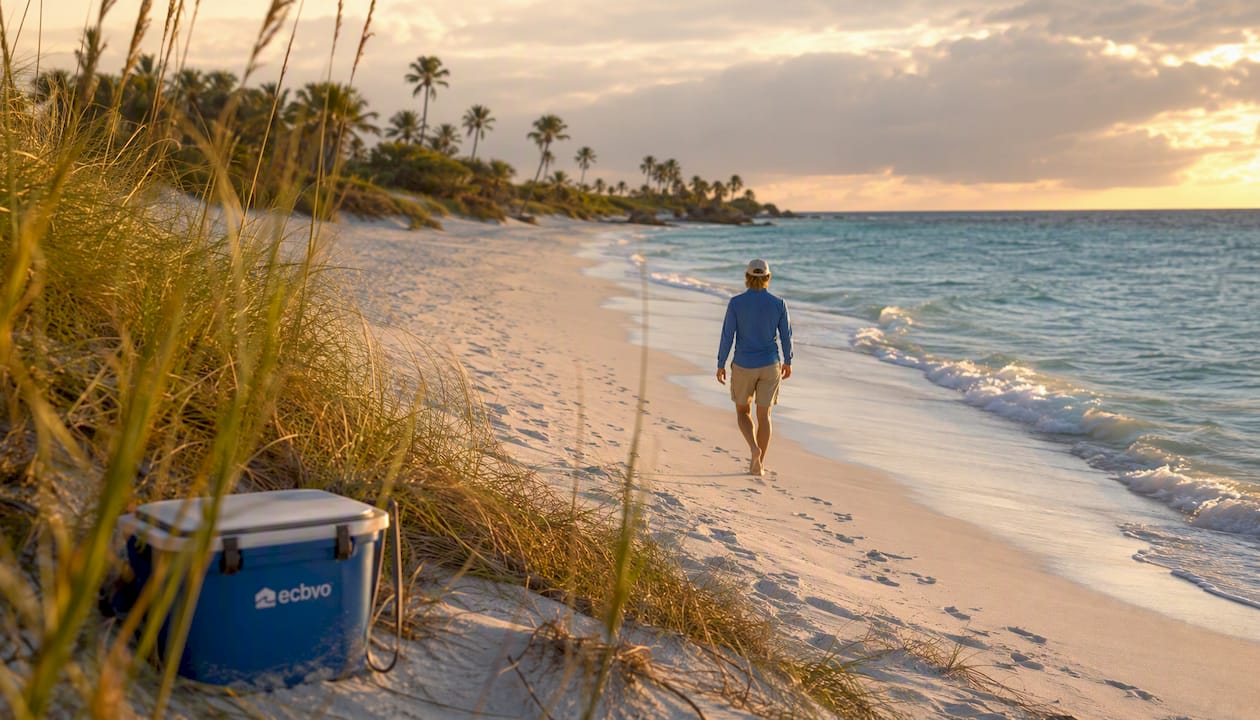
Casino Beach is the central hub. The Pensacola Beach Boardwalk runs along its edge, lined with restaurants, bars, and a stage that hosts live concerts through the summer. The Pensacola Beach Pier extends 1,471 feet into the Gulf here, making it one of the longest fishing piers on the Gulf Coast. This end of the island is lively, walkable, and social.
Quietwater Beach and the Fort Pickens area occupy the western stretch. The water is calmer on the Sound side at Quietwater, which makes it popular with families and paddlers. Drive further west and you enter Gulf Islands National Seashore, where Fort Pickens stands as a 19th-century brick fortification open for self-guided tours. The National Park Service manages this land, and the contrast with the Boardwalk end is striking: fewer crowds, more wildlife, and genuine solitude.
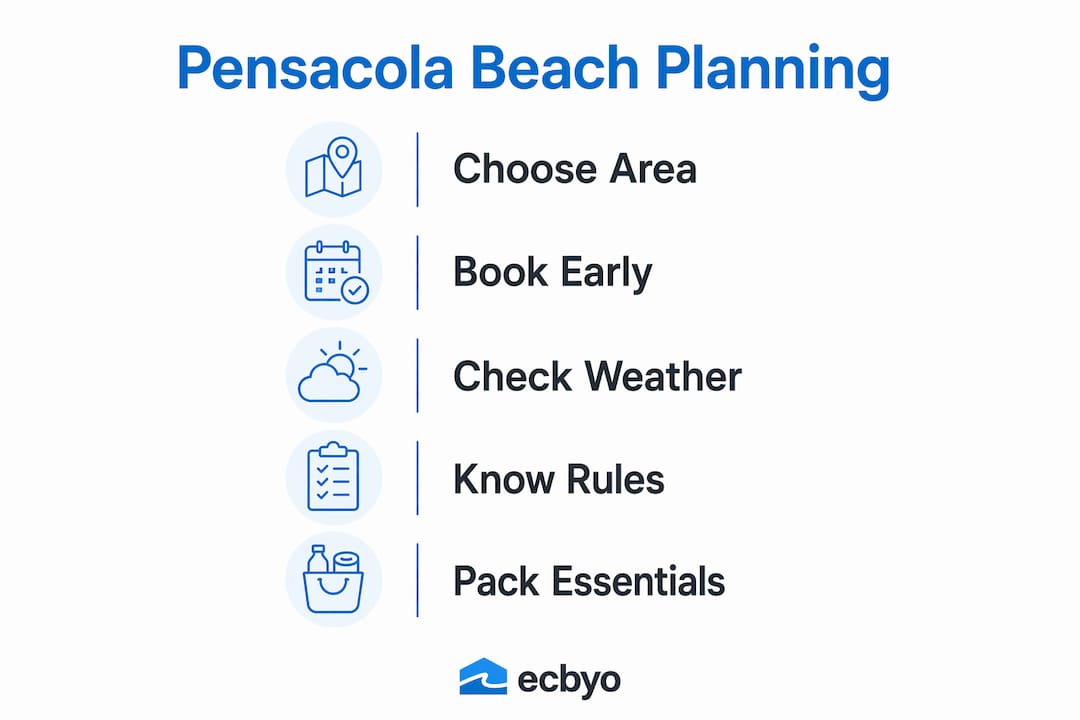
Parking lots are numbered along the island, which helps with orientation. Lot A sits near the Boardwalk; lots further west approach the national seashore. The Santa Rosa Island Authority (SRIA) manages the island and publishes a map on its site.
Pro Tip: Download the SRIA parking map before you leave home. Knowing which lot number corresponds to your rental or hotel saves real time on busy summer mornings.
Top things to do on Pensacola Beach
The island packs a surprising range of activities into a small footprint. Here are the top draws, ranked by how broadly they appeal:
- Pensacola Beach Pier — Fishing, crabbing, and sunset watching from one of the Gulf’s longest piers. Non-fishing visitors pay a small walk-on fee; no reservation needed.
- Pensacola Beach Boardwalk — Free to walk, with live music most summer evenings, waterfront dining, and easy people-watching. Check the event calendar before you arrive.
- Gulf Islands National Seashore / Fort Pickens — Hiking trails, birding, and a Civil War-era fort with interpretive exhibits managed by the National Park Service. Entry requires a National Parks pass or a per-vehicle fee.
- Water sports — Snorkeling, paddleboarding, kayaking, and jet ski rentals are available from multiple outfitters near Casino Beach. Gear rentals are typically walk-up, though charters book fast in July and August.
- Dolphin-watching and fishing charters — Half-day and full-day charters depart from Pensacola Beach Marina. Book at least a week ahead during peak season.
- Family beach play — The shallow, calm water near Quietwater Beach is ideal for young children. Play areas and restrooms are nearby.
- Evening dining and nightlife — The Boardwalk area concentrates most of the island’s restaurants and bars within easy walking distance.
For families exploring the Gulf Coast’s national parks, Fort Pickens is genuinely one of the most accessible and rewarding stops on the entire stretch.
Pro Tip: The Blue Angels, based at Naval Air Station Pensacola, practice over the bay on Tuesday and Wednesday mornings during their training season (typically March through November). Watch from the Pensacola Beach Boardwalk or the fishing pier for a free, unobstructed view. No base access is needed.
Where to stay: neighborhoods, lodging types, and how to book
Choosing the right area shapes the whole trip. The table below maps each zone to its strengths.
| Area | Best for | Noise level | Proximity to attractions | Typical lodging |
|---|---|---|---|---|
| Casino Beach / Boardwalk | Nightlife, dining, pier access | High (evenings) | Walking distance to pier and restaurants | Hotels, condos, short-term rentals |
| Quietwater / Fort Pickens | Families, nature, paddling | Low | 5–15 min drive to Boardwalk | Vacation rentals, small resorts |
| Portofino / condo zones | Couples, longer stays, luxury | Moderate | Mid-island, easy drive both ways | High-rise condos, vacation rentals |
| Gulf Breeze / mainland | Budget travelers, off-island base | Low | 10–15 min drive to beach | Hotels, vacation rentals |
Lodging types at a glance:
- Hotels and resorts near the Boardwalk offer pools, daily housekeeping, and on-site dining, but rooms are smaller and nightly rates climb fast in summer.
- Vacation rentals (condos and single-family homes) give families full kitchens, laundry, and private outdoor space. A condo sleeps 4–6 comfortably; a beach house can handle larger groups.
- Pet-friendly options exist but are limited. Filter specifically for pet-friendly listings when searching, and confirm the pet policy directly with the owner.
- RVs cannot park in standard public lots on the island. Designated RV spots exist at Fort Pickens and at a private Pensacola Beach RV Resort.
Pro Tip: Book 3–4 months ahead for summer stays and at least 6 months ahead for Blue Angels Air Show weekend. Shoulder-season travelers (October or April) can often find availability 4–6 weeks out.
Emeraldcoastbyowner lists Pensacola-area vacation rentals directly from property owners, which means no traveler service fees and the ability to ask the owner specific questions about the property before you commit. Travelers who prefer a quieter base can also browse Gulf Breeze rentals for mainland options with easy beach access.
How to get to Pensacola Beach and move around the island
Getting there:
- By air: Pensacola International Airport (PNS) is roughly 10 miles from the beach. Major carriers serve PNS with direct flights from Atlanta, Dallas, Houston, and Charlotte. Car rental desks are inside the terminal.
- By car: From I-10, take Exit 13 south on US-29 toward downtown Pensacola, then follow US-98 east to the Bob Sikes Bridge. The drive from the airport takes about 20–25 minutes outside peak hours.
- Rideshare: Uber and Lyft both operate in the Pensacola area and serve the beach, though surge pricing applies on busy event weekends.
Getting around once you’re there:
- Trolley service runs seasonally (an example published schedule ran May 27–September 2, 4 PM–midnight; check SRIA for the current year’s dates). It connects key stops along the island and is free or low-cost.
- Bikes and scooters are popular for mid-island travel. Drivers must give cyclists a minimum 3-foot clearance when passing, per Florida law.
- Parking is the biggest friction point for daytrippers. The SRIA survey found parking to be the top complaint among day visitors. Arrive before 9 AM on summer weekends or use the trolley from a mainland park-and-ride.
For practical parking strategies at crowded beach destinations, GorillaGuides’ parking tips offer useful general guidance that applies well here.
Beach laws, safety rules, and conservation you must follow
The SRIA and Escambia County enforce these rules actively. Ignorance is not a defense.
Legal rules on the sand:
- No glass containers of any kind on the beach
- No open fires, private grills, or open flames
- Tents smaller than 10’ x 12’ are allowed without a permit; larger structures require one
- All personal property (chairs, umbrellas, toys, tents) must be removed by sunset daily. Items left overnight are removed and disposed of by beach maintenance crews.
- Dogs are permitted only in two designated areas: Lot B (west end) and Lot E (east end), with seasonal hours and leash requirements. All other beach areas prohibit dogs except service animals.
Safety and the flag system:
The SRIA enforces a color-coded flag system at all lifeguard stands:
| Flag color | Meaning |
|---|---|
| Green | Low hazard, calm conditions |
| Yellow | Medium hazard, moderate surf or currents |
| Single red | High hazard, high surf or strong currents |
| Double red | Water closed to the public, no swimming or wading |
| Purple | Dangerous marine life present |
A double red flag means no swimming or wading, period. Anyone rescued from the Gulf must wait 24 hours before re-entering the water. That rule is enforced.
Conservation:
Santa Rosa Island’s dune systems and sea turtle nesting areas are protected. Stay off the dunes, do not disturb nesting markers, and follow the “Leave Only Your Footprints” standard. Violations can result in fines.
Pro Tip: Check the live flag status on the SRIA website or the Visit Pensacola social channels before heading to the beach each morning. Conditions can shift quickly, especially during afternoon storm season.
When to visit: seasons, weather, and crowd trade-offs
The shoulder seasons offer the best balance of warmth and manageable crowds.
| Season | Air Temp | Water Temp | Crowds | Notes |
|---|---|---|---|---|
| Mid-March–early May | 70–82°F | 65–76°F | Moderate | Spring break peaks in March; April is ideal |
| June–August | 88–91°F | 82–86°F | Very high | Daily afternoon thunderstorms; book far ahead |
| September–early October | 82–89°F | 79–85°F | Moderate | Hurricane season; warm water, fewer crowds |
| October–early December | 65–82°F | 64–79°F | Low | Best value; some businesses reduce hours |
| December–February | 61–66°F | 60–65°F | Very low | Too cool for most swimmers; good for birding and hiking |
Packing and weather notes:
- Summer highs regularly exceed 90°F. Reef-safe sunscreen, a wide-brim hat, and UV-protective clothing are non-negotiable.
- Afternoon thunderstorms are nearly daily from June through August. Plan water activities for mornings and move indoors by 2–3 PM.
- Hurricane season runs June 1 through November 30. Book travel insurance for any summer or fall trip and confirm your rental’s cancellation policy before paying.
- A lightweight rain layer and water shoes round out any packing list, regardless of season.
Budget expectations, trip length, and practical tips
What to pack:
- Reef-safe sunscreen (required at some snorkel sites)
- Shade equipment (tent under 10’ x 12’, or a beach umbrella)
- Water shoes for rocky areas near Fort Pickens
- Lightweight rain layer for afternoon storms
- Insect repellent for dusk hours near the dunes
Cost expectations:
- Vacation rental condos: Nightly rates vary widely by season and location; shoulder-season stays typically run lower than peak-summer rates. Booking direct through Emeraldcoastbyowner eliminates traveler service fees.
- Hotels near Pensacola Beach: Rates climb significantly in June–August. Staying in Gulf Breeze or on the mainland cuts lodging costs while adding a short drive.
- Parking: Public beach lots are free or low-cost, but fill fast. Overnight guests staying in rentals or hotels typically have designated parking included.
- Food: Casual beachside meals run $12–$20 per person; sit-down dinners at Boardwalk restaurants average $25–$45 per person. Cooking in a vacation rental kitchen cuts food costs substantially for longer stays.
Trip length recommendations:
- Daytrip — Feasible from Pensacola city or Gulf Breeze. Arrive early, park before 9 AM, and plan to leave by mid-afternoon to beat traffic.
- Long weekend (3–4 nights) — Enough time for the Boardwalk, the pier, and a half-day at Fort Pickens. Ideal for couples or small groups.
- 7-day family stay — Covers everything: Fort Pickens, dolphin charter, water sports, a Boardwalk evening, and still leaves beach days to spare.
Accessibility and pet rules:
Beach wheelchairs are available through the SRIA at no charge at select lifeguard stations. Boardwalk areas are paved and accessible. Dogs are welcome only at the two designated dog-park areas (Lot B and Lot E) during posted hours, on leash. For family travel planning tips that include accessibility considerations, GorillaGuides’ family travel resources offer practical guidance.
Pro Tip: Staying in a vacation rental with a full kitchen can cut your food budget by 30–40% on a week-long trip. Grocery stores are a short drive across the bridge in Gulf Breeze.
Major events and when to time your visit
| Event | Typical timing | Notes |
|---|---|---|
| Blue Angels Air Show | Late October (Homecoming) | Largest annual event; book lodging 6+ months ahead |
| Blue Angels practice flights | Tues/Wed, March–November | Free viewing from Boardwalk or pier |
| 4th of July fireworks | July 4 | Huge crowds; arrive very early or stay overnight |
| Boardwalk summer concerts | June–August (weekends) | Free or low-cost; check Visit Pensacola calendar |
| Seafood and cultural festivals | Spring and fall | Dates vary; check SRIA and Visit Pensacola sites |
Booking around events:
- The Blue Angels Homecoming Air Show in late October is the single biggest lodging crunch of the year. Properties within viewing distance of the bay sell out fast.
- 4th of July weekend rivals summer peak for crowds and parking pressure. If you’re visiting then, staying on the island overnight is far easier than driving in.
- Shoulder-season festivals (spring seafood events, fall cultural fairs) draw local crowds without the same lodging strain, making them a good reason to visit in April or October.
Where to watch the Blue Angels:
The best free public viewing spots are the Pensacola Beach Boardwalk and the fishing pier. Both offer unobstructed sightlines over the bay. No base access or tickets are required for practice sessions.
Dining and nightlife on Pensacola Beach
The Boardwalk area concentrates most of the island’s food and drink scene within a short walk. Waterfront seafood restaurants dominate, with grouper, shrimp, and Gulf oysters appearing on nearly every menu. Casual spots serve fish tacos and po’boys at lunch; the same strip shifts to a livelier bar scene after dark.
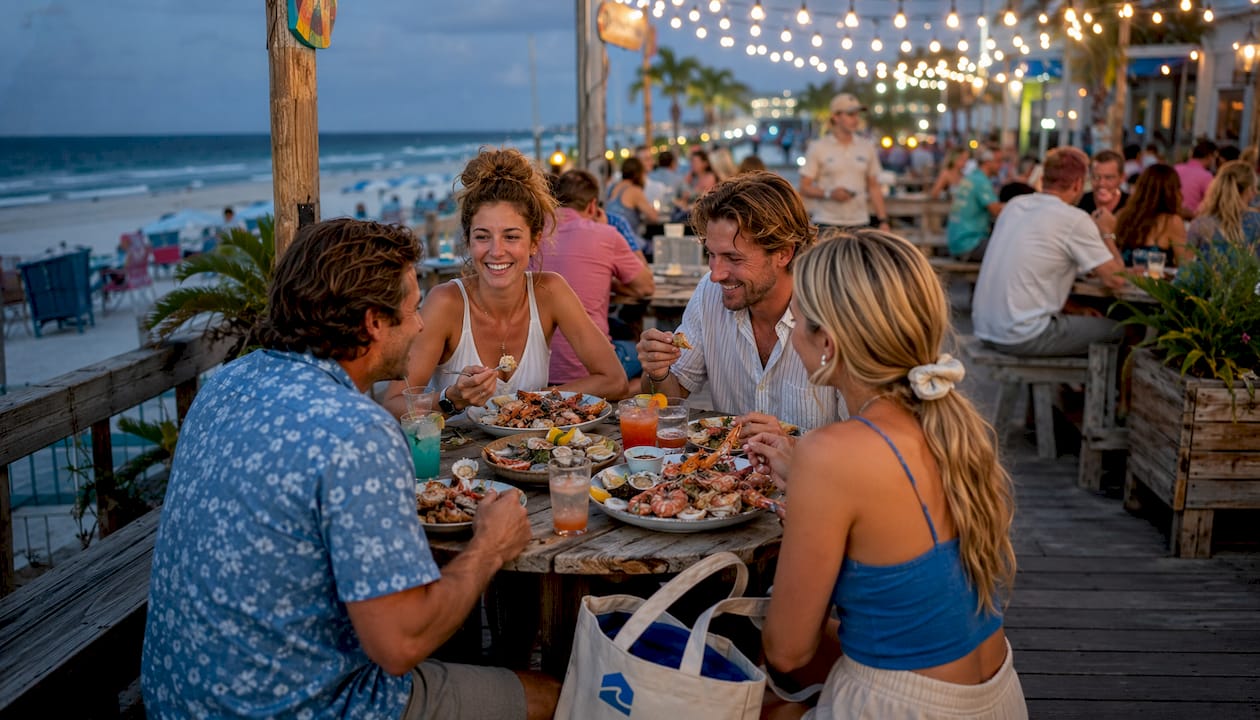
A few things worth knowing: the best tables at waterfront restaurants fill fast on summer evenings, so arriving before 6 PM or making a reservation pays off. Several spots offer happy hour specials in the late afternoon, which is also a good time to grab a seat on a deck before the dinner crowd arrives.
Beyond the Boardwalk, smaller local spots scattered along Via De Luna Drive offer a quieter alternative with shorter waits. The island’s dining scene skews casual and beach-friendly. You will not feel out of place in flip-flops at most restaurants.
Local shopping and souvenir spots
Shopping on Pensacola Beach is compact and beach-themed. The Boardwalk area has the highest concentration of souvenir shops, selling the expected mix of T-shirts, shell art, and Gulf Coast-branded goods. A few boutiques carry locally made jewelry and coastal home décor worth a look.
For more variety, the Pensacola city side of the bridge offers larger retail options, including specialty shops in the historic downtown district. The Palafox Street area in downtown Pensacola has a walkable strip of independent stores, galleries, and markets that reflect the city’s longer cultural history.
Back on the island, the best souvenir is often something practical: a quality beach hat, a reef-safe sunscreen brand you can’t find everywhere, or a locally caught seafood seasoning from one of the market stalls near the marina.
History and cultural significance of Pensacola Beach
Pensacola is one of the oldest European-settled cities in North America, and that history reaches the beach. Fort Pickens, built in the 1830s on the western tip of Santa Rosa Island, held Confederate prisoners during the Civil War, including the Apache leader Geronimo, who was held there in 1886. The National Park Service preserves the fort and its grounds as part of Gulf Islands National Seashore.
The beach itself has a layered past. Santa Rosa Island was used as a military installation for much of the 20th century before transitioning to civilian recreation. Naval Air Station Pensacola, established in 1914, remains active today and is the home base of the Blue Angels, the Navy’s flight demonstration squadron. Their presence over Pensacola Bay is not just a tourist draw; it reflects the city’s deep military identity.
The SRIA, created by the Florida Legislature, has managed the island’s public lands since 1947, balancing tourism, conservation, and residential use on a barrier island that remains geologically active and ecologically sensitive.
Key Takeaways
Pensacola Beach rewards travelers who plan ahead: book direct, arrive early, and respect the island’s firm rules to get the most out of every day on the sand.
| Point | Details |
|---|---|
| Best time to visit | Shoulder seasons (mid-March–early May, October–early December) offer warm weather with fewer crowds. |
| Non-negotiable rules | No glass, no open fires, tents under 10’ x 12’, and all personal items removed from the beach by sunset. |
| Getting there | Fly into Pensacola International Airport (PNS), then drive or rideshare roughly 10 miles to the island. |
| Recommended stay | A 4–7 night stay covers the Boardwalk, Fort Pickens, and water activities without feeling rushed. |
| Book direct with Emeraldcoastbyowner | Pensacola-area vacation rentals listed on Emeraldcoastbyowner carry no traveler service fees and allow direct owner contact. |
Why direct vacation rentals work better here than most people expect
The conventional wisdom says hotels are simpler. Book a room, show up, done. But Pensacola Beach is a place where that logic breaks down quickly, especially for families or groups staying more than two nights.
The island’s best experiences- cooking fresh Gulf seafood, spreading out after a long beach day, having a private porch to watch the sunset from, are all things a vacation rental delivers and a hotel room simply cannot. Add the fact that direct-book listings through Emeraldcoastbyowner carry no traveler service fees, and the math shifts further. Those fees on major booking platforms can add 10–15% to the total cost of a stay. On a week-long rental, that is real money.
There is also the owner-communication advantage. When you book direct, you can ask the owner exactly which parking lot the unit is closest to, whether the building has beach gear to borrow, or what the best nearby grocery run looks like. That kind of local knowledge does not come with a hotel confirmation email.
Emeraldcoastbyowner has been connecting Gulf Coast travelers with property owners since November 2016, growing from 350 listings to thousands of properties across Florida, Alabama, Mississippi, Louisiana, and Texas. The Pensacola-area inventory covers everything from Gulf-front condos near the Boardwalk to quieter homes near Fort Pickens, which means you can match the neighborhood to the trip rather than settling for whatever is left.
Pensacola Beach vacation rentals, booked direct
Skip the service fees. Emeraldcoastbyowner connects you directly with property owners across the Pensacola area, so you pay for the rental, not the middleman.
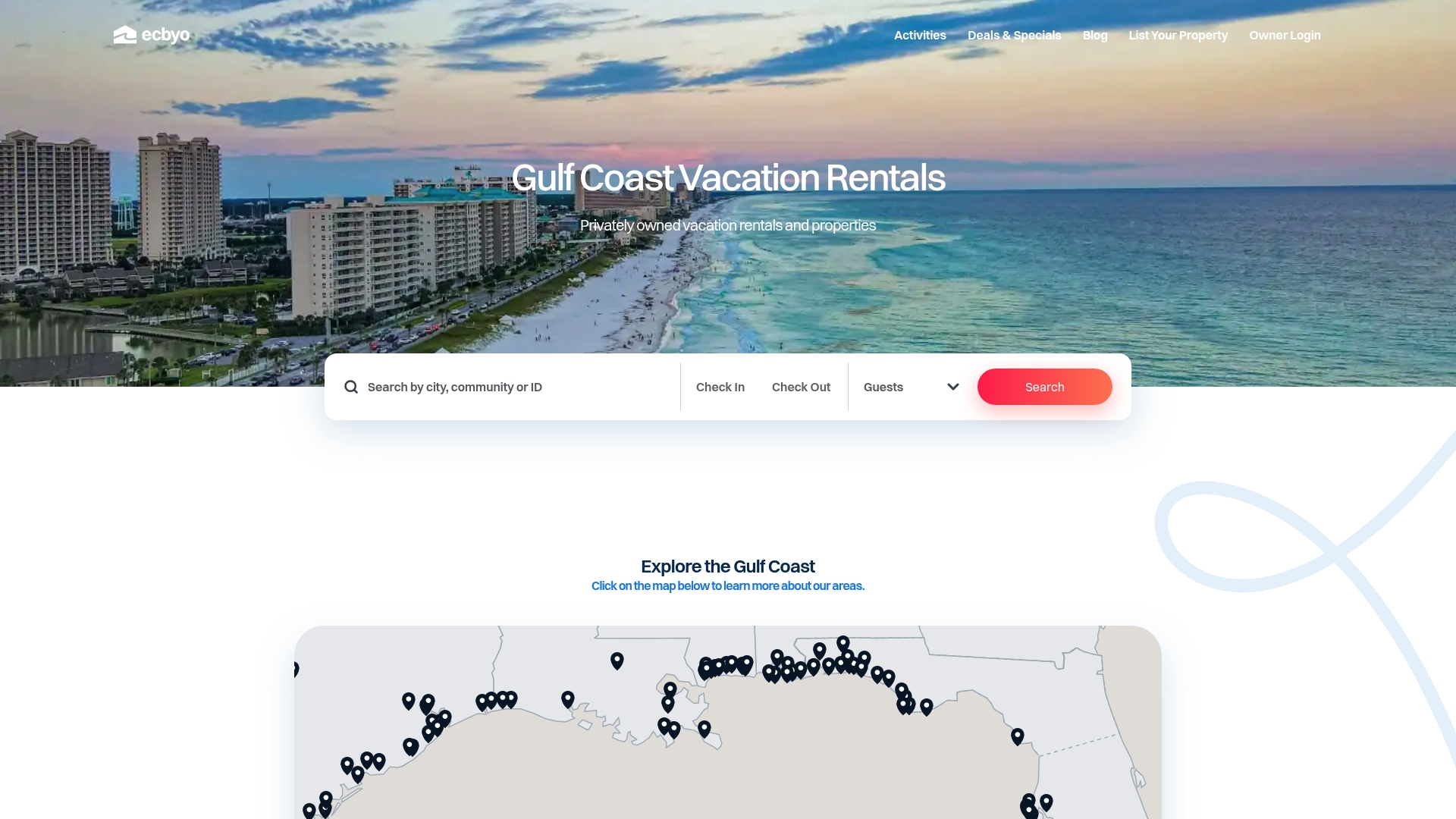
Browse Florida vacation rentals on Emeraldcoastbyowner to filter by beachfront, pet-friendly, or specific neighborhoods like Casino Beach and the Fort Pickens corridor. If you’re flexible on dates, check the deals and specials page for last-minute savings on Gulf Coast properties. Book 3–4 months ahead for shoulder-season stays; 6 months or more for Blue Angels weekend or peak July. When you find a listing, message the owner directly to confirm parking, pet policies, and any local tips before you commit.
Useful sources and official contacts
These are the primary sources trip planners should consult for current rules, permit requirements, and live conditions:
- Santa Rosa Island Authority (SRIA) — Beach rules, flag system, dog-park hours, trolley schedules, and parking maps. The authoritative source for island ordinances.
- Escambia County Beach Laws — Official county ordinances covering glass, fires, tents, and overnight property removal.
- SRIA FAQs — Covers RV parking, dog areas, drone rules, and trolley service details.
- National Park Service: Gulf Islands National Seashore — Fort Pickens entry fees, trail maps, and seasonal closures for nesting season.
- Visit Pensacola — Event calendars, tourism metrics, and visitor guides for Escambia County.
- Pensacola International Airport (PNS) — Flight schedules, car rental desks, and ground transportation options; check the airport’s official site for current terminal information.
- Florida Department of Health: Beach Water Quality — Live water quality reports for Escambia County beaches.
This article is general travel information, not legal or regulatory advice. Confirm current rules and permit requirements with SRIA, Escambia County, or the National Park Service for your specific visit.
FAQ
What is the best month to visit Pensacola Beach?
April and October are the strongest choices. Both offer warm temperatures, manageable crowds, and lower lodging rates than peak summer, with shoulder-season conditions that suit most trip types.
What are the most important beach rules to know?
No glass containers, no open fires, tents must be under 10’ x 12’, and all personal items must be removed from the sand by sunset. A double red flag means no swimming or wading, and anyone rescued must wait 24 hours before re-entering the Gulf.
Can you see the Blue Angels from Pensacola Beach?
Yes. The Blue Angels practice over Pensacola Bay on Tuesday and Wednesday mornings during their training season (roughly March through November), and the Pensacola Beach Boardwalk and fishing pier offer clear, free views with no base access required.
Does Pensacola Beach have all-inclusive resorts?
Pensacola Beach does not have traditional all-inclusive resorts. The lodging mix is primarily hotels, condos, and vacation rentals. Travelers looking for a full-kitchen, private-space alternative can find beachfront options through Emeraldcoastbyowner with no traveler service fees.
How far is Pensacola International Airport from the beach?
Pensacola International Airport (PNS) is approximately 10 miles from Pensacola Beach, a drive of roughly 20–25 minutes under normal traffic conditions.
Recommended
- Pensacola Florida Vacation Rentals | Beach Homes & Condos | Book Direct & Save
- Orange Beach, Alabama: Your Complete Vacation Guide | ECBYO
- What Is the Florida Panhandle Known For: Travel Guide | ECBYO
- What Is Destin, Florida Known for? A Complete Travel Guide | ECBYO

About the Author
Joe Godar of the Emerald Coast by Owner Editorial Team creates destination guides, vacation-planning resources, and local travel content focused exclusively on Gulf Coast vacation rentals.
Our team researches beach communities, vacation rental trends, family travel planning, local attractions, and direct-booking best practices across Florida, Alabama, Mississippi, Louisiana, and Texas. Every guide is written to help travelers make more informed booking decisions while avoiding unnecessary third-party guest service fees.
Since launching in 2016, Emerald Coast by Owner has helped connect travelers directly with verified vacation rental hosts across the Gulf Coast.
This article was reviewed for accuracy and updated using local destination research and current vacation rental market insights.


