


Short-term vacation rentals are legal in Louisiana, but there is no single statewide rulebook. The state sets the tax rules and one privacy rule, while each city and parish decides whether, where and how a home can be rented to guests. For you as a traveler, that means the rules behind your booking depend on where the home sits, and a quick look at the listing tells you a lot. We built our Louisiana vacation rentals page so you can browse owner-listed homes and contact owners directly, with no guest service fees.
TL;DR
- Louisiana has no statewide short-term rental license. Parishes and cities set their own permit, zoning and safety rules.
- A stay is generally “short-term” when it is under 30 consecutive days, and that is when state sales tax and local occupancy taxes apply.
- New Orleans has the strictest rules in the state: permits, a one-hour response requirement, insurance, and listings that must show permit numbers.
- State law bans hidden cameras in rentals and allows cameras only in common areas with a posted notice.
- Before you book, confirm the permit (where one is required), the guest count, and the total price including taxes.
Table of Contents
- How Louisiana defines a short-term rental
- What the state regulates, and what it leaves to cities and parishes
- Taxes on your stay
- New Orleans: the strictest rules in the state
- Other parishes: expect a permit and local conditions
- Your privacy: Louisiana’s hidden camera rule
- What happens when a rental breaks the rules
- A traveler’s checklist before you book in Louisiana
- Why booking direct with the owner helps
- Find a Louisiana rental and contact the owner
- FAQ
- Sources
How Louisiana defines a short-term rental
The word “vacation rental” is not a legal category by itself. Louisiana law and local codes talk about short-term rentals, and the dividing line is the length of the stay. State law that lets New Orleans levy an occupancy tax defines a short-term rental as renting all or part of a residential dwelling for less than 30 consecutive days. New Orleans uses the same cutoff in its zoning ordinance: a stay under thirty consecutive days is short-term, and longer stays are long-term and need no short-term rental permit.
So a week at the beach house or a long weekend in the French Quarter is a short-term rental. A two-month winter stay is usually treated as a long-term rental, which is a different set of rules.
What the state regulates, and what it leaves to cities and parishes
The state’s role is narrow. Louisiana has no statewide short-term rental permit and does not override local rules, so parishes and cities handle permits, inspections and fines. The state covers three things that matter to you.
| Topic | Who sets it | What it means for you |
|---|---|---|
| Operating permit | Parish or city | Depends on the destination; some require one, some are stricter than others |
| Sales and occupancy taxes | State and local government | Added to your rental price |
| Hidden cameras | State (R.S. 21:61) | Protects your privacy inside the rental |
| Noise, parking, trash | Parish or city | Rules you follow as a guest |
Because the rules are local, a rule you read about for New Orleans does not apply in a different parish. Always look at the parish or city where your rental sits.
Taxes on your stay
Tax is where state law touches your bill most directly. The Louisiana Department of Revenue explains that the taxable service of furnishing sleeping rooms covers accommodations sold to transient guests by hotels, lodging houses, property management companies and accommodation intermediaries, and that the sales price includes service, facilitator, processing and similar fees, even when they are listed separately.
A summary of recent changes reports that the state sales tax on stays under 30 nights rose to 5% on January 1, 2025, and that booking platforms became responsible for collecting the state tax under Act 82 of 2025. Rates and collection rules can change, so treat the final checkout total, or the owner’s written quote, as the number that counts.
Local taxes come on top. In New Orleans, state law lets the city levy an occupancy tax of up to 6.75% on short-term rentals, paid by the guest with the rent. The city also lists its own per-night fees and taxes for operators, which are why a New Orleans total can look higher than the nightly rate suggests.
| New Orleans charge (excluding state and federal taxes) | Amount |
|---|---|
| Occupancy fee, non-commercial short-term rental | $5 per night |
| Occupancy fee, commercial short-term rental | $12 per night |
| Orleans Parish Gross Rentals Tax | 5% |
| Orleans Parish Occupancy Tax | 6.75% |
| Occupancy privilege (1 to 299 rooms) | $0.50 per night |
These figures come from the city’s taxes and fees page, published for 2025. Some are paid by the operator and some are passed to guests, so the useful habit is simple: ask for the full price with taxes before you pay a deposit.
A worked example
Say you book a five-night stay at $200 a night in a New Orleans commercial short-term rental. The base rent is $1,000. State sales tax at 5% adds $50, and a 6.75% occupancy tax adds $67.50. Add any cleaning fee, which the state treats as part of the taxable price, and the taxes rise slightly with it. This example uses only the rates above and is for illustration: exact line items vary by property and booking channel, so use the quote you receive.

New Orleans: the strictest rules in the state
Most out-of-state travelers who ask about Louisiana rental laws are really thinking about New Orleans. The city has the most detailed rulebook, and the changes explain why listings there look the way they do.
Permits. No dwelling may be used as a short-term rental unless the owner holds a valid owner permit and has named an operator with a valid operator permit, according to the city’s code of ordinances. The operator permit page lists the application fee at $50, plus $150 for a single non-commercial unit or $1,000 for a single commercial unit or multiple units.
Reachable hosts. Operators must be reachable by phone and, according to the same page, physically present at the unit within one hour of being contacted. For non-commercial rentals, the operator must live at the property during guest stays. If you have a lockout, a broken air conditioner or a noise problem at midnight, this is the rule that protects you.
Safety. The city requires owners to carry $1,000,000 in commercial general liability insurance, keep guest registration records, post the owner permit and an evacuation diagram, and provide working fire extinguishers, smoke alarms, carbon monoxide detectors and locks on all entry and exit points (operator permit page).
Limits on supply. The city’s 2023 ordinance, summarized by a Louisiana law firm, limited residential licenses to one per city square, awarded by lottery, and required the licensed operator to live on the premises. The aim was to protect neighborhood character, reduce noise and trash, and preserve housing for residents. The same summary reports that the Fifth Circuit’s October 7, 2025 decision upheld the city’s authority to regulate short-term rentals but struck down some restrictions, such as limits on who may hold permits. Because rules like these keep evolving, a listing you saw last year may not follow today’s rules.
Noise. Between 10:00 p.m. and 8:00 a.m., loud sound is defined as noise above conversational level, or music audible from the property line, and each instance counts as a separate violation. Plan your late-night gatherings with that in mind.

Other parishes: expect a permit and local conditions
Outside New Orleans, rules differ by parish. Jefferson Parish, which borders New Orleans, requires zoning clearance, an occupational license and a lodging license, with a $750 annual processing fee, a background check and an interior inspection before a permit is issued. Smaller parishes publish their own application processes through the parish government or police jury.
Homeowner associations and condo boards add another layer. A neighborhood may restrict rentals even where the parish allows them, which affects owners more than guests, but it helps explain why some homes list minimum stay lengths. Our guide to HOA vacation rental rules covers the checks owners make.
Your privacy: Louisiana’s hidden camera rule
The one operational rule set by state law is about cameras. Under R.S. 21:61, an owner or lessor may not use a concealed or disguised camera on the premises. Cameras are allowed only in common areas, never in bedrooms or bathrooms, and only with a conspicuous posted notice. The statute also bars commercial use or public release of footage.
If you are recorded in violation, the same statute gives you a civil claim against the owner for actual damages, reasonable attorney fees and litigation costs, and punitive damages. If you believe you were recorded in a bedroom or bathroom, contact local law enforcement and a Louisiana attorney. A hidden camera capturing someone undressed can also be charged as video voyeurism under a separate law.
What happens when a rental breaks the rules
Penalties fall mostly on owners, but they can touch your trip. In New Orleans, adjudication fines for short-term rental violations are set at up to $1,000 per violation. Platforms in New Orleans must also verify that hosts have a valid permit before collecting a booking fee, according to the same law firm summary. A rental that lacks a permit where one is required can be shut down, which is why verifying details before paying matters.
A traveler’s checklist before you book in Louisiana
- Find the permit information. New Orleans listings must show the owner permit number, operator permit number, accessibility status, number of permitted bedrooms and maximum occupancy, and the owner permit must be posted where guests and neighbors can see it. Outside New Orleans, check the parish’s requirements.
- Match your group to the occupancy limit. A permitted guest count is a legal limit, not a suggestion.
- Get the full price in writing. Include cleaning fees and taxes, as the state treats most fees as part of the taxable price.
- Confirm who answers the phone. Ask for the owner’s or operator’s number and how quickly they respond.
- Read the house rules. Quiet hours, parking, trash and pool rules are enforced locally. If the home has a pool, a guide on pool safety at vacation rentals outlines what hosts typically set up.
- Get the agreement in writing. Dates, deposit, cancellation terms and house rules belong in a rental agreement. See our guide to the Gulf Coast rental agreement.
For more planning questions, our list of 10 questions to ask before booking a Gulf Coast vacation rental is a good companion.
Why booking direct with the owner helps
Every item in that checklist comes down to information: the permit, the occupancy, the price, the person who answers when something goes wrong. When you deal with the owner directly, you can get those answers in a single conversation, and you know who is responsible for the home. On Emerald Coast By Owner, listings have detailed property pages and owner profiles, and you contact owners directly. Travelers pay no booking or service fees to us. You can also read about how owner-managed rentals work on the Gulf Coast.
Our view
Louisiana’s patchwork of local rules can look confusing, but it points to a simple principle: the person who runs the home should be easy to reach and clear about what the home is. We focus on Gulf Coast rentals and connect guests with owners directly because a clear conversation before booking removes most surprises. Our listings carry detailed property information and owner profiles, so you can see what you are booking and who stands behind it, with no traveler service fees added.
When you ask an owner about permits, occupancy, taxes and house rules, you are doing what the local rules are designed to support: making a stay safe, quiet and predictable for you and for the neighbors.
Gail
Find a Louisiana rental and contact the owner
Browse homes and condos across Louisiana, including Baton Rouge vacation rentals, and message owners directly with your questions. Our listings include map-based search, owner profiles and filters for pet-friendly, beachfront and budget stays, and guests pay no service fees to us.
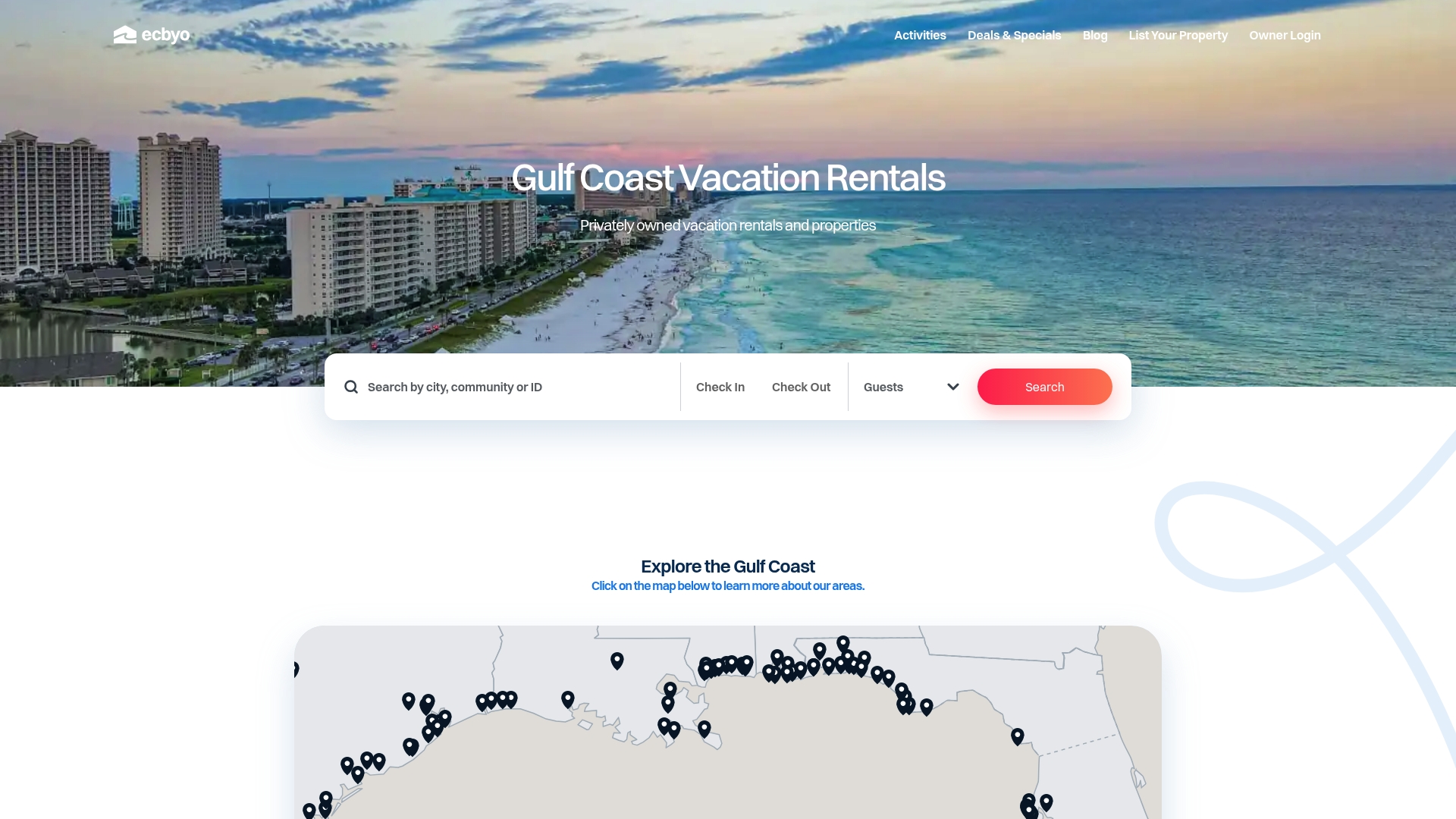
Start on our Louisiana vacation rentals page, or compare other states from our Gulf Coast vacation rentals home page. If you are also planning a Texas trip, see the Texas vacation rental laws guide.
FAQ
Are vacation rentals legal in Louisiana?
Yes. Short-term rentals are legal statewide, but there is no statewide license. Each parish or city decides whether a permit is needed and under what conditions, so the rules depend on the rental’s location.
How long can I stay before it counts as a long-term rental?
In the definitions used by New Orleans and by the state’s occupancy tax law, a rental of less than 30 consecutive days is short-term. Stays of 30 days or more are treated as long-term, without short-term permits or the same taxes.
Do I pay tax on a Louisiana vacation rental?
Yes. State sales tax applies to short stays, and local occupancy taxes can apply on top, such as in New Orleans. The state treats service and similar fees as part of the taxable price, so ask for a total that includes everything.
Can a host put cameras in a Louisiana rental?
Only in common areas, with a conspicuous posted notice. Cameras are never allowed in bedrooms or bathrooms, and hidden cameras are prohibited under R.S. 21:61.
Sources
- Louisiana Laws, R.S. 338.221 (Louisiana State Legislature)
- Overview of short-term rentals in New Orleans (City of New Orleans)
- Louisiana short-term rental laws by city (2026)
- Furnishing of sleeping rooms and online travel companies (Louisiana Department of Revenue)
- New Orleans short-term rental taxes and fees
- New Orleans code of ordinances, owner permit
- New Orleans short-term rental operator permit
- The Ups and Downs of Residential Short-Term Rentals in New Orleans (Kean Miller)
- New Orleans noise and listing requirements training
- Jefferson Parish short-term rental permits and licenses
- Louisiana R.S. 21:61
- Louisiana surveillance camera laws
- Pool safety in vacation rentals
Recommended
- Florida Vacation Rental Laws: What Guests and Owners Should Know
- Texas Vacation Rental Laws: What Guests and Owners Need to Know
- HOA Vacation Rental Rules: 5 Checks Gulf Coast Hosts Need
- Avoid Fines and Booking Suspensions: Gulf Coast Rental Agreement
 |
About the AuthorGail Greiner of the Emerald Coast by Owner Editorial Team creates destination guides, vacation-planning resources, and local travel content focused exclusively on Gulf Coast vacation rentals. Our team researches beach communities, vacation rental trends, family travel planning, local attractions, and direct-booking best practices across Florida, Alabama, Mississippi, Louisiana, and Texas. Every guide is written to help travelers make more informed booking decisions while avoiding unnecessary third-party guest service fees. Since launching in 2016, Emerald Coast by Owner has helped connect travelers directly with verified vacation rental hosts across the Gulf Coast. This article was reviewed for accuracy and updated using local destination research and current vacation rental market insights. |


