


The Gulf Coast is the right call for warm-water resort seekers; the Great Lakes are the better fit for nature-driven travelers who want dramatic scenery, freshwater adventures, and a cooler escape. That single distinction, backed by Forbes travel reporting, covers roughly 80% of the decision.
- Water temperature decides comfort: Gulf waters run warm from May through October; Great Lakes swim windows are shorter and less predictable, with cold upwelling possible even in July.
- Sand and scenery set expectations: Destin and Gulf Shores offer powdery white sand and calm, shallow surf; Sleeping Bear Dunes and Traverse City deliver towering dunes, pebbly coves, and freshwater vistas.
- Budget and access differ: STR market data shows Gulf Coast beach markets carry higher year-round occupancy and more consistent lodging availability, while Great Lakes rentals concentrate into a tight 12–14 week peak window.
Key Takeaways
The Gulf Coast delivers a warmer, more predictable beach vacation; the Great Lakes offer dramatic scenery and outdoor adventure with a shorter, less certain swim window.
| Point | Details |
|---|---|
| Gulf Coast swim season | Waters run 80–85°F from June through September, ideal for families with young children. |
| Great Lakes variability | Nearshore temps range 60–75°F in peak summer; upwelling can drop temps sharply within hours. |
| Best months to visit | Gulf: May–June and September; Great Lakes: late June through August. |
| Storm and safety risks | Gulf: hurricane season peaks August–October; Great Lakes: algal blooms and rip currents July–August. |
| Emeraldcoastbyowner | Lists thousands of Gulf Coast rentals by owner with no guest service fees for Gulf-bound travelers. |
Table of Contents
- How do Gulf Coast and Great Lakes vacations compare?
- What are the water temperatures and safety risks at each region?
- What does the beach itself look and feel like?
- What activities and amenities does each region offer?
- How much does each trip cost, and how easy is it to reach?
- When is the best time to visit each region?
- Which trip type is each region best suited for?
- Sample itineraries for each region
- How to choose between the Gulf Coast and Great Lakes
- Where to check real-time water temperatures and advisories
- A travel editor’s honest take on this choice
- Book your Gulf Coast vacation rental without the fees
- Sources
- FAQ
How do Gulf Coast and Great Lakes vacations compare?
| Dimension | Gulf Coast | Great Lakes |
|---|---|---|
| Typical water temp (peak) | 80–85°F (July–August) | 60–75°F (late July–August) |
| Swim season length | May through October | Late June through early September |
| Sand & shoreline | Fine white quartz sand, flat and shallow | Dunes, mixed pebble/sand, freshwater |
| Storm risk | Hurricane season June–November | Lake squalls, algal blooms (July–August) |
| Activities | Resorts, water sports, fishing charters, nightlife | Hiking, dune climbing, wineries, boating |
| Typical nightly rental range | $200–$500+ (year-round demand) | $150–$500 (peak season only) |
| Best months | May–June and September | Late June through August |
| Family-friendliness | High: lifeguards, resort pools, calm surf | Moderate: requires more safety planning |
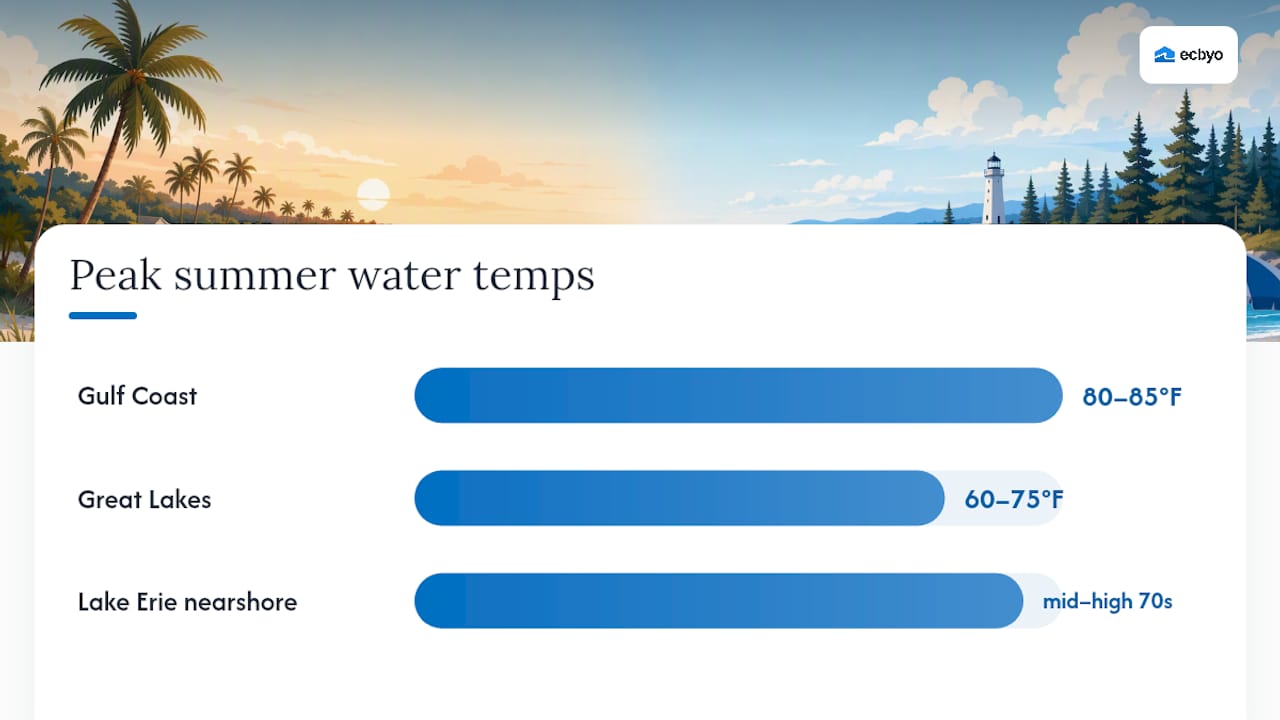
Lake Erie warms fastest among the five Great Lakes, sometimes reaching the mid-to-high 70s°F nearshore in summer. Gulf Coast waters near Destin and Panama City Beach typically stay above 80°F from June through September.
What are the water temperatures and safety risks at each region?
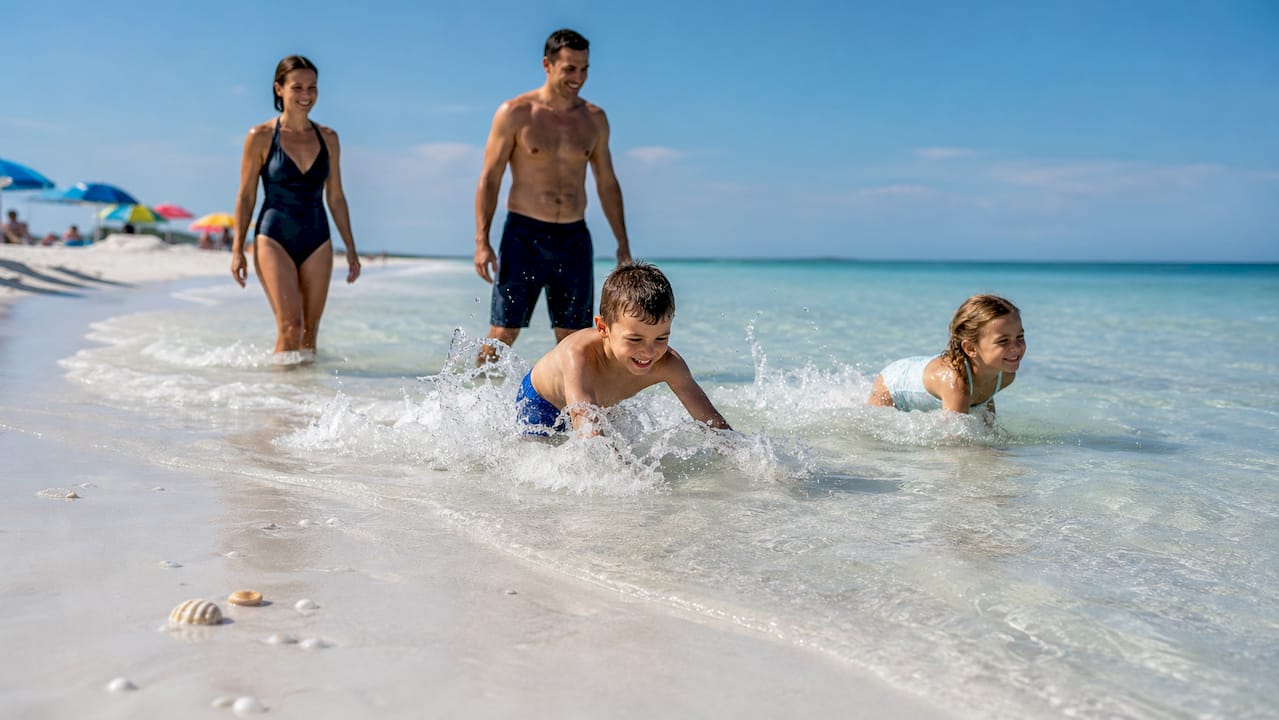
Gulf nearshore temperatures are reliably warm throughout the main vacation season. Waters off Gulf Shores, Orange Beach, and Panama City Beach regularly sit between 80°F and 85°F from June through September, making spontaneous swimming easy for families with young children.
The Great Lakes tell a different story. Local Michigan reporting documented nearshore temperatures that vary widely, generally cooler in upper lakes and warmer in shallower areas, with some inland lakes reaching their seasonal peaks during summer. Wind-driven upwelling can drop nearshore temperatures by 15–20°F within hours, turning a warm morning swim into a cold-shock risk by afternoon.
NOAA’s GLSEA daily surface maps smooth lakewide averages, so nearshore readings at your specific beach often differ substantially. Always check station-level data before heading out.
Safety hazards by region:
- Gulf Coast: rip currents (strongest near jetties and inlets), jellyfish blooms in late summer, occasional red tide advisories along Florida’s southwest coast
- Great Lakes: rip currents, cold-water shock from upwelling, harmful algal blooms (particularly Lake Erie in July–August), and E. coli advisories after heavy rain events
For both regions, swim at lifeguarded beaches whenever possible and check local health department advisories the morning of your beach day.
What does the beach itself look and feel like?
Gulf Coast beaches are visually consistent in the best way: fine, white quartz sand that stays cool underfoot even on hot days, shallow warm water that grades gently from ankle-deep to chest-deep, and a flat horizon over the Gulf of Mexico. Destin’s Emerald Coast earns its name from the striking green-blue water color produced by the white sand bottom. Panama City Beach and Gulf Shores share that same soft-sand character, while Orange Beach adds a slightly quieter, less commercial feel just west of Gulf Shores.
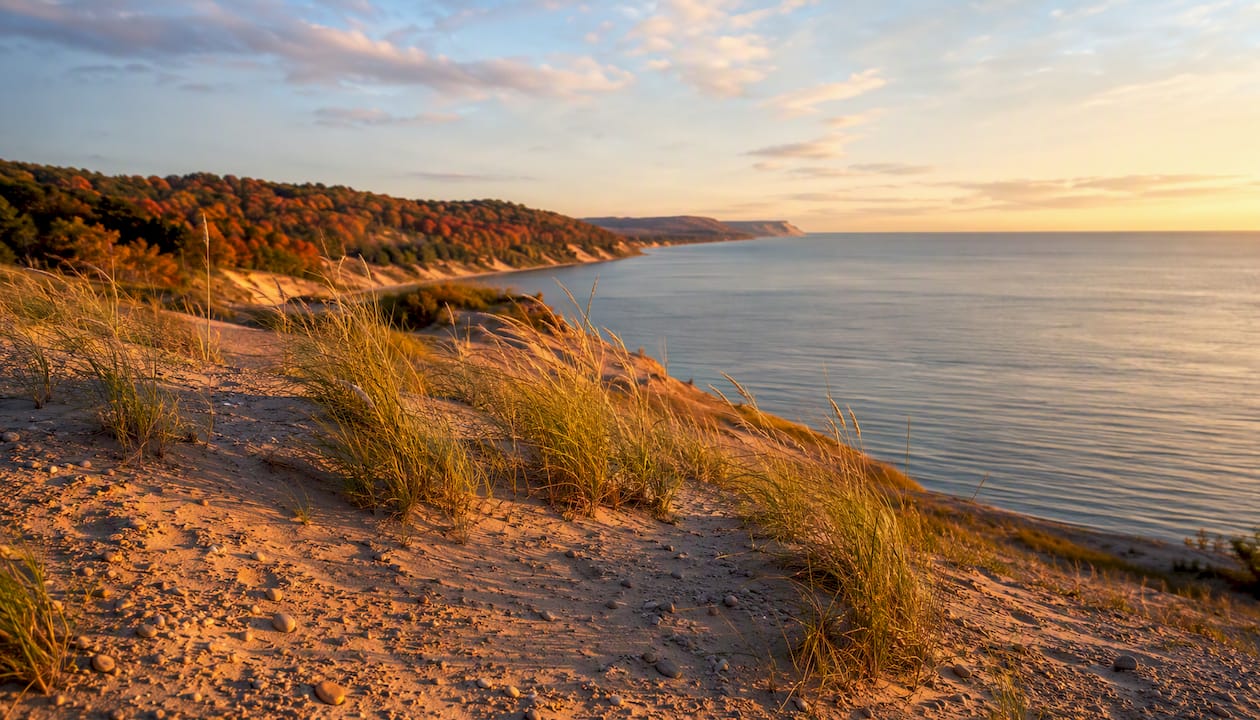
Great Lakes shorelines are far more varied. Sleeping Bear Dunes on Lake Michigan rises up to 450 feet above the water, offering one of the most dramatic coastal landscapes in the country. Grand Haven has a long, sandy Lake Michigan beach with a working lighthouse. Traverse City’s West Bay is calm and sandy, almost lagoon-like in summer. Lake Erie’s Ohio and Pennsylvania shores tend toward flatter, sandier beaches that warm up faster than the northern lakes. City beaches near Chicago and Milwaukee offer urban convenience but less of the wild scenery.
Wildlife differs noticeably between the two regions. Gulf Coast beaches attract brown pelicans, dolphins visible from shore, and seasonal sea turtle nesting. Great Lakes shorelines draw migratory shorebirds, bald eagles near the Upper Peninsula, and excellent freshwater fishing for walleye, perch, and salmon.
What activities and amenities does each region offer?
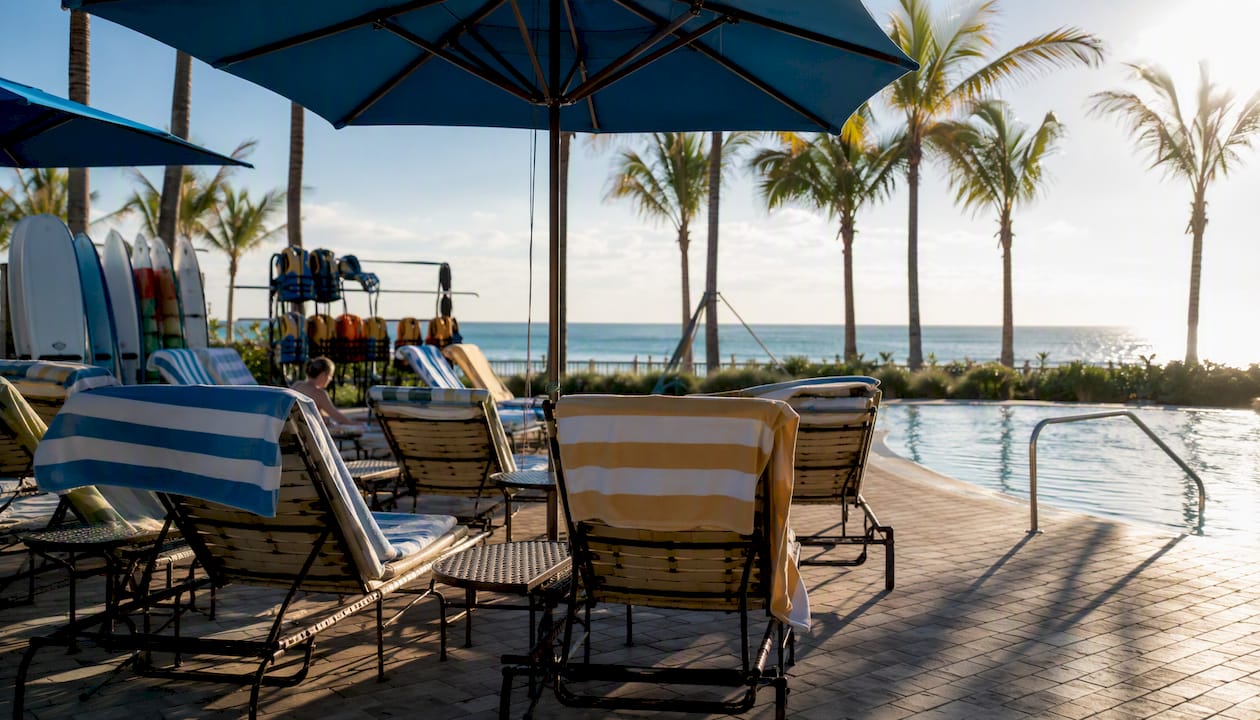
Gulf Coast strengths lean toward built-in convenience. Beachfront resorts in Destin and Gulf Shores come with pools, spas, on-site dining, and organized water sports rentals. Fishing charter operations are plentiful and easy to book same-day. Nightlife in Panama City Beach is active; Orange Beach and Gulf Shores offer a more relaxed bar-and-seafood scene. Luxury beachfront rentals with private pools and Gulf views are widely available.
Great Lakes strengths reward travelers who plan. Sleeping Bear Dunes National Lakeshore offers hiking trails and the famous dune climb. Traverse City sits at the center of Michigan’s wine country, with dozens of wineries along the Old Mission and Leelanau peninsulas. Mackinac Island, reachable by ferry from Mackinaw City, bans cars entirely. Boating, kayaking, and stand-up paddleboarding are popular on calmer inland lakes nearby.
Pro Tip: Families who want both resort convenience and freshwater adventure can base themselves in Traverse City for three nights (dunes, wineries, bay swimming) then drive south to a Lake Michigan beach town like South Haven or St. Joseph for two nights of sandier, calmer swimming. The drive is under two hours.
How much does each trip cost, and how easy is it to reach?
STR market data shows Gulf Coast beach markets maintain higher year-round occupancy, which keeps nightly rates relatively stable but also means fewer last-minute deals. Expect $200–$500+ per night for a beachfront condo in Destin or Gulf Shores during peak season, with off-peak spring and fall rates dropping meaningfully. Great Lakes rentals average lower entry prices, but peak-season demand in towns like Traverse City can push rates toward Gulf-level pricing during the short summer window.
Accessibility at a glance:
- Gulf Coast: Destin/Fort Walton Beach Airport (VPS), Pensacola International (PNS), and Northwest Florida Beaches International (ECP) serve the core Florida Panhandle. New seasonal nonstop routes from Midwest cities have made Gulf Shores and Orange Beach more reachable. Drive-to traffic from Atlanta, Nashville, and Birmingham is heavy in summer.
- Great Lakes: Traverse City’s Cherry Capital Airport (TVC) has seasonal nonstop service from several major hubs. Grand Haven and Sleeping Bear Dunes are drive-to destinations from Chicago, Detroit, and Indianapolis. Lake Erie shore towns are within easy driving distance of Cleveland, Pittsburgh, and Buffalo.
Budget checklist:
- Nightly rental: $150–$500 depending on region, season, and proximity to water
- Parking/beach permits: free at most Gulf state beaches; Michigan state parks require a Recreation Passport ($17/year for Michigan residents, $34 for non-residents)
- Book Gulf Coast rentals 3–6 months ahead for summer; Great Lakes peak weeks (late July–August) book out nearly as fast in popular towns
When is the best time to visit each region?
Gulf Coast: May and June offer warm water, lower crowds, and pre-hurricane-season calm. September is the sweet spot for experienced travelers: water stays warm from summer heat, crowds thin after Labor Day, but hurricane risk is at its statistical peak. The Atlantic hurricane season runs June 1 through November 30, with peak activity from mid-August through mid-October.
Great Lakes: Late June through August is the reliable window. Late July and August deliver the warmest nearshore temperatures, particularly on Lake Erie and southern Lake Michigan. September can offer lower crowds and still-warm water in sheltered bays, but water temperatures drop quickly after Labor Day.
Algal bloom advisories on Lake Erie and some inland Michigan lakes typically peak in July and August. Check your state’s health department beach advisory page before any Great Lakes swim day.
Which trip type is each region best suited for?
Choose the Gulf Coast if you:
- Want guaranteed warm water for kids and non-swimmers
- Prefer a resort-style stay with on-site dining, pools, and organized activities
- Are planning a couples’ getaway or anniversary trip with upscale dining and nightlife
- Value predictable lodging availability and a longer booking window
- Are flying in and want easy airport access near the beach
Choose the Great Lakes if you:
- Prioritize dramatic natural scenery (Sleeping Bear Dunes, Pictured Rocks)
- Want a road-trip-friendly itinerary through multiple towns and landscapes
- Are interested in wine country, craft breweries, or farm-to-table dining (Traverse City)
- Prefer a quieter, less commercial beach experience
- Are driving from the Midwest and want to minimize travel time
Gulf Coast destinations to consider: Gulf Shores and Orange Beach (Alabama) for family-friendly resort beaches; Destin and Panama City Beach (Florida) for a mix of amenities and nightlife; the 30A corridor for upscale, quieter Gulf access.
Great Lakes destinations to consider: Traverse City and Sleeping Bear Dunes (M-22 corridor) for scenery and wine; Grand Haven for a classic Lake Michigan beach town; Lake Erie’s Ohio shore for the warmest Great Lakes water and easy Midwest access.
Sample itineraries for each region
3–4 day Gulf Coast trip
- Day 1: Arrive, check into a beachfront condo in Destin or Gulf Shores, afternoon on the beach, dinner at a local seafood restaurant on the harbor.
- Day 2: Morning snorkel or paddleboard rental, afternoon resort pool, sunset dolphin cruise.
- Day 3: Fishing charter in the morning, afternoon at the beach, evening at a waterfront bar.
- Day 4: Final beach morning, depart.
Packing tip: reef-safe sunscreen, rash guards for kids, and a light cover-up for evening dining.
3–4 day Great Lakes trip (Lake Michigan/Traverse City)
- Day 1: Arrive Traverse City, check in, walk the West Bay waterfront, dinner at a winery tasting room.
- Day 2: Drive M-22 to Sleeping Bear Dunes, hike the Dune Climb, swim at Glen Lake.
- Day 3: Kayak on the Platte River, afternoon at a Leelanau Peninsula winery, sunset at Good Harbor Beach.
- Day 4: Morning at Traverse City’s West Bay beach, depart.
Pro Tip: Pack a windproof layer and a fleece for Great Lakes evenings — temperatures can drop into the low 60s°F after sunset even in July, and lake breezes are real.
How to choose between the Gulf Coast and Great Lakes
Work through these questions to land on the right region:
- Water temperature: Do you need reliably warm water (above 75°F) for the whole trip? Gulf Coast. Comfortable with some variability and cooler days? Great Lakes.
- Travel time: Driving from the Midwest? Great Lakes may be 4–6 hours closer. Flying from the Southeast or South? Gulf Coast wins on access.
- Activities: Resort pools, fishing charters, and nightlife? Gulf. Hiking, dunes, wineries, and road trips? Great Lakes.
- Budget: Flexible on timing and want lower entry prices? Great Lakes off-peak. Want predictable availability year-round? Gulf Coast.
- Kids’ ages: Very young children who need calm, warm, shallow water? Gulf Coast is the safer choice.
Red flags to watch:
- Avoid Gulf Coast trips in September if you have no travel insurance and a non-refundable booking. Hurricane risk peaks then.
- Avoid Great Lakes swimming during active algal bloom advisories, especially on Lake Erie. Check state health department pages the day before.
- Cold-water shock is a real risk for young children and non-swimmers on the Great Lakes even in summer. Never skip the water-temperature check.
Where to check real-time water temperatures and advisories
Before booking and before swimming, run these three checks:
- Lakewide surface temps: NOAA GLSEA publishes daily gridded surface-temperature maps for all five Great Lakes. Use these for a baseline, then look for nearshore station data, which can differ by 10–15°F.
- Nearshore and river-mouth temps: The Weather and USGS stream/nearshore stations give localized readings closer to actual swim conditions.
- Beach advisories: Your state’s health department beach advisory page lists current E. coli and algal bloom closures. Michigan, Ohio, and Indiana all publish searchable advisory databases updated daily in summer.
| Resource | What it covers | Best for |
|---|---|---|
| NOAA GLSEA | Daily lakewide surface temps, ice cover | Great Lakes baseline planning |
| weather.gov water temp map | Nearshore and river-mouth station readings | Day-of swim decisions |
| State health dept advisories | Algal blooms, E. coli closures | Safety checks before swimming |
| Local state park pages | Beach conditions, lifeguard schedules | On-site planning |
BeachFinder’s Great Lakes guide recommends treating the large Great Lakes like ocean coastlines: check lifeguard coverage, wave and rip-current forecasts, and local advisories every time, not just once per trip.
A travel editor’s honest take on this choice
The Gulf Coast vs Great Lakes debate is often framed as a tie, with each region winning for “different types of travelers.” That framing undersells how different the experiences actually are. If a family has young children who need warm, calm water and parents who want a low-planning vacation, the Gulf Coast is not just “one option” — it is the clearly better fit. The Great Lakes reward travelers who enjoy doing research, checking conditions, and building a flexible itinerary. That is a real skill set, not a universal preference.
The one thing most comparisons miss: the Gulf Coast’s rental market is genuinely more accessible for first-time vacation-rental bookers. Emeraldcoastbyowner lists thousands of Gulf Coast properties with direct owner contact and no guest service fees, which removes a layer of friction that can make Great Lakes booking feel easier by comparison. For Gulf-focused travelers, that infrastructure matters.
Book your Gulf Coast vacation rental without the fees
Gulf Coast travelers have a direct path to better value: Emeraldcoastbyowner connects you with thousands of Gulf Coast vacation rentals listed directly by owners, with no guest service fees added at checkout. That means the price you see is the price you pay.
Browse Florida Gulf Coast rentals from Destin and Panama City Beach to Gulf Shores and Orange Beach, filter by beachfront access, pet-friendly options, or luxury amenities, and contact owners directly. Check the deals and specials page for current discounts before you book. For the best availability in peak summer weeks, aim to book 3–4 months ahead.
Sources
- Great Lakes beaches guide: freshwater coastlines, dunes, city beaches, and swim planning - BeachFinder guide
- Forbes
- Water temperatures across the Great Lakes and Michigan inland waters (Freep)
- Staystra
FAQ
What is the best month to visit the Great Lakes?
Late July through August offers the warmest nearshore water temperatures across most of the Great Lakes, with Lake Erie and southern Lake Michigan reaching the mid-to-high 70s°F. Late June is a good secondary window with fewer crowds.
Can you swim in all five Great Lakes?
Yes, but conditions vary widely. Lake Erie and southern Lake Michigan are the most swimmer-friendly in summer. Lake Superior stays cold even in August and carries a serious cold-shock risk; always check current water temperatures and swim near lifeguarded beaches.
What is the prettiest beach on the Gulf Coast?
Destin, Florida consistently draws praise for its emerald-green water and fine white quartz sand. Henderson Beach State Park in Destin offers a less commercial stretch of that same coastline. Gulf Shores and Orange Beach in Alabama are close runners-up with equally soft sand and calmer surf.
Why does Gulf water look so much clearer than Great Lakes water?
Gulf of Mexico clarity near the Florida Panhandle comes from the white quartz sand bottom, which reflects light and gives the water its signature green-blue color. Great Lakes clarity varies by lake and location; Lake Superior is actually among the clearest freshwater bodies in the world, but its color reads deep blue rather than tropical green because of depth and cold temperatures.
Is a Gulf Coast or Great Lakes vacation better for families with young kids?
The Gulf Coast is generally the safer, easier choice for families with young children. Warm, shallow water, wide sandy beaches, and resort infrastructure (lifeguards, pools, on-site dining) reduce planning burden. Great Lakes trips require more safety research, particularly around water temperature and algal bloom advisories.
Recommended
- Compare Gulf Coast Beach Towns | ECBYO
- Gulf Coast National Parks and Beaches: Top Picks for Nature Lovers | ECBYO
- Types of Gulf Coast Beach Rentals: Your 2026 Guide | ECBYO
- Beach Time! An ECBYO blog about all things Gulf Coast

About the Author
Joe Godar of the Emerald Coast by Owner Editorial Team creates destination guides, vacation-planning resources, and local travel content focused exclusively on Gulf Coast vacation rentals.
Our team researches beach communities, vacation rental trends, family travel planning, local attractions, and direct-booking best practices across Florida, Alabama, Mississippi, Louisiana, and Texas. Every guide is written to help travelers make more informed booking decisions while avoiding unnecessary third-party guest service fees.
Since launching in 2016, Emerald Coast by Owner has helped connect travelers directly with verified vacation rental hosts across the Gulf Coast.
This article was reviewed for accuracy and updated using local destination research and current vacation rental market insights.


