



If you want turquoise water and reef snorkeling, the Caribbean is the stronger pick. If you want driveable, white-sand beaches, vacation rentals, and lower total trip costs, the Gulf Coast delivers. That’s the core of any honest Gulf Coast vs Caribbean vacation comparison, and everything else comes down to your specific priorities.
Best match by traveler type:
- Families with young kids: Gulf Coast (Destin, Gulf Shores) — calm, shallow water, easy driving, no passport needed
- Budget travelers: Gulf Coast — driving to Gulf Shores or Pensacola typically costs far less than a Caribbean resort package
- Couples and romantics: Either, depending on vibe — Gulf Coast for laid-back rental retreats; Caribbean (Puerto Rico, USVI) for tropical atmosphere and resort amenities
- Divers and snorkelers: Caribbean — Puerto Rico, the Bahamas (Exuma), and the U.S. Virgin Islands offer reef systems the Gulf simply cannot match
- Anglers and fishing enthusiasts: Gulf Coast — the Gulf of Mexico is one of the most productive sport-fishing regions in the country
- First-time international travelers: U.S. territories (Puerto Rico, St. Thomas) give you a Caribbean experience without a passport
Key Takeaways
The Gulf Coast is the stronger pick for families, budget travelers, and anglers; the Caribbean wins for divers, resort seekers, and travelers who prioritize turquoise water and reef experiences above all else.
| Point | Details |
|---|---|
| Match region to your top priority | Reef diving and tropical resorts favor the Caribbean; calm water, fishing, and lower costs favor the Gulf Coast. |
| Florida Panhandle closes the visual gap | Destin, Pensacola, and 30A beaches produce genuinely turquoise water thanks to fine quartz sand and shallow bottoms. |
| Passport-free Caribbean options exist | Puerto Rico and the U.S. Virgin Islands require no passport for U.S. citizens and offer direct flights from most major hubs. |
| Gulf Coast trips often cost less overall | Driving eliminates airfare, and vacation rental nightly rates typically run lower than Caribbean resort packages with fees. |
| Emeraldcoastbyowner for Gulf rentals | The marketplace lists thousands of direct-owner Gulf Coast rentals with no guest fees, covering Florida, Alabama, Louisiana, and Texas. |
Table of Contents
- How does the Gulf Coast compare to the Caribbean on key dimensions?
- What makes Caribbean beaches look so different?
- What does the U.S. Gulf Coast actually offer?
- Head-to-head: where each region wins and where it falls short
- What does a Gulf Coast vs. Caribbean trip actually cost?
- When should you go, and what safety checks should you run?
- Which specific destinations should you consider?
- How do you decide between the Gulf Coast and the Caribbean?
- What Gulf Coast rental options does Emeraldcoastbyowner offer?
- When Joe recommends the Caribbean vs. the Gulf Coast
- Find your Gulf Coast rental directly, with no guest fees
- Sources
- FAQ
How does the Gulf Coast compare to the Caribbean on key dimensions?
| Dimension | Gulf Coast | Caribbean |
|---|---|---|
| Water clarity & sand | Very clear and white in the Florida Panhandle (Destin, Pensacola, Siesta Key); murkier in Texas | Consistently turquoise across most islands; powdery white sand common |
| Beach type & surf | Calm, shallow, gentle waves; ideal for wading and young children | Varies by island; Atlantic-facing beaches can have stronger surf; calm on leeward sides |
| Best activities | Fishing, boating, family beach days, birding, shelling, Crab Island | Snorkeling, scuba diving, reef excursions, all-inclusive resorts, island-hopping, nightlife |
| Cost shape | Lower nightly rates; driving option eliminates airfare; vacation rentals common | Higher airfare from most U.S. cities; resort fees and excursion costs add up quickly |
| Accessibility | Driveable from much of the Southeast and Midwest; short flights from major hubs | Flights required; Puerto Rico and USVI need no passport; Bahamas and Mexico require one |
| Seasonality & hurricane risk | Hurricane season June–November; late spring and fall are ideal windows | Same June–November hurricane season; shoulder seasons (May, November) offer good value |
| Family vs. party vibe | Strongly family-oriented; some areas (Destin, Gulf Shores) have lively nightlife too | Mix of both; party scenes in Nassau and Cancún; quieter on St. John and Exuma |
| Accommodation types | Vacation rentals (condos, homes, cottages) dominate; fewer all-inclusives | All-inclusive resorts common; vacation rentals available but resort model prevails |
Representative Gulf Coast picks: Destin, Gulf Shores/Orange Beach, Pensacola, Siesta Key. Representative Caribbean picks: Puerto Rico, Bahamas (Nassau/Exuma), U.S. Virgin Islands (St. Thomas, St. John), Cancún/Riviera Maya.
What makes Caribbean beaches look so different?
The Caribbean’s signature turquoise color is not just a marketing image. It comes from a specific combination of geology and optics: fine white quartz or crushed coral sand reflects sunlight upward through shallow, clear water, shifting the visible color toward blue-green. The same optical conditions occur wherever you have white-bottomed shallows and minimal sediment runoff, which is why parts of the Florida Panhandle can produce a convincingly Caribbean look on a clear day.
Most Caribbean islands also sit on or near active reef systems, which means the water stays clear because coral filters sediment and the seafloor is typically white limestone or sand. That clarity is what makes snorkeling and diving so rewarding.
Common Caribbean activities for U.S. travelers:
- Snorkeling and scuba diving on coral reefs (Exuma, St. John, Cozumel)
- All-inclusive resort stays with meals, drinks, and excursions bundled
- Island-hopping by ferry or small plane (USVI, Bahamas)
- Nightlife and casino scenes (Nassau, Cancún, San Juan)
- Cultural experiences: Old San Juan’s Spanish colonial architecture, Rastafarian culture in Jamaica, French Creole heritage in Martinique
- Whale watching, sea turtle encounters, and eco-tours
Representative Caribbean destinations for U.S. travelers:
- Puerto Rico — U.S. territory, no passport required, direct flights from most major U.S. cities, Spanish colonial culture, El Yunque rainforest, Flamenco Beach
- U.S. Virgin Islands (St. Thomas, St. John) — no passport required for U.S. citizens, world-class snorkeling at Trunk Bay, duty-free shopping in Charlotte Amalie
- Bahamas (Nassau, Exuma) — passport required, short flight from Miami or Fort Lauderdale, famous swimming pigs at Exuma, Atlantis resort on Nassau
- Cancún / Riviera Maya, Mexico — passport required; Mexico’s Caribbean coast is distinct from its Gulf and Pacific coasts, offering resort corridors, cenote diving, and Mayan ruins at Tulum and Chichén Itzá
What does the U.S. Gulf Coast actually offer?
The Gulf Coast stretches roughly 1,700 miles from the Florida Keys to the Texas border with Mexico, and it is not one uniform beach experience. The region breaks into distinct personalities, and knowing which stretch suits you matters.
The Florida Panhandle (Destin, Pensacola, 30A, Fort Walton Beach) is the Gulf’s closest equivalent to a Caribbean beach. The sand here is made of fine Appalachian quartz that washed down over millennia, and it stays cool to the touch even in summer. Travel guides consistently rank Panhandle beaches as the clearest and whitest on the Gulf, and the water in Destin’s East Pass or along Scenic Highway 30A can genuinely look turquoise on a calm morning. Caladesi Island, near Clearwater, is another spot travel writers describe as convincingly Caribbean-like on good days.
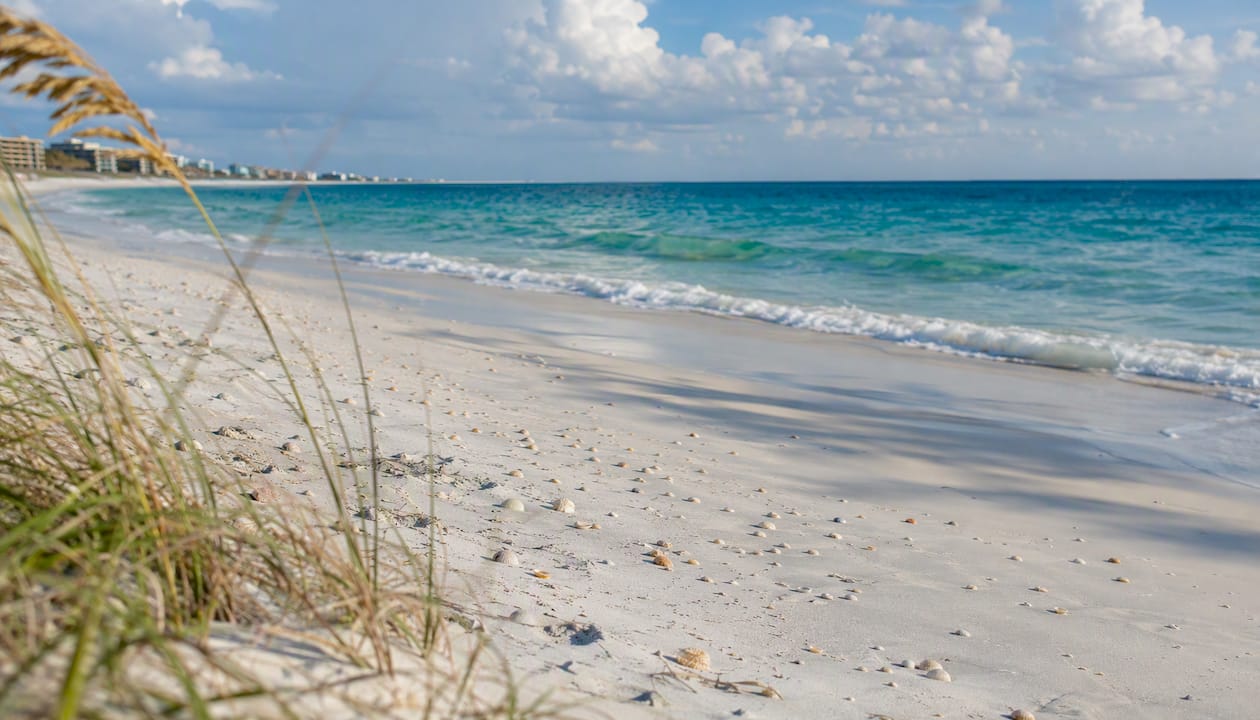
Central and South Gulf Florida (Sanibel, Siesta Key, Naples) shifts toward shelling beaches, wildlife refuges, and calmer, slightly greener water. Siesta Key’s quartz sand is among the finest in the world by grain size. The vibe here is quieter and more nature-focused than the Panhandle.
Alabama (Gulf Shores, Orange Beach) shares the Panhandle’s quartz sand and offers some of the most affordable beachfront rentals on the Gulf. The water is clear, the seafood is excellent, and the area is very family-oriented.
Texas (South Padre Island, Galveston, Surfside Beach) is a different story. River runoff from the Mississippi and Rio Grande systems carries sediment into the Gulf, and the Texas coast typically has lower water clarity than the Panhandle. Texas beaches reward travelers who come for sport fishing, birding, working-waterfront culture, and lower costs, not for Caribbean-style visuals.
Typical Gulf Coast activities:
- Family beach days with calm, wading-depth water
- Deep-sea and inshore fishing charters
- Boating, kayaking, paddleboarding
- Birding and wildlife watching (Padre Island National Seashore, Bon Secour National Wildlife Refuge)
- Shelling (Sanibel is world-famous for it)
- Family-friendly Crab Island activities in Destin
Pro Tip: For the most Caribbean-like Gulf experience, target the Florida Panhandle between late April and early June, before summer crowds and before peak hurricane season. Water clarity peaks when winds are calm and before summer algae blooms.
Head-to-head: where each region wins and where it falls short
Water clarity and sand quality. The Caribbean wins overall, but the Florida Panhandle closes the gap significantly. Destin and 30A beaches regularly produce the turquoise-green water color that travelers associate with the tropics, for the same optical reasons that make Caribbean beaches look the way they do. Texas Gulf beaches, by contrast, tend toward murky green-brown due to sediment load.
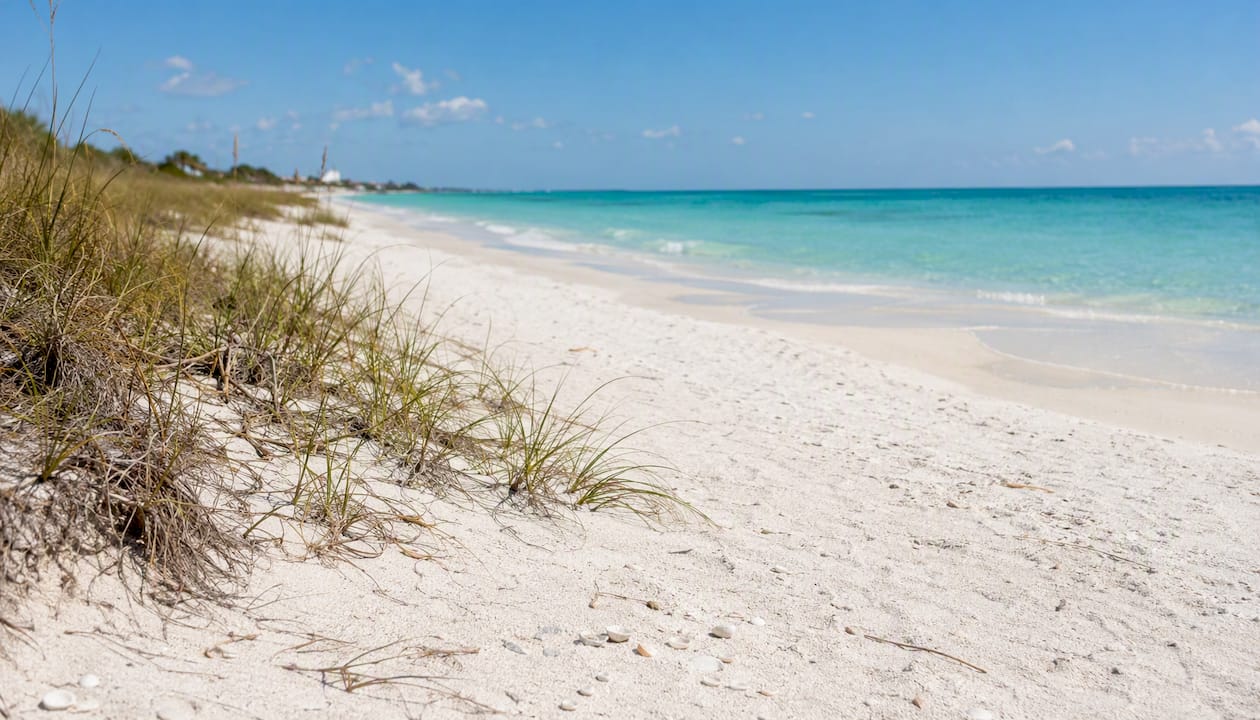
Surf and beach type. The Gulf is calmer almost everywhere, which makes it better for young children and nervous swimmers. Caribbean beaches vary: leeward (western) shores on most islands are calm, while Atlantic-facing beaches can have real surf. If you want waves, the Caribbean’s windward coasts or Puerto Rico’s north shore deliver.
Activities. The Caribbean leads on reef-based activities, plain and simple. Coral reef systems around the USVI, Bahamas, and Belize are among the richest in the Atlantic. The Gulf leads on inshore and offshore fishing, family beach activities, and boating in protected bays. Neither region is weak overall; they just reward different priorities.
Cost. Gulf Coast trips tend to cost less for most U.S. travelers. Many Gulf Coast towns come in cheaper than a Caribbean trip once you factor in airfare and resort fees. Driving to Gulf Shores or Destin from Atlanta, Nashville, or Dallas eliminates a $400–$700 round-trip airfare entirely. Caribbean all-inclusive packages bundle costs but rarely come cheap; a week at a mid-range Cancún resort for a family of four typically runs well above what a comparable Gulf Coast vacation rental week would cost.
Accessibility. The Gulf Coast wins for most of the continental U.S. because large portions are driveable. Puerto Rico and the USVI offer a passport-free Caribbean option with direct flights from Atlanta, New York, Miami, and Charlotte. The Bahamas and Mexico require a valid U.S. passport.
Seasonality and weather risk. Both regions share the same June–November Atlantic hurricane season. The Gulf Coast’s best windows are late April through May and September through October. The Caribbean’s shoulder seasons (May and November) offer lower prices and manageable weather. Peak summer in both regions brings heat, humidity, and elevated storm risk.
Family vs. party vibe. The Gulf Coast skews family-friendly, especially Destin, Gulf Shores, and the 30A corridor. The Caribbean has both: St. John and Exuma are quiet and nature-focused, while Nassau and Cancún have active nightlife and casino scenes.
Pro Tip: If water clarity is your single most important factor, rank destinations by their sand composition first. Quartz-sand beaches (Florida Panhandle, USVI’s Trunk Bay) consistently outperform shell-sand or dark volcanic beaches for that turquoise look, regardless of which region they’re in.
What does a Gulf Coast vs. Caribbean trip actually cost?
Cost is where the Gulf Coast often surprises travelers who assume the Caribbean is the default affordable option.
Airfare and travel time:
- Driving from Atlanta to Destin: roughly 5–6 hours, no airfare
- Driving from Houston to South Padre Island: roughly 5–6 hours
- Flight from New York to San Juan, Puerto Rico: typically 3.5–4 hours direct
- Flight from Miami to Nassau, Bahamas: roughly 50 minutes; from New York, about 3 hours
- Flight from Dallas to Cancún: roughly 2.5–3 hours direct
- Flight from Chicago to Pensacola: roughly 2 hours direct
Typical lodging cost shapes:
- Gulf Coast vacation rental (beachfront condo, Gulf Shores): budget to mid-range nightly rates, often lower than comparable Caribbean hotel rooms, with no resort fees
- Caribbean all-inclusive resort (Cancún, Punta Cana): bundled pricing that covers meals and drinks but typically carries a higher base rate per person
- Caribbean vacation rental (Puerto Rico, USVI): available and often well-priced, but the all-inclusive model dominates the market
Passport and entry requirements:
- Puerto Rico and U.S. Virgin Islands: no passport required for U.S. citizens (U.S. territories)
- Bahamas: valid U.S. passport required
- Mexico (Cancún, Riviera Maya): valid U.S. passport required
- All Gulf Coast destinations: no passport, no entry requirements for U.S. citizens
Booking note: Direct-owner vacation rental marketplaces typically charge no guest service fees, which can save a meaningful amount compared to platforms that add percentage-based fees on top of the nightly rate. For Gulf Coast trips, searching direct-owner listings is worth doing before committing to a resort.
When should you go, and what safety checks should you run?
Both regions sit inside the Atlantic hurricane belt, so timing matters. Hurricane season officially runs June 1 through November 30, with peak activity typically in August and September.
Best travel windows:
- Gulf Coast: Late April through May for warm water, low crowds, and pre-season pricing. September through October also works well once peak storm risk passes, and fall water temperatures stay warm into November.
- Caribbean: May (just before peak season) and November (just after) offer a good balance of lower prices and manageable weather. December through April is the traditional high season with the most reliable weather.
Practical safety and health checks before booking:
- Check NOAA’s hurricane forecast center for active storm tracking during hurricane season
- Review the CDC’s travel health notices for any health advisories relevant to your Caribbean destination
- Consult the U.S. State Department’s travel advisories before booking any foreign Caribbean destination; advisory levels vary significantly by country and can change
- Monitor local red tide forecasts for Gulf Coast trips (Florida Fish and Wildlife Conservation Commission posts current red tide status)
- Check sargassum seaweed forecasts for Caribbean trips, particularly for Mexican Caribbean beaches, where seasonal seaweed accumulation can affect beach conditions
Before you book:
- Choose flexible cancellation policies during hurricane season (June–November)
- Consider travel insurance that covers weather-related cancellations for any trip booked during storm season
- Verify current entry requirements for any foreign destination, as requirements can change
- Check local beach condition reports within a week of travel
Which specific destinations should you consider?
Matching a destination to your travel style makes the decision much easier. Here are concrete picks on each side, with the logistics that matter.
Gulf Coast picks:
- Destin, Florida — Best for families and first-timers; calm Emerald Coast water, excellent vacation rental inventory, driveable from much of the Southeast. Compare Gulf Coast beach towns to find the right fit for your group.
- Gulf Shores / Orange Beach, Alabama — Budget-conscious families and groups; affordable beachfront rentals, great seafood, no passport. Driveable from Atlanta, Nashville, and Memphis.
- Pensacola / Florida Panhandle — Travelers who want the clearest Gulf water; Pensacola Beach and Navarre Beach consistently rank among the Gulf’s most visually striking. Driveable or short flight from major Southeast hubs.
- Siesta Key / Sarasota, Florida — Couples and nature lovers; world-class quartz sand, quieter atmosphere, proximity to wildlife refuges. Short flight or drive from Tampa.
Caribbean picks:
- Puerto Rico — Best overall value for a Caribbean trip from the U.S.; no passport required, direct flights from most major cities, rich culture, El Yunque rainforest, and Flamenco Beach on Culebra. Excellent for couples and adventurous families.
- U.S. Virgin Islands (St. Thomas, St. John) — Divers and snorkelers; Trunk Bay on St. John is one of the most photographed beaches in the Caribbean. No passport needed. St. Thomas has a busy cruise port; St. John stays quieter.
- Bahamas (Nassau / Exuma) — Couples and divers seeking remote cays and clear water; Exuma’s swimming pigs and sandbars are genuinely spectacular. Passport required; short flight from Miami or Fort Lauderdale.
- Cancún / Riviera Maya, Mexico — All-inclusive resort travelers and history enthusiasts; passport required, but direct flights from most U.S. cities are frequent and often affordable. Cenote diving and Mayan ruins add cultural depth beyond the beach.
How do you decide between the Gulf Coast and the Caribbean?
Work through these steps in order and you’ll have a clear answer in under a minute.
- Do you have a valid passport? If no, your Caribbean options are limited to Puerto Rico and the USVI. If yes, all destinations are open.
- What is your total budget? If driving is an option and you want to keep costs down, the Gulf Coast almost always wins. If you’re flying regardless, compare all-in costs including resort fees and excursions.
- How long is your trip? Shorter trips (3–4 nights) favor driveable Gulf Coast destinations. Longer trips (7+ nights) justify the flight cost to the Caribbean.
- What is your top activity priority? Reef snorkeling or diving: choose Caribbean. Fishing, boating, or calm family beach days: choose Gulf Coast.
- How do you prefer to stay? Vacation rental with a kitchen and direct owner contact: Gulf Coast has the deepest inventory. All-inclusive resort with everything bundled: Caribbean leads.
- What is your weather risk tolerance? If traveling June–November, both regions carry hurricane risk. The Gulf Coast offers more flexibility to drive home if a storm approaches; island destinations require flight rebooking.
- Do you want cultural immersion? Old San Juan, Mayan ruins, and island-hopping culture are hard to replicate on the Gulf Coast. The Gulf Coast offers Gulf seafood culture, fishing communities, and state parks.
- Are pets or accessibility needs a factor? Gulf Coast vacation rentals have the widest selection of pet-friendly and accessible beach rentals; Caribbean resorts vary widely on both.
Decision flow: If your top priority is reef diving or a tropical resort experience, book the Caribbean. If your top priority is cost, calm water, family logistics, or keeping things simple, book the Gulf Coast. If you’re torn, Puerto Rico or the USVI gives you a genuine Caribbean experience with domestic-travel convenience.
What Gulf Coast rental options does Emeraldcoastbyowner offer?
Gulf Coast vacation rentals come in several distinct types, and knowing which fits your group saves time during the search.
- Beachfront condos — Best for couples and small families; typically include shared pool access, assigned parking, and direct beach access. Common in Destin, Gulf Shores, and Pensacola Beach.
- Single-family beach homes — Best for larger groups and multi-family trips; private yards, full kitchens, and more space than a condo. Found across the Panhandle and Alabama Gulf Coast.
- Cottages and bungalows — Best for couples or small groups wanting a quieter, more personal feel; often found in Old Florida communities along 30A and near Apalachicola.
- Pet-friendly rentals — Available across all Gulf Coast states on Emeraldcoastbyowner; filter by pet policy before contacting the owner.
- Luxury beach houses — For groups wanting high-end finishes, private pools, and premium Gulf views; available in 30A, Rosemary Beach, and Alys Beach.
Pro Tip: When reviewing a Gulf Coast rental listing, always confirm the exact map pin location versus the beach access point, check the cleaning fee structure, and ask the owner directly about damage deposit terms. Direct owner contact through Emeraldcoastbyowner means you get straight answers without a customer service intermediary.
Emeraldcoastbyowner’s Gulf Coast rental guide covers each rental type in detail, including when each makes the most sense for different group sizes and trip lengths. The marketplace covers Florida, Alabama, Mississippi, Louisiana, and Texas, with map-based search and no guest service fees.
When Joe recommends the Caribbean vs. the Gulf Coast
The question comes up constantly among travelers planning their first real beach vacation: Caribbean or Gulf Coast? Joe’s honest answer, shaped by years of writing about Gulf Coast destinations for the Emeraldcoastbyowner blog, is that the Caribbean wins on visuals and reef activities, but the Gulf Coast wins on practicality for most American families.
The Caribbean recommendation tends to come when someone has a specific diving destination in mind, is celebrating a milestone trip, or wants a cultural experience that goes beyond the beach. Puerto Rico, in particular, is hard to argue against for U.S. travelers who want a genuine tropical experience without the passport and international-flight complexity.
The Gulf Coast recommendation comes when the group includes young children, when budget is a real constraint, when driving is on the table, or when the traveler simply wants a relaxed week in a well-equipped rental without resort-schedule pressure. For that traveler, Destin or Gulf Shores typically delivers more value per dollar than any comparable Caribbean resort week.
Find your Gulf Coast rental directly, with no guest fees
If the Gulf Coast is your pick, Emeraldcoastbyowner is the direct route to the region’s best vacation rental inventory. The marketplace connects travelers with property owners across Florida, Alabama, Mississippi, Louisiana, and Texas, with no guest service fees added at checkout.
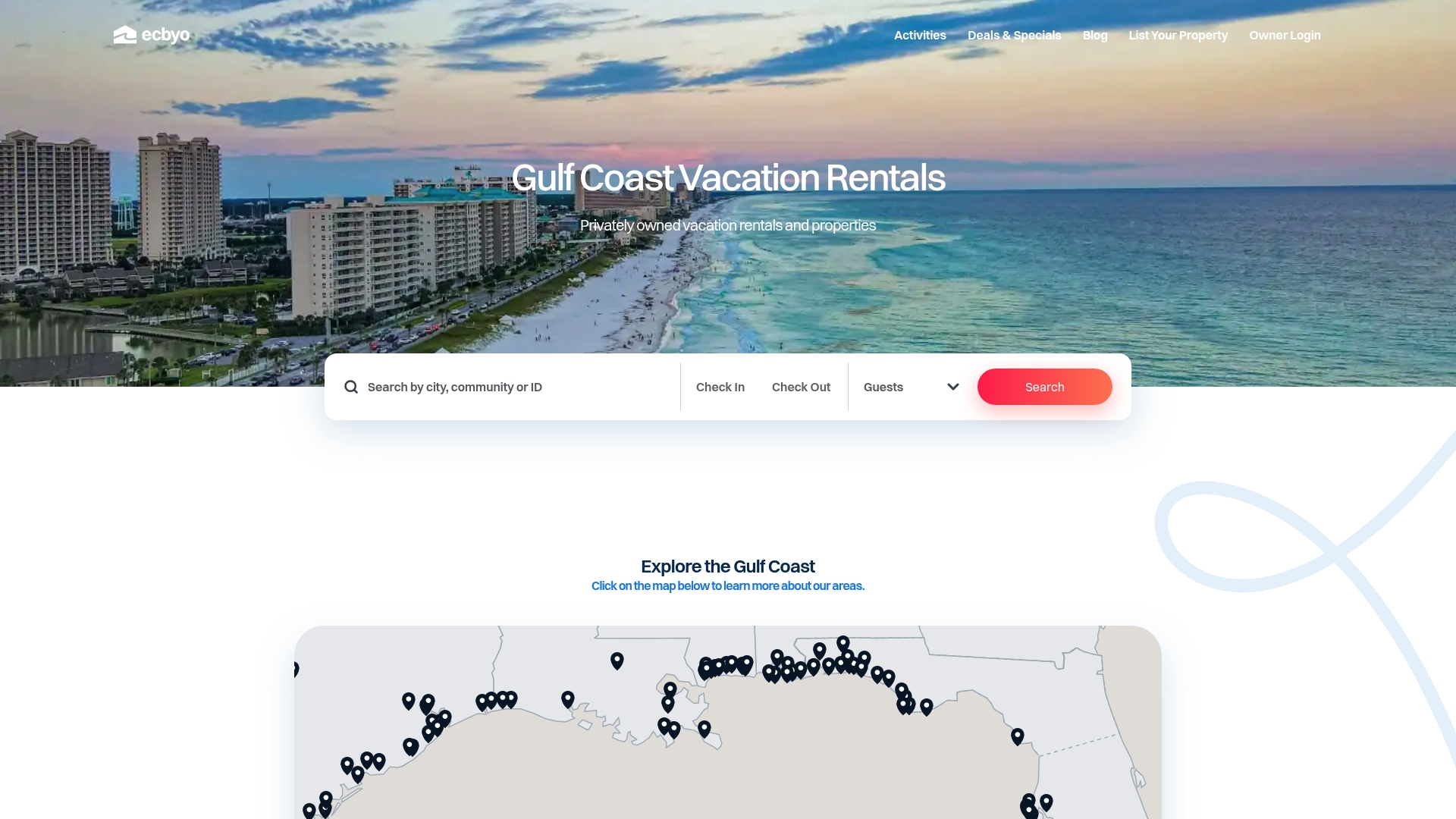
Search by map to find beachfront condos in Destin, family homes in Gulf Shores, or cottages along 30A. Every listing includes direct owner contact, so questions about pet policies, parking, or check-in logistics get answered by the person who actually owns the property. For budget-conscious travelers, checking the deals and specials page before booking can surface discounted weeks and last-minute openings. When you’re ready to browse, search Florida Gulf Coast vacation rentals to see current availability across the Panhandle and beyond.
Sources
Before finalizing any beach vacation, verify current conditions and advisories with these sources:
- Here are the U.S. beaches that feel like the Caribbean
- Beach destinations in Mexico: Caribbean, Pacific, and Mexican Coasts compared | Mexican Routes
FAQ
What is the prettiest beach on the Gulf Coast?
Consistently, travel guides point to Destin and the 30A corridor in the Florida Panhandle as the Gulf’s most visually striking beaches, thanks to fine white quartz sand and clear emerald-green water. Siesta Key in Sarasota is also frequently cited for its exceptionally fine, cool sand.
Which Caribbean destinations don’t require a U.S. passport?
Puerto Rico and the U.S. Virgin Islands (St. Thomas, St. John) are U.S. territories, so American citizens can visit without a passport. All other Caribbean destinations, including the Bahamas and Mexico’s Riviera Maya, require a valid U.S. passport.
What is a cheaper alternative to Turks and Caicos for U.S. travelers?
The U.S. Virgin Islands, particularly St. John, offer comparable turquoise water and white sand at lower overall cost, with no passport required. On the Gulf Coast side, Destin and Gulf Shores deliver similar visual appeal at a fraction of the total trip cost, especially for travelers who can drive.
Where should you avoid in the Caribbean right now?
Advisory levels change frequently, so always check the U.S. State Department’s current travel advisories before booking any foreign Caribbean destination. Some countries carry elevated advisories due to crime or civil unrest; Puerto Rico and the USVI, as U.S. territories, fall under domestic safety standards.
Is the Gulf Coast good for snorkeling?
The Gulf Coast has limited reef snorkeling compared to the Caribbean. The best Gulf snorkeling is around artificial reefs and rock ledges off the Florida Panhandle, but it does not compare to the coral reef systems around the USVI, Bahamas, or Belize. For dedicated snorkelers, the Caribbean is the clear choice.
Recommended
- Beach Time! An ECBYO blog about all things Gulf Coast
- Types of Gulf Coast Beach Rentals: Your 2026 Guide | ECBYO
- Compare Gulf Coast Beach Towns | ECBYO
- Gulf Coast Couples Retreats: 9 Best Examples for 2026 | ECBYO

About the Author
Joe Godar of the Emerald Coast by Owner Editorial Team creates destination guides, vacation-planning resources, and local travel content focused exclusively on Gulf Coast vacation rentals.
Our team researches beach communities, vacation rental trends, family travel planning, local attractions, and direct-booking best practices across Florida, Alabama, Mississippi, Louisiana, and Texas. Every guide is written to help travelers make more informed booking decisions while avoiding unnecessary third-party guest service fees.
Since launching in 2016, Emerald Coast by Owner has helped connect travelers directly with verified vacation rental hosts across the Gulf Coast.
This article was reviewed for accuracy and updated using local destination research and current vacation rental market insights.


