



The top gulf coast sunset viewing destinations are Naples Pier (classic silhouette over open water), Pier 60 at Clearwater Beach (nightly celebration with amenities), St. Andrews State Park (multiple shoreline types for varied compositions), Gulf State Park Pier in Gulf Shores (long pier, low crowds), Fort Morgan Beach (remote and wide-open horizon), Mallory Square in Key West (festive and iconic), and Port Aransas, Texas (uncrowded Gulf views with marsh backdrops). Whether you want romance, family-friendly access, or a serious photography setup, one of these spots fits.
- Naples Pier — unobstructed western horizon, Southwest Florida’s most photographed pier
- Pier 60, Clearwater Beach — nightly sunset festival, walkable amenities, reliable crowds
- St. Andrews State Park — pier, dune crossovers, marsh overlooks, and Gulf beach in one park
- Gulf State Park Pier, Gulf Shores — longest fishing pier in Alabama, calm and scenic
- Fort Morgan Beach — wide, remote shoreline with almost no light pollution
- Mallory Square, Key West — street performers, warm colors, and a true Gulf of Mexico horizon
- Port Aransas, Texas — laid-back pier access with marsh reflections and barrier island silhouettes
Key Takeaways
The strongest Gulf Coast sunset spots combine unobstructed western exposure with a foreground element — a pier, dune, or marsh channel — and the best photography comes from arriving early, underexposing, and staying for afterglow.
| Point | Details |
|---|---|
| Arrive early, stay late | Scout foregrounds 30–60 minutes before sunset and linger 20–30 minutes after for peak afterglow color. |
| Underexpose for richer color | Drop exposure by a couple of f-stops (or drag the phone slider down) to boost saturation and preserve the sun’s outline. |
| Best months for color | October through December offers the clearest skies and least crowded beaches across most of the Gulf Coast. |
| Top spots by priority | Naples Pier, Pier 60, St. Andrews State Park, Gulf State Park Pier, and Fort Morgan Beach cover the range from festive to remote. |
| Emeraldcoastbyowner | Book fee-free Gulf Coast vacation rentals directly from owners near every major sunset destination from Florida to Texas. |
Table of Contents
- 1. Florida’s best Gulf Coast sunset spots
- 2. Alabama and Mississippi sunset spots worth the drive
- 3. Louisiana and Texas Gulf Coast picks
- 4. Pier, cruise, or rooftop: which sunset experience fits you?
- 5. How to photograph Gulf Coast sunsets better
- 6. When to go and what to expect by season
- Stay near your favorite sunset spot with Emeraldcoastbyowner
- Sources
- FAQ
1. Florida’s best Gulf Coast sunset spots
Southwest Florida consistently ranks among the strongest regions on the entire Gulf for vivid evening color. Naples, Sanibel, and Captiva face due west, giving you a clean horizon with no land mass interrupting the view.
Naples Pier is the anchor of the region. The 1,000-foot pier puts you well offshore, so the sun drops into open water rather than behind a treeline. Parking is available at the pier lot on 12th Avenue South; arrive by 6:30 PM in summer to claim a spot. Best for photographers and couples.
Sanibel and Captiva Islands offer a quieter alternative. Bowman’s Beach on Sanibel faces northwest and stays less crowded than the pier. Captiva’s Sunset Beach is exactly what the name promises: a narrow strip of sand with nothing between you and the Gulf horizon. Both islands charge a toll to enter ($6 per vehicle as of 2026), so budget accordingly.
Pier 60 at Clearwater Beach runs a nightly sunset celebration with street performers, artisan vendors, and food nearby. It is the most amenity-rich sunset spot on the Gulf Coast. Families love it; photographers tolerate the crowds for the festive foreground elements. Parking garages are within a short walk.
Fort De Soto Park in the Tampa Bay area gives you a long causeway pier and a wide, south-facing beach. The park closes at sunset, so check the seasonal gate hours before you go. The elevated fishing pier extends your sightline and lengthens the apparent afterglow, which is a real advantage for photographers working with longer exposures.
Siesta Key near Sarasota is famous for its quartz-white sand, which reflects warm light beautifully in the final minutes before the sun drops. The public beach has ample parking and restrooms. Best for families and casual viewers.
Anna Maria Island sits at the northern end of the Sarasota area and offers a quieter, Old Florida feel. The Rod and Reel Pier on the island’s north tip gives you an elevated view over Tampa Bay with a classic wooden pier silhouette. Less crowded than Clearwater, and the surrounding town has good dining within walking distance.
St. Andrews State Park near Panama City Beach is one of the most versatile sunset spots on the Gulf Coast. The park’s multiple shoreline types — Gulf beach, pass-facing shorelines, marsh overlooks, and a long pier — produce clearly different lighting conditions depending on where you stand. The dune crossovers give photographers elevated foreground options that flat beach access points simply cannot match. Day-use fee applies; the park closes at sundown.
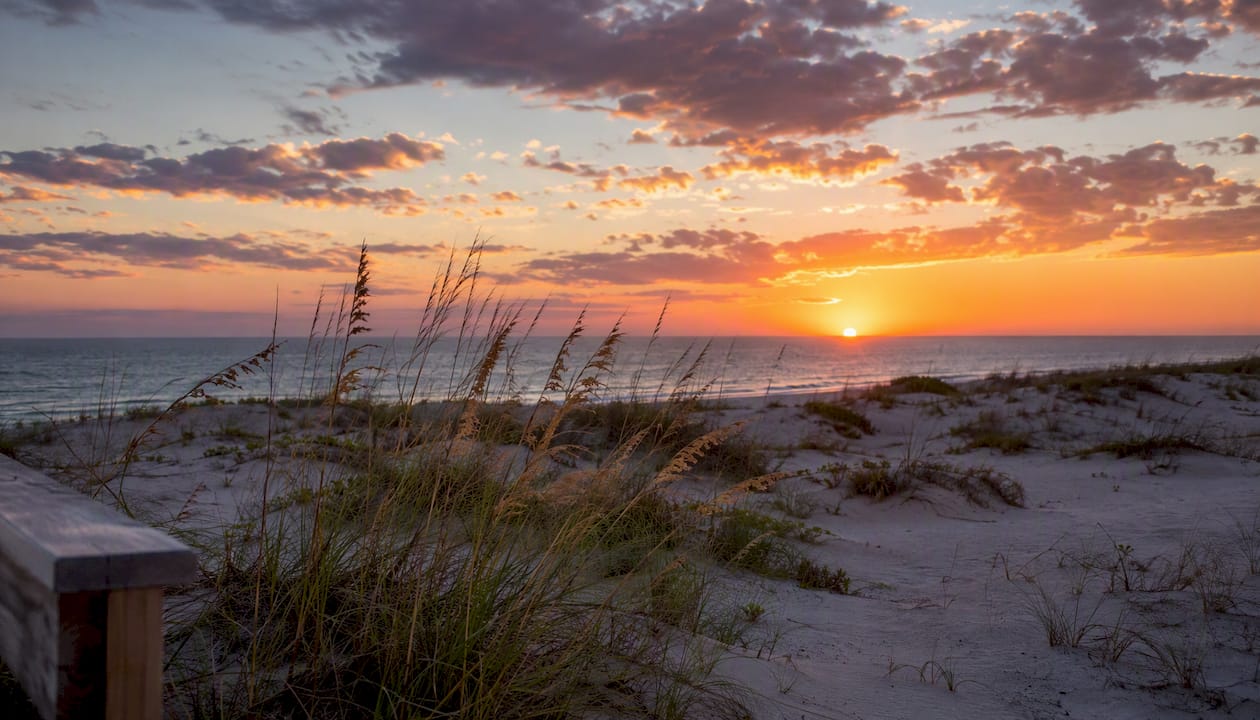
Navarre Pier is the longest pier in Florida at 1,545 feet, putting you far enough offshore to feel genuinely surrounded by water. The surrounding Navarre Beach is one of the least developed stretches of the Florida Panhandle, which keeps crowds manageable even in summer.
Panama City Beach Pier (M.B. Miller County Pier) offers a straightforward, fee-free sunset experience with a wide beach on either side. It is a solid family pick with nearby restaurants and resort amenities.
Key West / Mallory Square is the Gulf Coast’s most theatrical sunset venue. The nightly Sunset Celebration draws street performers and vendors to the waterfront plaza. The horizon is wide and the colors tend to run warm and deep. Arrive 45 minutes early to claim a good spot along the railing.
| Spot | Best For | What Makes It Strong | Access & Parking | Crowd Level |
|---|---|---|---|---|
| Naples Pier | Photography, romance | Open western horizon, 1,000-ft pier | Paid lot on 12th Ave S | Moderate |
| Pier 60, Clearwater | Families, casual viewers | Nightly festival, amenities nearby | Paid garages nearby | High |
| St. Andrews State Park | Photography, solitude | Multiple shoreline types, dune crossovers | Day-use fee, closes at sundown | Low–Moderate |
| Siesta Key | Families | Quartz sand reflects warm light | Free public lot | Moderate–High |
| Anna Maria Island | Romance, solitude | Old Florida charm, Rod & Reel Pier | Street parking | Low |
| Fort De Soto Park | Photography | Long pier, elevated sightline | Day-use fee, gate closes at sunset | Low–Moderate |
| Navarre Pier | Solitude, photography | Longest pier in FL (1,545 ft) | Free parking nearby | Low |
| Key West / Mallory Square | Romance, families | Festive atmosphere, wide horizon | Street/garage parking | Very High |
2. Alabama and Mississippi sunset spots worth the drive
Alabama’s Gulf Coast packs a surprising amount of variety into a short stretch of shoreline.
- Gulf State Park Pier, Gulf Shores — At roughly 1,540 feet, this is one of the longest piers in the region. The pier extends far enough into the Gulf that the horizon reads as open water in every direction. Parking is available at the pier lot; a small daily fee applies. Best for photographers and families who want a structured, amenity-friendly experience.
- Fort Morgan Beach — Located at the tip of the Fort Morgan Peninsula, this beach offers one of the most remote and wide-open sunset views in Alabama. Light pollution is minimal, the shoreline is uncrowded, and the historic fort itself creates an interesting silhouette option for photographers. Access is free; the drive down the peninsula takes about 45 minutes from Gulf Shores.
- Orange Beach / The Wharf — The Wharf is a waterfront entertainment complex with a Ferris wheel and elevated boardwalk that gives you a slightly elevated view over the water. It is the most social sunset spot in Orange Beach, with restaurants and bars within steps. Best for groups and couples who want dining alongside the view.
- Perdido Key State Park — Straddling the Florida-Alabama line, Perdido Key offers a preserved, undeveloped shoreline with almost no commercial development in sight. The park’s western-facing beach is particularly clean for horizon shots. A small parking fee applies; facilities are basic.
- Mississippi Gulf Coast (Biloxi/Ocean Springs) — The Mississippi shoreline faces south rather than west, which means sunsets here are more of a side-angle experience than a direct western drop. The man-made beach along Highway 90 in Biloxi offers long, unobstructed views, and the pier at Ocean Springs Harbor gives photographers a usable foreground. Best for travelers already in the area rather than a dedicated sunset trip.
3. Louisiana and Texas Gulf Coast picks
The western Gulf Coast trades Florida’s white sand for marsh grass, barrier islands, and wide-open skies. The colors can be just as vivid, and the crowds are far thinner.
Grand Isle, Louisiana sits at the end of a long causeway south of New Orleans. The island faces the Gulf directly, and the combination of marsh reflections on the bay side and open water on the Gulf side gives photographers two completely different compositions within a short walk. The state park at the island’s eastern tip has basic facilities and a fishing pier.
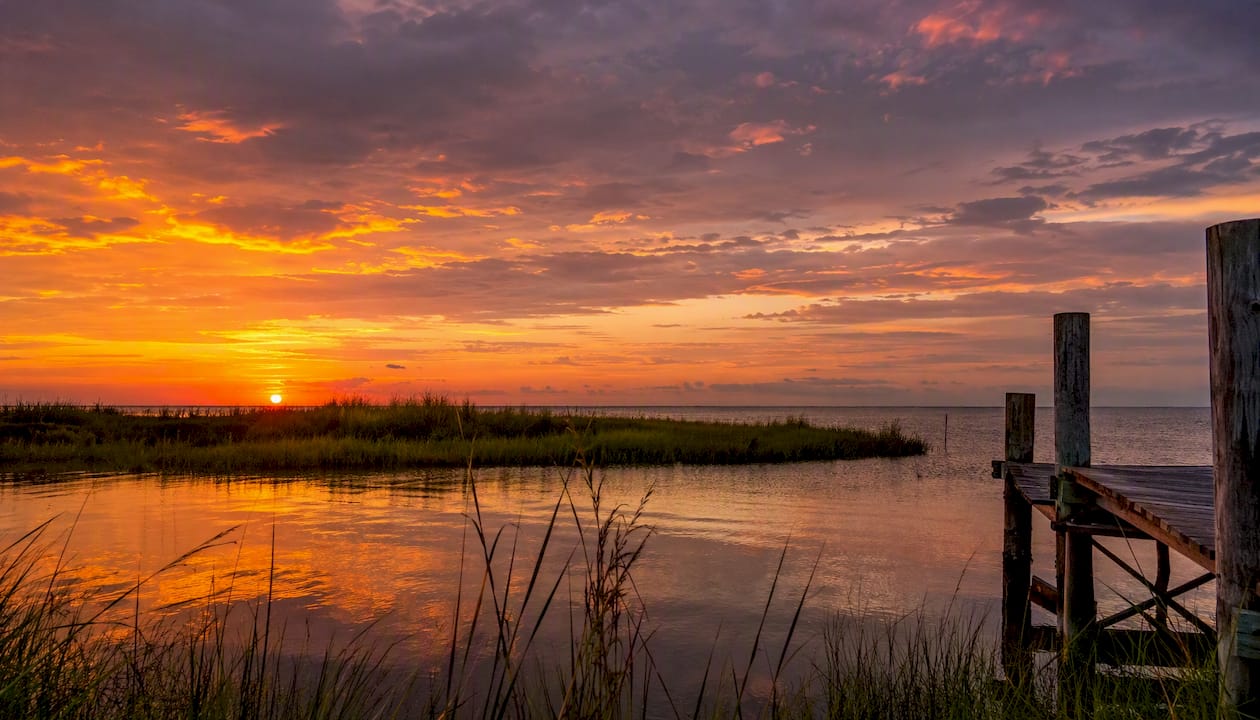
Port Fourchon, Louisiana is less visited but offers dramatic marsh-and-water sunsets with almost no other travelers around. Access requires a drive through working oil-field infrastructure, which is part of its raw, industrial-meets-natural character.
Galveston, Texas has several good sunset access points. The Galveston Island Historic Pleasure Pier puts you over the water with the Gulf stretching west, and the 61st Street Fishing Pier is a quieter alternative with a longer sightline. The Seawall Boulevard beach is wide and flat, making it easy for families to spread out.
Port Aransas, Texas is a barrier island town with a relaxed pace and genuine Gulf access. The Horace Caldwell Pier extends into the Gulf and is free to walk. The surrounding dunes and marsh channels create layered foreground options that flat beach access points rarely offer.
Padre Island National Seashore is the longest undeveloped barrier island in the United States. The northern access point near Corpus Christi gives you miles of empty beach facing west-southwest. No commercial development means no light interference and no crowds. The National Park Service charges a weekly vehicle fee.
4. Pier, cruise, or rooftop: which sunset experience fits you?
The format of your sunset experience shapes everything from your photo composition to how relaxed the evening feels.
Piers give you a fixed, elevated platform over the water. The horizon is clean, the foreground is built in (the pier railing, pilings, or other visitors), and you can set up a tripod without worrying about motion. State park piers like Fort De Soto and Gulf State Park Pier extend your sightline and can lengthen the apparent afterglow by keeping you above the waterline longer. The tradeoff is that popular piers get crowded fast.
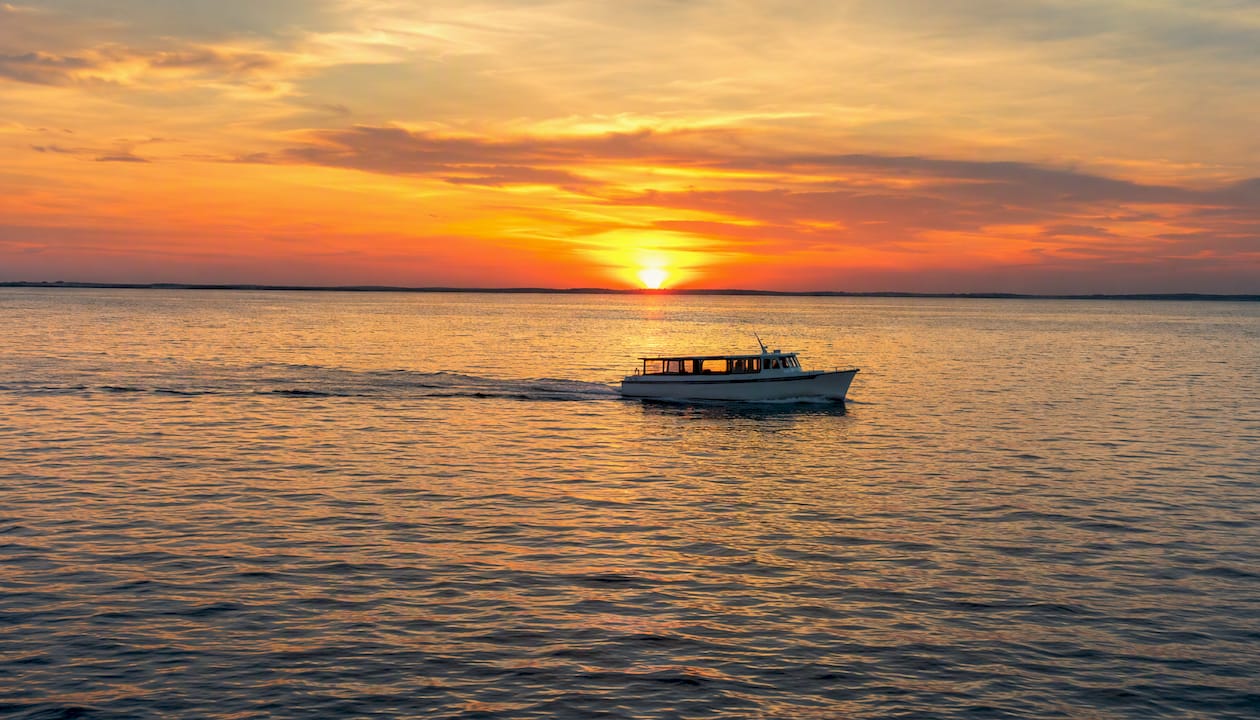
Sunset cruises put you on a moving platform, which introduces motion blur challenges for photographers but creates a genuinely immersive experience for everyone else. The boat’s changing angle means you get multiple compositions in a single outing. Naples and Clearwater both have active sunset cruise markets; Destin’s harbor offers group-friendly tour options that work well for families or larger parties.
Rooftop bars and waterfront restaurants trade photographic control for comfort. You get an elevated view, a drink in hand, and no sand in your shoes. The best options in the St. Pete/Clearwater area sit close enough to the water that the horizon is visible from the bar. The tradeoff is that glass, railings, and ambient lighting complicate photography.
| Format | Best For | Photographic Advantage | Key Limitation |
|---|---|---|---|
| Pier | Photography, families | Fixed platform, built-in foreground | Crowds at popular piers |
| Sunset cruise | Romance, groups | Multiple angles, immersive experience | Motion blur, limited tripod use |
| Rooftop/restaurant | Casual viewers, couples | Elevated view, comfortable | Glass/railings interfere with shots |
| Open beach | Solitude, wide compositions | Full horizon, flexible positioning | No elevation, no foreground structure |
Pro Tip: For photographers, a fixed pier beats a cruise every time for sharp images. If you want the cruise experience AND good photos, bring a fast prime lens (f/1.8 or wider) and shoot in burst mode to catch stable moments between swells.
5. How to photograph Gulf Coast sunsets better
Better Gulf Coast sunset photos come down to three things: arriving early, exposing correctly, and staying after the sun drops.
Arrive 30–60 minutes before sunset to scout your foreground and set up your composition before the light changes. The 20–30 minutes after the sun disappears below the horizon often produce the most saturated purples and pinks, so do not pack up when the sun drops.
Numbered checklist for on-site use:
- Check the exact sunset time for your location (apps like PhotoPills or The Photographer’s Ephemeris give precise local times).
- Arrive 45–60 minutes early, especially in Destin and Panhandle locations where coastal weather patterns can shift quickly.
- Scout your foreground: a pier railing, driftwood, a silhouetted pelican, or wet sand with reflections all add depth.
- Underexpose by a couple of f-stops to boost color saturation and preserve the sun’s outline. On a smartphone, tap the sun on your screen and drag the exposure slider down.
- Use a wide-angle lens (16–24mm) for full horizon shots and a telephoto (200mm+) to compress the sun against a distant pier or island silhouette.
- Shoot in RAW if your camera supports it — the extra dynamic range is worth it in high-contrast sunset light.
- Stay for afterglow. The sky often deepens to violet and magenta 15–20 minutes after the sun is gone.
Pro Tip: A perfectly clear sky is not always your best friend. Thin, high clouds and higher humidity scatter low-angle light and often produce deeper oranges and purples than a cloudless evening. Check the forecast, but do not cancel a shoot just because clouds are present.
6. When to go and what to expect by season
Timing a Gulf Coast sunset trip involves balancing color quality, crowd levels, and weather safety.
- October through December is the sweet spot for most of the Gulf Coast. Humidity drops, skies clear, and the lower sun angle produces longer golden hours. Snowbird season begins in November, which raises crowd levels at popular Florida spots but keeps Alabama and Texas quieter.
- January through March offers the clearest skies and the least crowded beaches. The tradeoff is shorter days and cooler evenings. Naples and Key West stay warm enough for comfortable sunset watching.
- April and May bring rising humidity and occasional afternoon storms, but the moisture in the air often intensifies sunset colors. This is a good shoulder-season window before summer crowds arrive.
- June through August is peak tourist season. Pier 60, Naples Pier, and Mallory Square will be at their busiest. Arrive early and consider less-visited alternatives like Navarre Pier or Fort Morgan Beach. Summer storms can roll in fast, especially in the Panhandle, so watch the radar.
- September is hurricane season’s peak. Conditions can be spectacular when a storm is offshore (dramatic cloud formations, intense colors), but safety comes first. Check the National Hurricane Center before any coastal outing.
Safety and etiquette notes:
- Most state parks close at or shortly after sunset. Check gate hours before you go.
- Pier fishing areas often have designated zones; respect them and give anglers space.
- Do not approach or disturb nesting shorebirds or sea turtles, which are protected under federal law.
- Blue Angels air shows and other scheduled events at Pensacola Naval Air Station can dramatically change crowd levels on specific evenings. Check local event calendars when planning a Pensacola Beach shoot.
How these spots were selected
The recommendations in this guide reflect a combination of state park management plans, local tourism organization listings, regional press coverage, and photographer community input. Every spot on the list has documented public access, confirmed parking or transit options, and a clear western or southwestern exposure that produces genuine sunset views.
Emeraldcoastbyowner has covered the Gulf Coast since 2016, building a regional knowledge base through thousands of property listings and traveler interactions across Florida, Alabama, Mississippi, Louisiana, and Texas. The Gulf Coast parks and beaches guide on the ECBYO blog provides additional park-level detail for readers planning multi-day trips.
Sources used include:
- Florida State Parks management plans and official park pages
- Visit St. Pete/Clearwater tourism listings
- Naples Daily News local photography coverage
- National Park Service (Padre Island National Seashore)
- Local Destin and Panhandle travel guides
A local perspective on Gulf Coast sunsets
The most underrated sunset experience on the Gulf Coast is Fort Morgan Beach on a weeknight in October. The peninsula is a 45-minute drive from Gulf Shores, the parking lot is nearly empty, and the horizon is as clean as anything you will find in Florida. Most travelers skip it because there are no restaurants or resort amenities nearby. That is exactly the point.
For photographers specifically: the dune crossovers at St. Andrews State Park are worth the extra walk. The elevated position above the beach gives you a foreground of sea oats and sand that flat beach access points cannot replicate. Get there 45 minutes before sunset and walk the crossovers first to pick your angle before the light changes.
One more tip that most guides skip: the bay side of barrier islands (Anna Maria, Sanibel, Perdido Key) often produces softer, more pastel sunset colors than the Gulf side because the water is calmer and the reflections are cleaner. If you want drama, face the Gulf. If you want something quieter and more painterly, turn around.
Stay near your favorite sunset spot with Emeraldcoastbyowner
Watching the sun drop into the Gulf is one thing. Waking up the next morning 10 minutes from the pier is another. Emeraldcoastbyowner connects travelers directly with property owners across the entire Gulf Coast, from Naples and Clearwater to Gulf Shores, Destin, and Port Aransas, with no traveler service fees added at checkout.
Search Florida vacation rentals by beach town, filter for beachfront or pier-access properties, and message owners directly to ask about parking, sunset views from the balcony, or pet-friendly policies. Heading to Texas? Browse Texas Gulf Coast rentals near Galveston or Port Aransas. Check the current deals and specials page for discounted rates near top sunset destinations. Start your search at Emeraldcoastbyowner and book direct.
Sources
The sources below cover park access, photography technique, and regional sunset guides used in compiling this article.
- The best places to watch sunset — Visit St. Pete/Clearwater
- Your guide to SWFL sunsets: top beaches & tips — Naples Daily News
- How to capture stunning Florida sunsets: tips from pro photographers (2026)
FAQ
What is the single best Gulf Coast sunset spot for photographers?
St. Andrews State Park near Panama City Beach offers the most compositional variety, with a Gulf pier, dune crossovers, marsh overlooks, and pass-facing shorelines all within one park. Naples Pier is the top pick for a clean, open-water horizon shot.
When is the best time of year to watch sunsets on the Gulf Coast?
October through December delivers the clearest skies, lower humidity, and the least crowded beaches across most Gulf Coast destinations. January through March is also strong for clarity, particularly in Southwest Florida.
How early should you arrive at a Gulf Coast sunset spot?
Arrive 30–60 minutes before the scheduled sunset time to scout your foreground and set up. At busy spots like Pier 60 or Mallory Square, arriving 45 minutes early also helps you claim a good position before crowds build.
Are Gulf Coast state park sunset spots free to visit?
Most state parks charge a day-use vehicle fee (around $4 per vehicle). Parks like St. Andrews and Fort De Soto close at or shortly after sunset, so check gate hours before your visit to avoid being locked in.
Does Emeraldcoastbyowner have rentals near top sunset spots?
Yes. Emeraldcoastbyowner lists thousands of vacation rentals directly from owners across Florida, Alabama, Mississippi, Louisiana, and Texas, including beachfront and pier-access properties near Naples, Clearwater, Gulf Shores, Destin, and Port Aransas, with no traveler service fees.
Recommended
- Compare Gulf Coast Beach Towns | ECBYO
- Beach Time! An ECBYO blog about all things Gulf Coast
- Gulf Coast National Parks and Beaches: Top Picks for Nature Lovers | ECBYO
- Gulf Coast Couples Retreats: 9 Best Examples for 2026 | ECBYO

About the Author
Joe Godar of the Emerald Coast by Owner Editorial Team creates destination guides, vacation-planning resources, and local travel content focused exclusively on Gulf Coast vacation rentals.
Our team researches beach communities, vacation rental trends, family travel planning, local attractions, and direct-booking best practices across Florida, Alabama, Mississippi, Louisiana, and Texas. Every guide is written to help travelers make more informed booking decisions while avoiding unnecessary third-party guest service fees.
Since launching in 2016, Emerald Coast by Owner has helped connect travelers directly with verified vacation rental hosts across the Gulf Coast.
This article was reviewed for accuracy and updated using local destination research and current vacation rental market insights.


