


The best Gulf Coast shoulder-season windows are late April through May and late September through October. Spring gives you warm days and pre-hurricane peace of mind at lower rates. Fall gives you the warmest water of the year, thinner crowds, and the steepest lodging discounts, with the trade-off being a slice of overlap with hurricane season and a few festival weekends that spike prices.
TL;DR:
- The best shoulder-season windows are late April to May and late September to October, offering warm weather, lower rates, and thinner crowds.
- Air and water temperatures peak in October, with water often feeling warmer in fall than spring despite similar calendar distances from summer.
- Fall shoulder season overlaps with hurricane season, so travelers should prefer refundable rates, buy travel insurance, and monitor NOAA updates.
- Booking directly with property owners can save 15 to 20 percent by avoiding third-party booking fees and allows for more flexible minimum stays.
- Major festivals like the Hangout Music Festival and National Shrimp Festival can temporarily spike demand and prices during shoulder months; check calendars before booking.
Table of Contents
- What Does Gulf Coast Shoulder Season Actually Mean?
- Why Does Shoulder Season Cost Less and Feel Less Crowded?
- How Warm Is the Water and Air During Shoulder Months?
- How Should You Plan Around Hurricane Season?
- Which Shoulder-Season Window Fits Your Trip Goal?
- What’s Worth Doing When the Crowds Thin Out?
- How Do You Book and Pack Smart for Shoulder Season?
- A Gulf Coast Travel Editor’s Take on Shoulder Season
- Book Direct and Skip the Guest Fees This Shoulder Season
- Sources
- FAQ
What Does Gulf Coast Shoulder Season Actually Mean?
“Shoulder season” gets thrown around loosely in general travel writing, but on the Gulf Coast it has a specific, useful meaning: the weeks that sit between the crowded, expensive peak of summer and the colder, quieter dead of winter. It’s the sweet spot where the beaches are still warm enough to enjoy but the crowds and prices have backed off from their June through August highs.
Regional data backs this up with real numbers. Tripbase’s month-by-month breakdown tags May and the October through December stretch as the Gulf Coast’s shoulder months, based on temperature and crowd patterns. Alabama’s Gulf Shores and Orange Beach corridor follows a similar rhythm, with local guidance pointing to late September through October and late April through May as the two windows that balance comfort, cost, and crowd size, according to regional travel guidance.
Here’s how it breaks down across the coast:
- Spring shoulder (late April to May): Warm air, water still cool but swimmable, no hurricane risk yet.
- Fall shoulder (September through November): October is the sweet spot, with November trailing off as temperatures cool.
- Regional variation: Florida’s Panhandle and Alabama’s beaches track closely together, while Texas Gulf beaches tend to run a few degrees warmer in the shoulder months and Louisiana’s coastal towns lean more on cultural events than beach weather to draw visitors.
Winter (December through February) is the true off-season for swimming, even though it still counts as a value period for lodging.
Why Does Shoulder Season Cost Less and Feel Less Crowded?
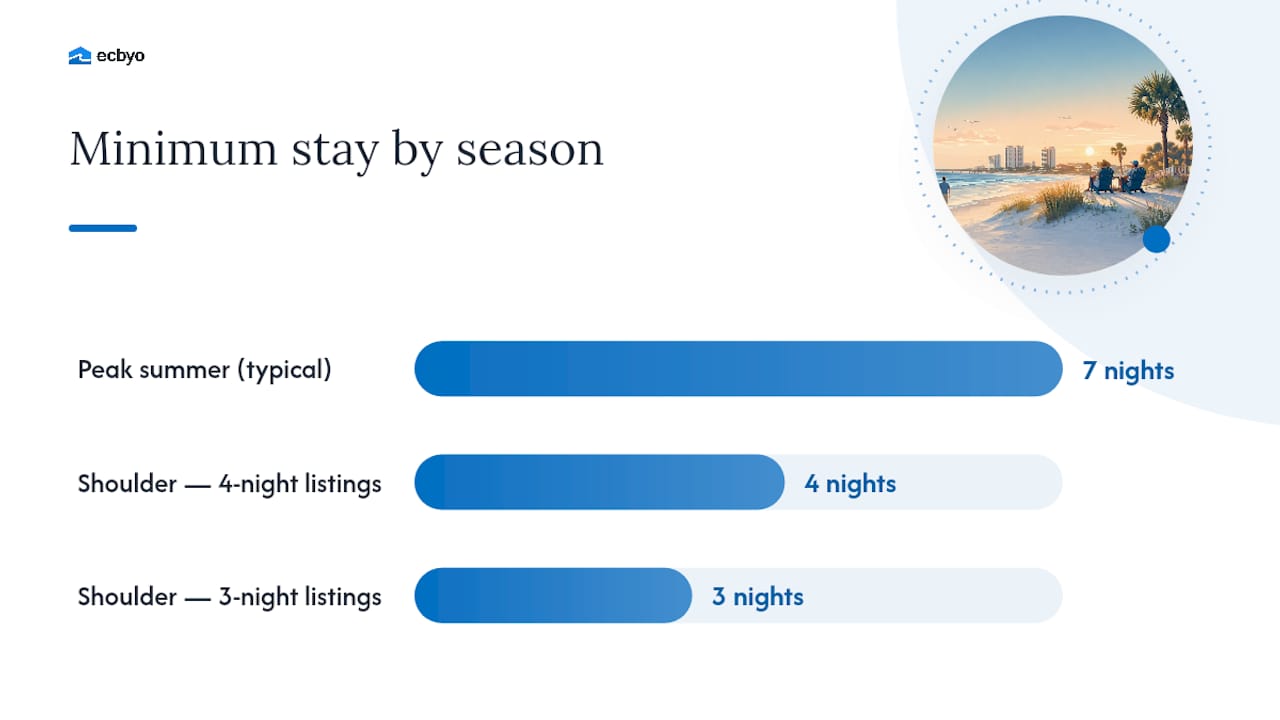
Rental owners set their nightly rates around demand, and demand on the Gulf Coast is brutally seasonal. Peak summer weeks often carry seven-night minimum stays and premium pricing, while shoulder-season listings frequently drop those minimums to three or four nights and cut nightly rates substantially. That flexibility alone can reshape a trip budget, letting you book a long weekend instead of committing to a full week.
Airfare follows a similar pattern. Flights into Gulf Coast airports like Pensacola, Mobile, and Fort Myers tend to ease up noticeably after Labor Day, and traffic on coastal highways thins out fast once school schedules resume. Direct booking with owners can also save travelers real money versus fee-heavy booking platforms, with one Gulf Coast travel guide estimating savings of roughly 15 to 20 percent simply by skipping OTA guest fees.
That said, shoulder season isn’t uniformly quiet. A few dates buck the trend hard:
- The Hangout Music Festival in Gulf Shores pulls in tens of thousands of visitors each spring and pushes rates up for that specific weekend.
- The National Shrimp Festival in Alabama, typically held in October, does the same for a fall weekend.
- Local college football Saturdays near coastal towns can quietly spike demand in nearby lodging markets.
Pro Tip: Book your shoulder-season stay 60 to 90 days out if you want the best rate, then check the local festival calendar before you lock in dates. Moving your trip by even a week can sidestep an event-driven price jump entirely.
How Warm Is the Water and Air During Shoulder Months?
Air temperature is only half the planning equation. Water temperature is what actually determines whether your trip feels like a beach vacation or a scenic walk along the sand. May delivers warm air but water that’s still catching up to summer levels. By late September and through October, the Gulf has spent months absorbing summer heat, so the water often feels warmer in fall than it does in spring, even though the calendar days are similar distances from summer.
| Month | Avg. Air Temp | Avg. Water Temp | Rainfall Pattern | Swim-Friendly? |
|---|---|---|---|---|
| May | Upper 70s to mid 80s°F | Mid 70s°F | Increasing afternoon showers | Yes, with cooler water |
| October | Upper 70s to low 80s°F | Upper 70s to low 80s°F | Drier, fewer storms | Yes, warmest shoulder month |
| November | Mid 60s to low 70s°F | Low 70s°F | Drier, occasional cold fronts | Yes for most, cooler mornings |
| December | Upper 50s to mid 60s°F | Upper 60s°F | Drier, cool fronts common | Limited, better for beach walks |
These figures reflect general Gulf Coast Florida patterns compiled by Tripbase’s seasonal weather data, and they shift slightly by subregion. Texas beaches run a touch warmer than Florida’s Panhandle in the same months, while Louisiana’s marshier coastline sees less beach swimming and more boat-based activity regardless of season. Humidity drops noticeably after Labor Day across the whole coast, which is part of why October consistently rates as the most comfortable month for walking, biking, or sitting outside for hours at a stretch.
How Should You Plan Around Hurricane Season?
Fall shoulder season overlaps with the back half of the Atlantic hurricane season, which runs from June 1 through November 30 according to NOAA’s official season dates. September and October carry the highest statistical activity, even though most days in that window pass without any storm impact at all. The risk is real, but it’s manageable with a few practical habits.
Build these into your booking process rather than treating them as an afterthought:
- Choose refundable or flexible-cancellation rates whenever the price difference is small, especially for September and early October stays.
- Buy travel insurance that specifically covers named-storm cancellations, not just generic trip interruption.
- Ask your host directly about their evacuation and refund policy before you pay a deposit.
- Check NOAA’s tropical outlook in the week leading up to your trip rather than relying on general news coverage.
- Confirm reopening status for any specific restaurant, tour, or attraction you’re counting on, since some businesses were still rebuilding services after 2024’s storm season, per local Florida tourism reporting.
Pro Tip: If a storm is tracking anywhere near the Gulf during your travel week, call your host directly instead of waiting on an email response. Owners booking direct tend to answer faster than a call center ever will.
Which Shoulder-Season Window Fits Your Trip Goal?
Not every traveler wants the same thing from a shoulder-season trip, so match your priority to the right window instead of defaulting to whichever dates are open.
- Swim-focused travelers should aim for late September through October, when Gulf water temperatures peak for the shoulder season and crowds have thinned from summer highs.
- Budget-focused travelers do best in late April through May, since hurricane risk is essentially zero and lodging rates haven’t hit their summer ceiling yet.
- Birders and wildlife watchers should target either shoulder window, since migration activity at sites like Bon Secour National Wildlife Refuge tends to overlap with both spring and fall shoulder periods.
- Festival-goers need to check specific event dates first, since a single weekend like the Hangout Music Festival or National Shrimp Festival can override the general “shoulder equals cheaper” rule for that stretch.
If two of these goals conflict, weight swimming and pricing over event attendance. Missing one festival costs you far less than booking into a swim-unfriendly week by accident.
What’s Worth Doing When the Crowds Thin Out?
Shoulder season doesn’t just save money. It changes what a day at the coast actually feels like. Trails that are packed in July feel private in October, and boat tours that require booking weeks ahead in summer often have same-day openings.
A few activities specifically shine during these quieter months:
- Birding and nature walks at Bon Secour National Wildlife Refuge, where fall migration overlaps neatly with the shoulder-season crowd drop. Check the refuge’s FWS page before you go, since trail access can shift after storm events.
- Kayaking and paddleboarding on calmer, less boat-trafficked waterways.
- Shelling and dolphin-watching boat tours, which run shorter waitlists outside of summer.
- State park hiking trails, far more pleasant without July’s heat and humidity stacked on top of the crowds.
- Off-peak dining, where popular local restaurants that require reservations in summer often seat walk-ins in October and May.
One caveat worth knowing before you build an itinerary: some tour operators reduce their schedules once summer ends, running fewer daily departures or closing certain days entirely. Call ahead to confirm a specific outfitter is operating on your travel dates rather than assuming a summer schedule carries through fall.
How Do You Book and Pack Smart for Shoulder Season?
Booking tactics matter more in shoulder season than in peak summer, because pricing and availability move around more. Flexible dates are your biggest lever. Shifting a trip by even three or four days can land you outside an event weekend or catch a lower minimum-stay requirement.
Booking directly with a property owner has a specific advantage here: you can actually ask questions that affect your trip. Find out whether beach access requires a walk or a shuttle, what the property’s storm and refund policy looks like, and whether nearby attractions are running full seasonal hours. A host who knows their property personally can answer all of that in one message, which is harder to get from a large booking platform’s support queue.
Pack for range, not for one forecast. Shoulder-season weather swings more than summer’s steady heat:
- Light layers for cooler mornings and evenings, especially in November.
- A rain shell for spring’s increasing afternoon showers.
- Reef-safe sunscreen, since UV exposure stays strong even when air temperatures feel mild.
- A printed or saved copy of your host’s contact info and cancellation policy in case a storm disrupts your plans.
Pro Tip: Ask your host for their preferred way to reach them if weather turns. A direct phone number beats a booking app’s messaging system every time you actually need a fast answer.
A Gulf Coast Travel Editor’s Take on Shoulder Season
Late September through October is the window most travelers underrate, and it shouldn’t be. Everyone talks about spring shoulder season because it’s the safe, no-hurricane-risk choice, but that safety comes with cooler water and a narrower comfort window. Fall gives you the warmest swimming conditions of the entire shoulder period, alongside the steepest price drops, and the hurricane risk is far more manageable than most travelers assume once you build in refundable rates and basic monitoring habits.
My honest booking preference for most travelers is a four to five night trip in the first two weeks of October, timed to land after any major festival weekend and before Halloween travel bumps kick in. That stretch consistently threads the needle between warm water, thin crowds, and rates that haven’t yet climbed back up for holiday travel. Readers weighing the difference between high season and shoulder season on the Gulf Coast will find October is where that gap is widest in your favor.
— Gail
Book Direct and Skip the Guest Fees This Shoulder Season
Some vacation rental marketplaces connect you directly to property owners, potentially helping you avoid third-party booking fees during shoulder season. Listings on direct booking platforms often allow contact with hosts, so you can negotiate flexible dates, confirm storm policies, or ask about beach access before committing, instead of relying solely on generic listing information.
Direct communication with property owners can be especially useful in shoulder months, when minimum-stay rules may be more flexible and owners might accommodate varied dates. Whether you’re eyeing a fall trip along Florida’s Gulf Coast or hunting for a spring deal in Alabama’s beach towns, you can search current listings, message owners directly, and lock in a stay without paying a traveler service fee. Property owners looking to list their own place for the upcoming shoulder season can do so through the ECBYO subscription for $499 per year. Start browsing available shoulder-season rentals today and message an owner directly to check their dates.
Sources
- Best Time to Visit Gulf Coast Florida (2026): Weather, Crowds & Prices | Tripbase
- Best Time to Visit Orange Beach & Gulf Shores Alabama - Gulf Shores | Orange Beach | Perdido Key
- Bon Secour National Wildlife Refuge | U.S. Fish & Wildlife Service
FAQ
What Is the Best Month to Visit Gulf Shores?
October is generally considered the best single month, combining the warmest shoulder-season water temperatures with lower crowds and lodging rates, according to Gulf Shores area travel guidance. Late April and May are strong runner-ups if you want zero hurricane risk instead.
What Is Shoulder Season on the Gulf Coast?
Shoulder season refers to the weeks between peak summer crowds and the colder off-season, specifically late April through May and September through November on the Gulf Coast. Tripbase’s seasonal data tags May and October through December as the shoulder months for the Gulf Coast Florida region.
What Is the Cheapest Month to Visit Gulf Shores?
December and January tend to be the cheapest months overall, but they come with cool water and limited swimming. Among the true shoulder months, late September through October delivers the best combination of low prices and warm, swimmable water.
What Are Typical Shoulder-Season Dates?
The two main shoulder windows are late April through May in spring and late September through October in fall, with November trailing off as a secondary fall option. Regional guides and seasonal weather data both point to these same two stretches as the Gulf Coast’s core shoulder period.
Does Booking Direct Save Money During Shoulder Season?
Yes. Booking directly with a property owner through a marketplace like Emeraldcoastbyowner avoids the guest service fees charged by many third-party platforms, and one Gulf Coast travel guide estimates savings of roughly 15 to 20 percent from skipping those fees. Shoulder-season listings also tend to have more flexible minimum-stay requirements, which adds further savings.
Recommended
- Best Time to Visit Gulf Shores: Late Apr to May or Late Sep to Oct
- What Is High Season on the Gulf Coast?
- October Gulf Coast Beach Explained: Your Fall Travel Guide
- Best Time to Visit Panama City Beach for Warm Water or Low Crowds
 |
About the AuthorGail Greiner of the Emerald Coast by Owner Editorial Team creates destination guides, vacation-planning resources, and local travel content focused exclusively on Gulf Coast vacation rentals. Our team researches beach communities, vacation rental trends, family travel planning, local attractions, and direct-booking best practices across Florida, Alabama, Mississippi, Louisiana, and Texas. Every guide is written to help travelers make more informed booking decisions while avoiding unnecessary third-party guest service fees. Since launching in 2016, Emerald Coast by Owner has helped connect travelers directly with verified vacation rental hosts across the Gulf Coast. This article was reviewed for accuracy and updated using local destination research and current vacation rental market insights. |


