


TL;DR:
- Booking Florida Keys cottages directly from owners helps avoid extra fees and ensures permit verification.
- Always confirm jurisdiction, permit, and tax registration details before paying deposits to avoid legal and safety issues.
The best way to find Florida Keys cottage rentals is to search a book-direct marketplace like Emeraldcoastbyowner, confirm the host’s local registration and tax status, and verify the property’s jurisdiction before paying any deposit.
Before you go further, run through these immediate steps:
- Check jurisdiction first. Confirm whether the property sits in unincorporated Monroe County or inside a municipality (Key West, Islamorada, Marathon). The answer changes minimum-stay rules, permit requirements, and occupancy limits.
- Verify tax and permit status. Ask the host for their Monroe County tourist development tax registration number and Florida Department of Revenue sales tax registration.
- Confirm the minimum stay. Some zoning districts require 28-day minimums. Never assume a nightly or weekly rate means short stays are legal there.
- Review recent guest photos and reviews. Listings with only professional photos and no guest-submitted images deserve extra scrutiny.
- Confirm a local contact. A host or property manager reachable by phone within the Keys is a meaningful trust signal.
Pro Tip: Open Google Maps satellite view for the exact address before booking. Cross-reference the satellite image with the listing’s exterior photos. If the dock, pool, or beach access shown in photos doesn’t match the satellite view, ask the host to explain the discrepancy before you pay.
Table of Contents
- Where can you search and filter Florida Keys cottage rentals?
- Which part of the Florida Keys should you pick?
- What do Florida Keys cottages usually include?
- How does pricing work, and what will the total cost be?
- What booking logistics and rules should you confirm before paying?
- When should you visit, and when should you avoid the Florida Keys?
- How do you vet a listing and spot red flags?
- What are the tax and registration rules for Keys cottage rentals?
- A practical booking checklist you can use right now
- Key Takeaways
- Why the “just book it” approach fails in the Florida Keys
- Florida Keys cottages, no guest fees, direct from the owner
- Useful sources for verification and further reading
- FAQ
Where can you search and filter Florida Keys cottage rentals?
The most reliable discovery paths are book-direct marketplaces, specialized vacation-rental platforms, and local property-manager websites. Book-direct options like Emeraldcoastbyowner let travelers contact owners without paying guest service fees, which can add 10–15% to the total cost on fee-heavy platforms.
When searching, the filters below separate genuinely suitable cottages from listings that only look right at first glance. Use map-based search to narrow by specific Key, then layer filters to match your priorities.
| Filter | Why It Matters |
|---|---|
| Waterfront / beachfront | Confirms direct water access vs. “water view” from a distance |
| Private dock | Critical for boaters; verify boat size limits and slip depth |
| Pet-friendly | Policies vary widely; confirm breed/weight restrictions directly |
| Number of bedrooms | Avoids oversized or undersized properties early in the search |
| AC included | Not universal in older Keys bungalows; confirm before summer travel |
| Full kitchen | Distinguishes cottages from studio-style units |
| Parking / boat trailer | Parking is limited in Key West and parts of Islamorada |
| Minimum-stay filter | Filter to minimum stay to surface legally compliant listings |
Combine map search with the waterfront and minimum-stay filters first. That combination eliminates the majority of listings that either misrepresent location or sit in restricted zoning. For Key Largo and Islamorada specifically, the private-dock filter is worth applying even if boating isn’t the primary goal, since dock access often signals a genuinely waterfront property rather than a canal-adjacent one.
Which part of the Florida Keys should you pick?
The Florida Keys stretch roughly 120 miles from Key Largo down to Key West along U.S. 1, known locally as the Overseas Highway. Drive times are deceptive: Key Largo to Key West is about two hours without stops, but island-hopping adds time fast. Pick your base first, then plan day trips rather than trying to stay in multiple locations.
Key Largo is the first Key you reach from Miami and the closest to the mainland. It’s the top choice for snorkeling and diving, with John Pennekamp Coral Reef State Park right at its doorstep. Cottages here tend to be canal-front or bay-side, and boat-trailer parking is generally easier than further south.
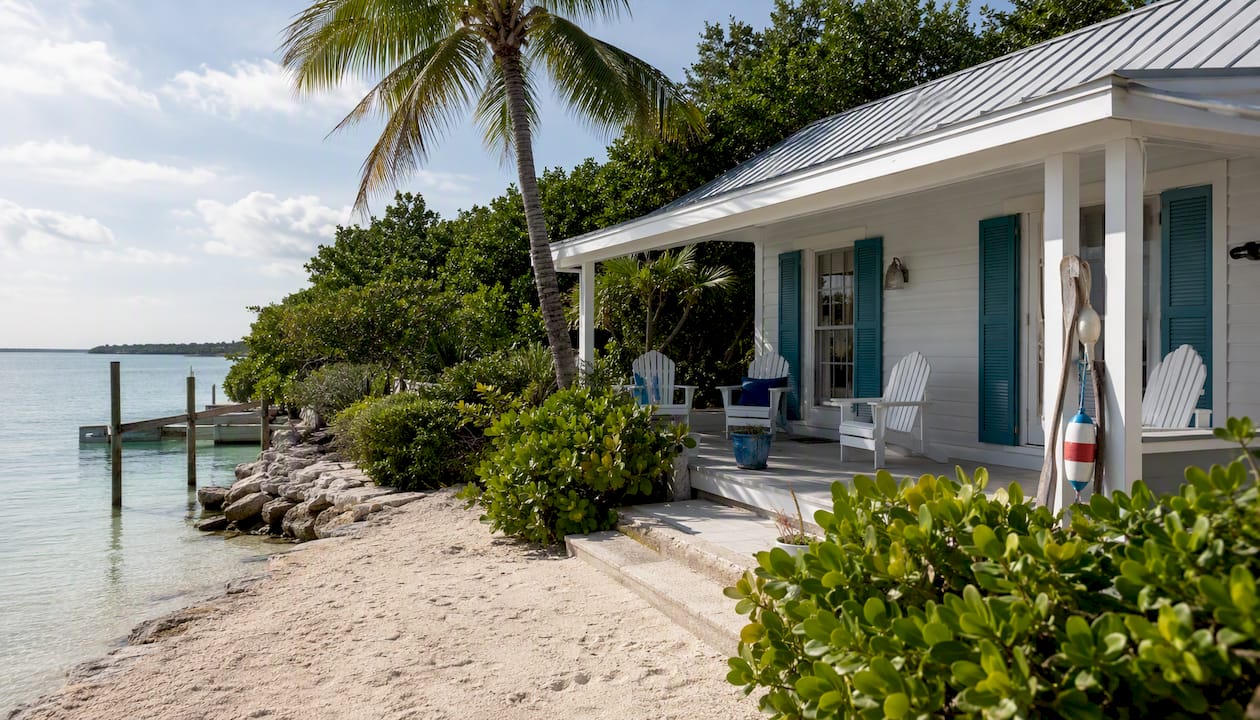
Islamorada sits in the Upper Keys and draws serious anglers and water-sports enthusiasts. The vibe is laid-back but upscale, with excellent restaurants and a strong sport-fishing culture. Waterfront cottages here often come with private docks and quick access to both the Atlantic and Florida Bay.
Marathon is the geographic midpoint of the Keys and has a more residential, family-friendly character. The Seven Mile Bridge is nearby, and Sombrero Beach is one of the few true sandy beaches in the Keys. Cottage rentals here tend to offer more space for the price than Key West.
Key West is the most densely developed and the most regulated. Short-term rental rules are strict, local zoning can prohibit short stays entirely in some districts, and parking is genuinely scarce. It’s the right choice for travelers who want walkable nightlife and historic charm, but confirm legal rental status carefully before booking.
Lower Keys (Big Pine Key, Summerland Key, Cudjoe Key) offer the quietest experience and some of the most affordable cottage options. Wildlife refuges limit development, which keeps the area uncrowded. These are best for travelers who want solitude and don’t need proximity to restaurants or nightlife.
A quick rule on waterfront access: canal-front cottages are common throughout the Middle and Lower Keys and give boat access without ocean-facing views. True oceanfront or bay-front cottages command a premium and are most concentrated in Islamorada and Marathon.
What do Florida Keys cottages usually include?
A typical Keys cottage is not a luxury resort unit. Most are older Florida bungalows or concrete-block homes updated over the years, and the character varies considerably between a 1960s fishing cottage and a fully renovated waterfront property.
Common amenities in most listings:
- Central AC (standard in renovated cottages; confirm for older properties)
- Full kitchen with stove, refrigerator, and basic cookware
- Wi-Fi
- Outdoor shower (nearly universal in waterfront properties)
- Parking for one or two vehicles
- Basic linens and towels
Premium amenities that vary by property:
- Private dock with boat lift or slip
- Private pool or hot tub
- Washer and dryer (not universal in smaller cottages)
- Beach access (true sandy beach is rare outside Marathon and a few Lower Keys spots)
- Kayaks, paddleboards, or fishing gear included
The style trade-off worth understanding: older Keys bungalows have authentic charm and often better locations, but kitchens and bathrooms may be dated. Renovated cottages offer modern finishes but sometimes sit on less desirable lots. Island-resort cottages within a managed complex offer the most consistent amenities but feel less private.
Pro Tip: Before booking, ask the host to send a current photo of the kitchen stovetop and the dock (if listed). These two features are most commonly misrepresented or shown in outdated photos. Confirming kitchen contents, linens, and parking details via direct message before arrival prevents the most common check-in disappointments.
How does pricing work, and what will the total cost be?
Florida Keys vacation homes carry some of the highest transient tax burdens in Florida. Understanding the full cost structure before booking prevents sticker shock at checkout.
A typical pricing breakdown looks like this:
| Cost Component | Typical Range / Rate | Notes |
|---|---|---|
| Base nightly rate | Varies by season and location | Weekly rates often slightly lower per night |
| Cleaning fee | Fixed per stay | Confirm whether it’s per stay or per night |
| Platform / guest service fee | Varies on book-direct; varies elsewhere | Book-direct avoids this cost entirely |
| Security deposit | Fixed or percentage | Refundable; confirm timeline |
| Florida state sales tax | 6% base rate | Plus any applicable discretionary surtax |
| Monroe County tourist development tax | 5% | Separate from state tax; owner-remitted |
| Combined transient tax | The combined rate of state and county taxes on short-term stays |
The combined transient tax rate in Monroe County reflects Florida’s state sales and use tax alongside the county’s 5% tourist development tax. That percentage applies to the base rental amount, not the cleaning fee, though practices vary by host.
Before confirming any booking, verify these items in the price breakdown:
- Is the cleaning fee charged once per stay or per night?
- Are taxes itemized separately, or rolled into a quoted total?
- What is the security deposit amount and refund timeline?
- Does the platform collect and remit state taxes, or does the owner handle all tax remittance?
- Is there a guest service fee, and can you book direct to avoid it?
What booking logistics and rules should you confirm before paying?
Minimum-stay rules in the Florida Keys are not just a host preference. Zoning ordinances in some areas require a minimum 28-day stay, meaning a listing advertising nightly or weekly rates in that zone may be operating illegally. Whether a property sits in unincorporated Monroe County or inside a city limits changes permit, minimum-stay, and management requirements entirely, so jurisdiction is the first thing to confirm.
Hosts operating legally in Monroe County should hold:
- A Florida Department of Revenue sales and use tax registration
- A Monroe County tourist development tax account with the Monroe County Tax Collector
- A local business tax receipt from the relevant municipality or county
- Any applicable vacation rental license from the Florida Department of Business and Professional Regulation (DBPR)
Pre-booking checklist:
- Confirm the full street address and verify it on Google Maps
- Ask for the host’s Monroe County tourist tax registration number
- Confirm the minimum-stay requirement and whether it matches local zoning
- Get check-in logistics in writing (key code, lockbox, or in-person handoff)
- Confirm parking instructions and any boat/trailer rules
- Review the cancellation policy before paying any deposit
- Identify a local contact number reachable during your stay
Pro Tip: When messaging a host before booking, ask directly: “Can you share your Monroe County tourist development tax registration number and your DBPR vacation rental license number?” A legitimate host will provide both without hesitation. Platforms do not automatically remit the county’s 5% tourist development tax on owners’ behalf, so an unregistered host creates a compliance risk for the stay.
When should you visit, and when should you avoid the Florida Keys?
The Florida Keys have two distinct travel seasons, and the gap between them in price and experience is significant.
High season (mid-December through April) brings the best weather, the most events, and the highest prices. Temperatures stay in the low-to-mid 70s°F, humidity is manageable, and demand for cottage rentals peaks around the winter holidays and spring break. Book at least three to four months in advance for peak weeks.
Shoulder season (May and November) offers a genuine sweet spot: lower rates, thinner crowds, and still-pleasant weather. May in particular can be excellent before summer humidity arrives.
Hurricane season runs June 1 through November 30. The statistical peak of Atlantic hurricane activity falls in September and October. Travel insurance with trip-cancellation coverage is strongly recommended for any Keys booking during this window. Cancellation policies on cottage rentals vary widely, and a named storm can make a property inaccessible even without a direct hit.
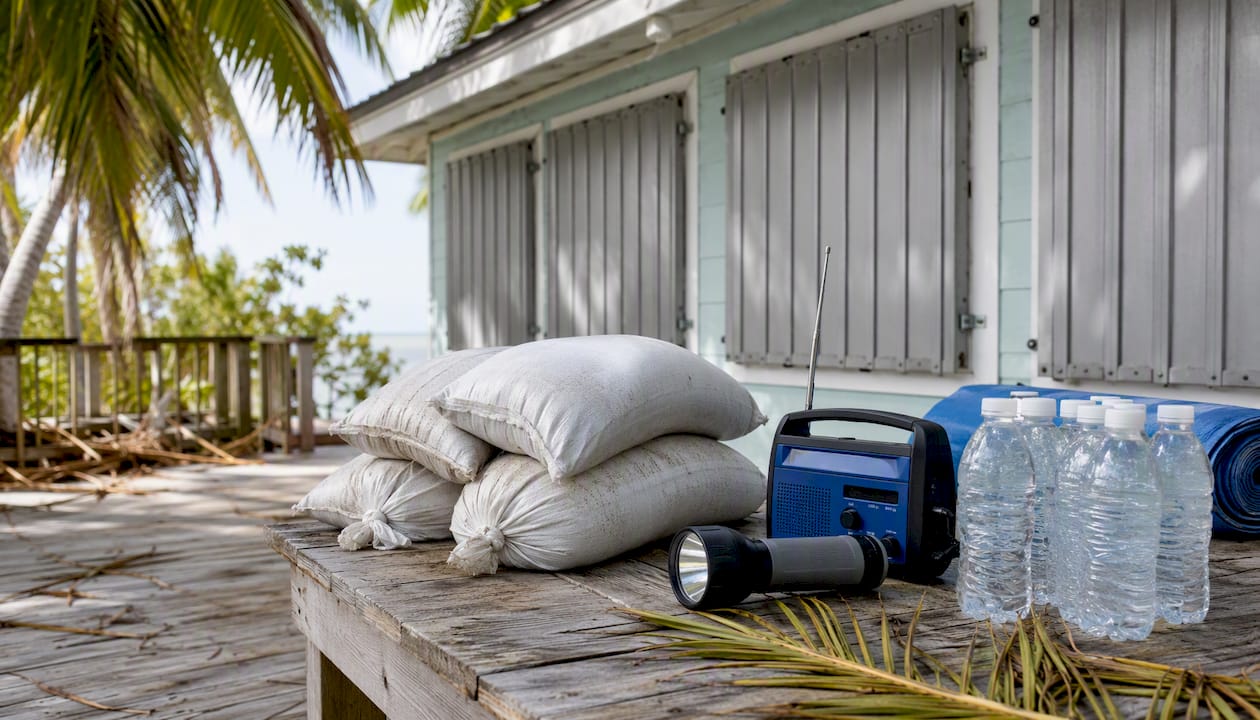
Low season (July through mid-October) brings the lowest rates but also the highest humidity, afternoon thunderstorms, and the greatest hurricane risk. Families with school-age children often book July despite the heat; confirm that the cottage has reliable AC and a covered outdoor space before committing.
For off-peak travel, booking four to six weeks in advance is usually sufficient. For holiday weeks, Fantasy Fest in Key West (late October), and spring break, six months is not too early.
How do you vet a listing and spot red flags?
Practical vetting using satellite view, entrance photos, and recent reviews reveals more about a cottage’s actual condition and safety than star ratings or curated listing photos. Follow this sequence before paying:
- Search the address on Google Maps. Switch to satellite view and confirm the property matches the listing photos. Verify dock, pool, and beach access visually.
- Check street view. Look at the entrance, parking area, and immediate surroundings. A listing that shows a pristine interior but a poorly maintained exterior is a warning sign.
- Read the three most recent reviews in full. Look for mentions of cleanliness, host responsiveness, and whether the amenities matched the listing. Ignore overall star ratings and read the text.
- Verify the host’s response rate and response time. A host who takes more than 24 hours to respond to an inquiry is likely to be slow during your stay.
- Ask for the permit and tax registration numbers. Document the response before paying any nonrefundable amount.
- Confirm a local phone number. An out-of-state-only contact with no local backup is a meaningful risk in a destination where weather and access issues are real.
Red flags that mean do not book:
- Vague or incomplete address (no street number, only a neighborhood name)
- Host requests payment via wire transfer, Zelle, or cash outside the platform
- No exterior or entrance photos in the listing
- Reviews that mention bait-and-switch amenities or unresponsive hosts
- Host cannot or will not provide a Monroe County tourist tax registration number
- Listing price is dramatically below comparable properties in the same area
What are the tax and registration rules for Keys cottage rentals?
Monroe County’s tax structure for short-term rentals involves multiple overlapping obligations, and jurisdiction determines which rules apply. A cottage in unincorporated Monroe County follows county rules; one inside Key West city limits follows both city and county rules, with stricter local requirements layered on top.
| Tax / Fee | Rate | Who Collects | Filing Cadence |
|---|---|---|---|
| Florida state sales and use tax | 7.5% (6% base + 1.5% discretionary surtax) | Florida Dept. of Revenue | Monthly |
| Monroe County tourist development tax | 5% | Monroe County Tax Collector | Monthly (due 1st) |
| Combined transient tax | Approximately 12.5% (state 7.5% + Monroe 5%) | Both agencies | Separate filings |
| Local business tax receipt | Fixed fee | Municipality or county | Annual |
Hosts must register separately with the Florida Department of Revenue for state sales tax and with the Monroe County Tax Collector for the tourist development tax. Monthly returns are required even when no rental income was collected that month. Booking platforms may collect and remit the state portion, but the county’s 5% tourist development tax typically remains the owner’s direct responsibility.
Zoning in Monroe County can prohibit vacation rentals in certain residential districts entirely. Advertising a nightly rate for a property in a restricted zone may itself be a code violation. Travelers should ask the host to confirm the property’s zoning designation and legal rental status, particularly for listings in Key West, where local rules are among the most restrictive in the Keys.
This article provides general information about Florida Keys rental taxes and regulations. Confirm current rules with the Monroe County Tax Collector, the Florida Department of Revenue, or a qualified local professional before making financial or legal decisions.
A practical booking checklist you can use right now
Copy or screenshot this checklist before shortlisting any Florida Keys vacation home. Adapt the pet, boat, and family rows to your trip.
Search and shortlist:
- [ ] Applied waterfront, minimum-stay, and pet/boat filters
- [ ] Confirmed exact address and verified on satellite view
- [ ] Reviewed three most recent guest reviews (text, not just stars)
- [ ] Confirmed AC, kitchen, and dock via current photos
Permit and tax verification:
- [ ] Host provided Monroe County tourist development tax registration number
- [ ] Host provided Florida DBPR vacation rental license number
- [ ] Confirmed jurisdiction (unincorporated county vs. municipality)
- [ ] Confirmed minimum-stay requirement matches local zoning
Safety and access:
- [ ] Entrance and exterior photos reviewed
- [ ] Local contact phone number confirmed
- [ ] Smoke detector and CO alarm presence confirmed
- [ ] Parking and boat/trailer rules documented in writing
Payment and arrival:
- [ ] Cancellation policy reviewed and understood
- [ ] Security deposit amount and refund timeline confirmed
- [ ] All taxes and fees itemized in the total cost
- [ ] Check-in logistics confirmed in writing (key code, time, contact)
For family trips: Ask the host to confirm crib, high-chair, and stair-gate availability with photos. For pet travel: Get the pet policy in writing, including breed/weight limits and any pet deposit. For boating: Confirm slip depth, boat-lift capacity, and whether a boat-trailer parking space is included.
To use this checklist in a host message, paste the permit and tax items as a direct question: “Before I book, could you share your Monroe County tourist development tax registration number and your DBPR vacation rental license? I also want to confirm the minimum-stay requirement for this property.”
Key Takeaways
Booking a Florida Keys cottage direct from the owner avoids guest service fees and gives you direct access to the host for permit verification, tax confirmation, and check-in logistics.
| Point | Details |
|---|---|
| Book direct to save on fees | Guest service fees on fee-heavy platforms can add significantly to total cost; book-direct marketplaces like Emeraldcoastbyowner charge travelers nothing. |
| Verify jurisdiction before paying | Whether a property is in unincorporated Monroe County or a municipality determines minimum-stay rules, permits, and occupancy limits. |
| Combined transient tax is ~12.5% | Monroe County’s 5% tourist development tax plus Florida’s 7.5% state sales/use tax brings the combined transient tax rate to approximately 12.5%. |
| Vet with satellite view and recent reviews | Satellite imagery and the text of recent guest reviews reveal more than curated listing photos or star ratings. |
| Emeraldcoastbyowner for book-direct search | Emeraldcoastbyowner lists Florida Keys cottage rentals with no guest fees, map-based search, and direct owner contact for permit and tax verification. |
Why the “just book it” approach fails in the Florida Keys
The Florida Keys are one of the most regulated short-term rental markets in the United States, and most travelers don’t realize it until something goes wrong. A listing that looks perfectly normal on a major platform may sit in a zoning district where weekly rentals are prohibited. The host may have never registered for the county’s tourist development tax. The dock shown in the photos may belong to a neighboring property.
None of these problems are visible from a listing page. They surface when a code enforcement officer knocks, when a tax authority contacts the host mid-stay, or when you arrive and the dock is locked. The conventional travel advice to “read the reviews and check the photos” is genuinely insufficient for the Keys. The regulatory layer here is thicker than almost anywhere else in Florida, and it changes block by block depending on whether you’re in a municipality or unincorporated county.
The travelers who have the smoothest Keys experiences are the ones who ask uncomfortable questions before booking: permit numbers, tax registration, zoning confirmation. Hosts who bristle at those questions are telling you something important. Hosts who answer them immediately, with documentation, are the ones worth booking.
Florida Keys cottages, no guest fees, direct from the owner
Emeraldcoastbyowner connects travelers directly with property owners across the Gulf Coast, including Florida Keys vacation homes from Key Largo to Key West. There are no guest service fees on the platform. The money you save goes toward the stay itself, not a middleman’s margin.
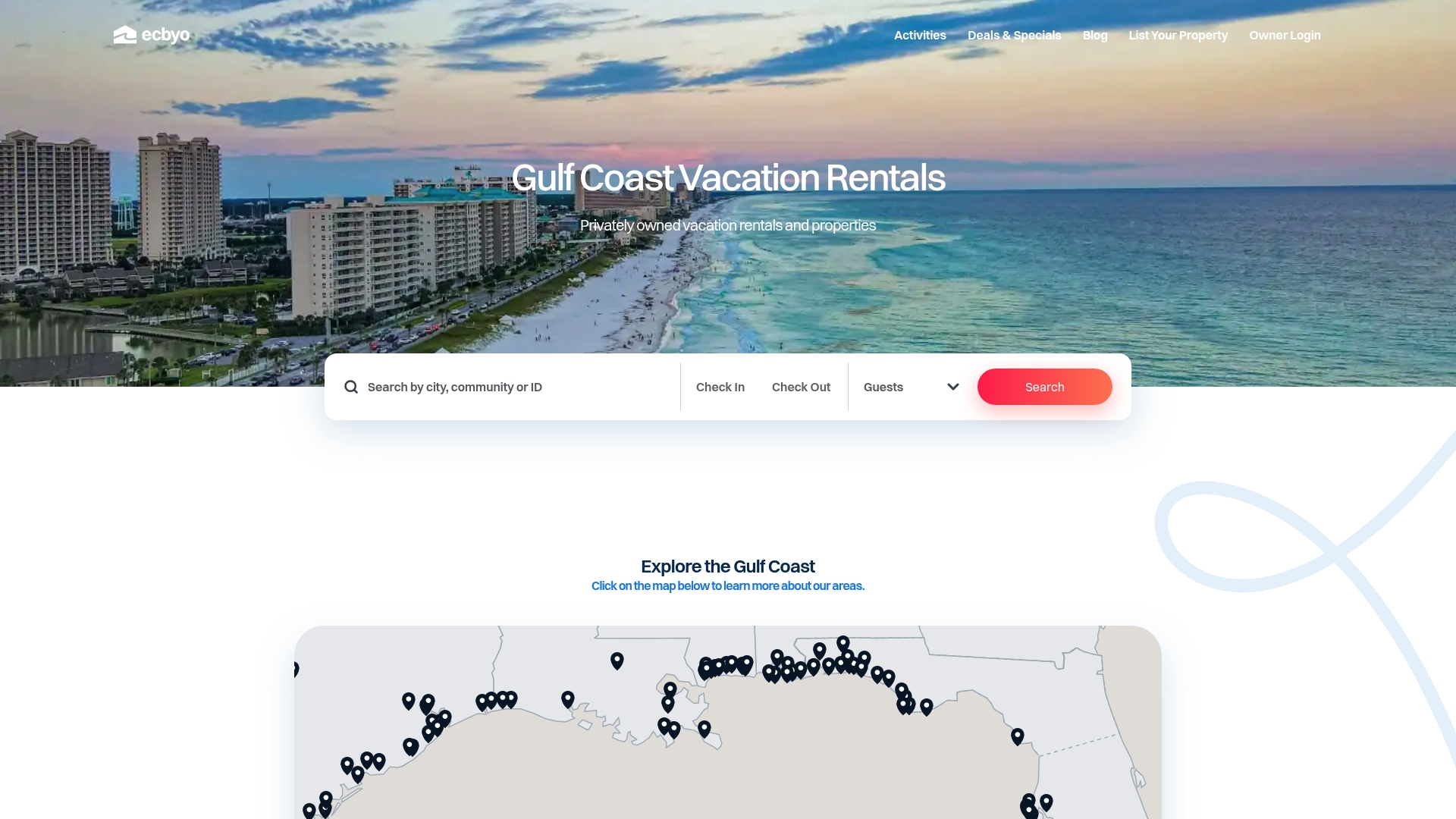
Searching on Emeraldcoastbyowner takes three steps. First, use the map-based search to filter by location, selecting the specific Key or region that matches your plans. Second, apply filters for waterfront access, pet-friendly policies, private dock, and minimum-stay to surface listings that genuinely fit. Third, contact the owner directly through the platform to confirm permit numbers, tax registration, check-in logistics, and any details the listing doesn’t cover. That direct line to the owner is where the real vetting happens, and it’s built into every booking on the site.
Check current Florida Keys listings on Emeraldcoastbyowner and filter by your travel dates to see available cottages with no booking fees added at checkout.
Useful sources for verification and further reading
Official tax and regulatory sources:
- Monroe County tourist tax rates, registration and filing - LegalClarity
- Sales and Use Tax on Rental of Living or Sleeping Accommodations (GT-800034)
- Evaluating Florida Keys homes for personal use and rental (Islamorada Life Realty)
- A practical checklist to vet accommodations for personal safety — Keys Cove
- Florida Keys Vacation Rentals: Top Tips to Get the Most From Your Stay
Vetting and practical planning:
- Florida Keys vacation rental tips (Casa Feliz) — kitchen, linens, parking, and arrival checklist
Emeraldcoastbyowner search pages:
- Florida vacation rentals on Emeraldcoastbyowner
- Key West rentals
- Key Largo rentals
- Islamorada rentals
- Key Largo vacation rental guide
FAQ
Where can you rent a cottage on the beach in Florida Keys?
Beachfront cottage rentals are most common in Marathon (near Sombrero Beach) and parts of the Lower Keys. Canal-front and bay-side cottages are far more prevalent throughout the Keys. Search Emeraldcoastbyowner with the waterfront filter applied to find verified options with direct water access.
When should you avoid traveling to the Florida Keys?
Hurricane season runs June 1 through November 30, with the highest risk in September and October. Summer travel is possible but comes with high humidity, afternoon storms, and the need for trip-cancellation insurance that explicitly covers named storms.
How much does it cost to rent in the Florida Keys?
Nightly and weekly rates vary widely by location, season, and property type. Add approximately 12.5% in combined transient taxes (Monroe County’s 5% tourist development tax plus Florida’s 7.5% state sales/use tax) to any quoted base rate, plus cleaning fees and any applicable platform fees.
Are there tiny homes or small cottages available in the Florida Keys?
Yes. Smaller one- and two-bedroom cottages and bungalows are available throughout the Keys, particularly in Marathon, the Lower Keys, and parts of Islamorada. Filter by bedroom count and use map search to find compact options. Confirm minimum-stay rules, since some small-cottage listings sit in zoning districts with 28-day minimums.
Do booking platforms remit all taxes for Florida Keys rentals?
Not always. Major platforms may collect and remit Florida’s state sales tax, but Monroe County’s 5% tourist development tax typically remains the owner’s direct responsibility. Ask the host to confirm their county tax registration before booking.
Recommended
- Anna Maria Island Vacation Rentals: Book Direct and Save | ECBYO
- Deals & Specials | Emerald Coast By Owner
- Captiva Vacation Rentals: Best Places to Stay in 2026 | ECBYO
- Key Largo Vacation Rentals on the Gulf Coast: 2026 Guide | ECBYO

About the Author
Joe Godar of the Emerald Coast by Owner Editorial Team creates destination guides, vacation-planning resources, and local travel content focused exclusively on Gulf Coast vacation rentals.
Our team researches beach communities, vacation rental trends, family travel planning, local attractions, and direct-booking best practices across Florida, Alabama, Mississippi, Louisiana, and Texas. Every guide is written to help travelers make more informed booking decisions while avoiding unnecessary third-party guest service fees.
Since launching in 2016, Emerald Coast by Owner has helped connect travelers directly with verified vacation rental hosts across the Gulf Coast.
This article was reviewed for accuracy and updated using local destination research and current vacation rental market insights.


