



The Emerald Coast is defined as a roughly 100-mile stretch of Florida’s Gulf Coast spanning five counties, from Pensacola in the west to Panama City Beach in the east. The name was coined in 1983 through a student contest, and it captures exactly what makes this region unforgettable: crystal-clear, emerald-green water and powder-soft quartz sand unlike anything else on the Gulf. This guide covers the Emerald Coast of Florida in full, from the science behind its famous color to the best beaches, nearby cities, family activities, and practical tips for planning your trip.
What makes the Emerald Coast of Florida so distinctive?
The Emerald Coast’s water gets its color from sunlight reflecting off white sand through exceptionally clear water. That combination produces the vivid green-blue tint that sets this coastline apart from the murkier Gulf waters farther west. Phytoplankton and algae in the water deepen the green hue, especially in summer when the Gulf warms up.
The sand itself is the other half of the story. It is nearly pure Appalachian quartz, carried south by rivers over thousands of years. That purity gives the sand two qualities travelers notice immediately: it squeaks underfoot when you walk on it, and it stays cool even on the hottest summer days. Both traits come from the same source, the fine, dense structure of quartz that reflects heat rather than absorbing it.
Here is what makes the beach experience here physically different from most Florida beaches:
- Water clarity: The Gulf bottom is visible at depths that would be murky elsewhere.
- Sand texture: Powder-fine grains feel soft and cool against bare feet all day long.
- Color contrast: White sand against emerald water creates a visual that photographs well and looks even better in person.
- Squeaky sand: The quartz grains rub together with a distinct sound, a quirky detail that surprises first-time visitors.
Pro Tip: Visit the beach before 9:00 AM or after 5:00 PM to experience the sand at its coolest and the water at its most vivid green, when the sun angle is lower and the light refracts differently through the water.
Which cities and destinations sit along the Emerald Coast?
The Emerald Coast covers five counties and 11 main destinations: Escambia, Santa Rosa, Okaloosa, Walton, and Bay. Each county has its own character, and understanding the geography helps travelers pick the right base for their trip.
| Destination | County | Known For |
|---|---|---|
| Pensacola Beach | Escambia | Historic forts, barrier island beaches, Naval Air Station |
| Navarre | Santa Rosa | Quiet, uncrowded beaches, natural parks |
| Fort Walton Beach | Okaloosa | Family-friendly, Indian Temple Mound Museum |
| Destin | Okaloosa | Fishing capital, Destin Harbor, white-sand beaches |
| 30A Corridor | Walton | Upscale beach communities, coastal dune lakes |
| Panama City Beach | Bay | Waterparks, nightlife, wide sandy beaches |
Destin sits at the geographic and cultural heart of the region. It draws more fishing charters than almost any other Gulf port, and its harbor area offers restaurants, dolphin cruises, and sunset tours. The 30A corridor, running through Walton County, is a different experience entirely. Communities like Seaside, Rosemary Beach, and WaterColor attract travelers who want upscale dining, boutique shopping, and access to the rare coastal dune lakes found nowhere else in the Western Hemisphere outside of Madagascar.
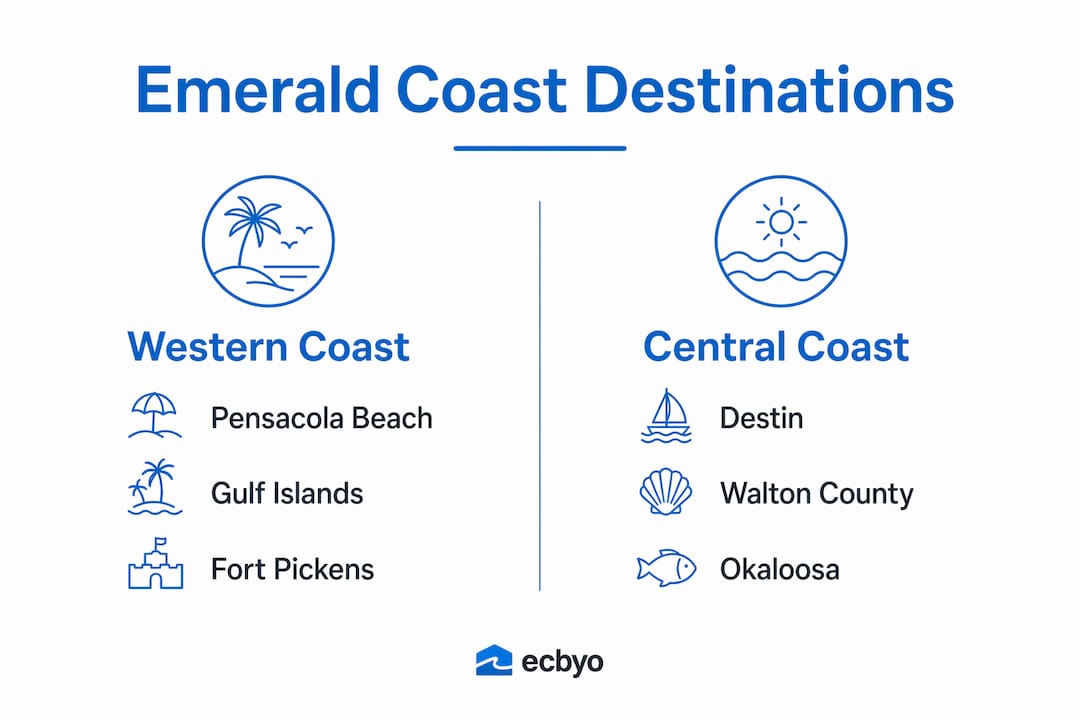
Pensacola anchors the western end of the coast and carries the most history. Fort Pickens, the National Naval Aviation Museum, and Pensacola Beach’s wide barrier island give it a depth that purely resort-focused towns lack. Navarre, between Pensacola and Fort Walton Beach, is the region’s best-kept secret for travelers who want uncrowded Florida beaches without sacrificing water quality.
US-98 connects most of these communities along the coast, making it easy to drive between them. Northwest Florida Beaches International Airport (ECP) near Panama City Beach and Pensacola International Airport (PNS) are the two main entry points for travelers flying in.
What activities and attractions draw families to the Emerald Coast?
The Emerald Coast offers more than beach time. The region’s family-friendly attractions range from waterparks to wildlife encounters, giving families with children a full week of varied activities without repeating themselves.
-
Big Kahuna’s Water and Adventure Park in Destin features more than 40 attractions, including water slides, a lazy river, and a miniature golf course. It is one of the most complete waterparks on the Gulf Coast and works well as a full-day break from the beach.
-
Shipwreck Island Waterpark in Panama City Beach offers a more compact but equally entertaining alternative, with wave pools and thrill slides suited to younger children.
-
Dolphin cruises from Destin Harbor run daily throughout the summer. Bottlenose dolphins are common in the Gulf near shore, and most cruise operators offer morning and sunset departures.
-
Henderson Beach State Park in Destin and Grayton Beach State Park along 30A both provide nature trails, camping, and protected shoreline. Grayton Beach consistently ranks among the top beaches in the United States for its natural preservation and water quality.
-
Turtle Watch runs through local conservation programs during nesting season from May through October. Guides take small groups to observe loggerhead sea turtle nests at night, a genuinely memorable experience for children and adults alike.
-
Fishing charters operate out of Destin, Fort Walton Beach, and Panama City Beach. Half-day inshore trips work well for families with younger children, while offshore charters target larger species like amberjack and red snapper.
Mixing beach days with inland excursions prevents the fatigue that sets in after several consecutive days of sun and sand. Inland visits to Crestview and local distilleries offer a farm-country character that contrasts well with the resort atmosphere on the coast. Baytowne Wharf at Sandestin Resort also provides shopping, dining, and live entertainment within a short drive of most 30A and Destin accommodations.
Pro Tip: Book dolphin cruises and fishing charters at least two weeks in advance during June, July, and August. The most popular departure times sell out quickly, and last-minute bookings often mean less desirable time slots.
For families who enjoy land-based thrills alongside beach days, family go-karting is a popular evening activity at several entertainment centers along the coast, offering a fun way to wind down after a full day outdoors.
When is the best time to visit the Emerald Coast?
The best time to visit the Emerald Coast for a 4–5 day trip is between May and October, with shoulder seasons offering warm water and smaller crowds. Peak season runs from Memorial Day through Labor Day, when beaches fill up and rental prices reach their highest. Spring Break falls in mid-March to mid-April and brings a younger crowd to Panama City Beach in particular.
Smart timing makes a real difference in cost and comfort:
- May: Water temperatures reach the mid-70s°F. Crowds are light, prices are lower, and the weather is warm without the intense summer humidity.
- June through August: Peak season. Water is warmest, all attractions are open, but expect full beaches and higher rental rates.
- September and October: The Gulf stays warm well into fall. Crowds thin out after Labor Day, and many properties drop their rates significantly.
- November through March: Off-season. Cooler temperatures make beach swimming less appealing, but the region stays open and offers the lowest prices of the year.
Travelers flying in should note that Northwest Florida Beaches International (ECP) near Panama City Beach and Pensacola International (PNS) both serve the region with direct flights from major US cities. A rental car is necessary for most trips, as public transit between coastal communities is limited. Planning a 4–5 day itinerary that mixes beach time with state park visits, a dolphin cruise, and at least one inland excursion gives travelers the most complete picture of what the region offers.
What cultural and historical roots shape the Emerald Coast?
The Emerald Coast carries a cultural identity that goes deeper than resort towns and beach bars. The region’s Indigenous roots include Muscogee (Creek) and Choctaw influences, and their presence shaped the land long before European settlement. Fort Walton Beach’s Indian Temple Mound Museum preserves one of the most significant Native American ceremonial sites on the Gulf Coast.
The local food culture reflects the coast’s geography directly:
- Pensacola shrimp from the Gulf’s eastern waters are smaller and sweeter than shrimp from other regions, and local restaurants serve them in dozens of preparations.
- Apalachicola oysters from the eastern edge of the Panhandle are considered among the finest in the country, prized for their clean, briny flavor.
- Seafood festivals in Pensacola, Destin, and Fort Walton Beach celebrate local catches throughout the year, drawing both locals and travelers.
Military installations also define the region’s character. Eglin Air Force Base, Naval Air Station Pensacola, and Hurlburt Field collectively make the Emerald Coast one of the most significant military communities in the United States. That presence shapes local employment, culture, and even the pace of life in ways that visitors notice when they spend time beyond the beach.
The phrase “the further north you go, the further south you are” captures something real about the Panhandle. The region blends Southern hospitality and culture with coastal resort appeal in a way that feels authentic rather than manufactured. Old Florida charm, meaning a slower pace, fresh seafood, and genuine local pride, coexists with modern resort development across the coast.
Key Takeaways
The Emerald Coast is a 100-mile Gulf Coast region defined by quartz-white sand, emerald-green water, and a mix of resort towns, state parks, and deep Southern culture that rewards travelers who look beyond the beach.
| Point | Details |
|---|---|
| Defined geography | The Emerald Coast spans five Florida counties from Pensacola to Panama City Beach, roughly 100 miles total. |
| Natural color source | Emerald water comes from sunlight reflecting off white quartz sand through clear, phytoplankton-rich Gulf water. |
| Best travel timing | May and the September-October shoulder season offer warm water, lower prices, and smaller crowds than peak summer. |
| Top family activities | Big Kahuna’s, Grayton Beach State Park, dolphin cruises, and fishing charters cover a full week of varied experiences. |
| Cultural depth | Indigenous history, military communities, and local seafood traditions give the region an identity beyond its beaches. |
Why the Emerald Coast rewards travelers who look past the obvious
Most people arrive here for the beaches, and the beaches absolutely deliver. But after spending time across the full stretch of the coast, from Pensacola’s history-rich barrier island to the quiet dune lakes along 30A, the thing that stands out most is how much travelers miss by staying in one spot.
The 30A coastal dune lakes are a perfect example. They exist in only two places on Earth outside of Madagascar, yet most visitors drive past them without stopping. These rare freshwater lakes connect periodically to the Gulf, creating unique ecosystems that support wildlife you won’t find anywhere else on the Florida coast. They’re worth a morning.
The same goes for the inland side of the region. Crestview and the farm country north of the coast feel genuinely different from the resort strip, and that contrast makes the beach feel more special when you return to it. Beach fatigue is real. Travelers who build in one or two inland days consistently report a better overall trip than those who spend every day on the sand.
My honest advice: resist the urge to book the same beach community for every night. Splitting a week between Pensacola Beach and 30A, for example, gives you two completely different experiences within the same region. Pensacola brings history, military culture, and a working waterfront. 30A brings upscale calm, rare lakes, and some of the best-preserved natural shoreline on the Gulf. Together, they tell the full story of what the Emerald Coast actually is.
— Joe
Plan your Emerald Coast stay with Emeraldcoastbyowner
The Emerald Coast has no shortage of places to stay, but finding the right property at the right price takes local knowledge. Emeraldcoastbyowner connects travelers directly with property owners across every major destination on the coast, from beachfront condos in Destin to quiet cottages near Grayton Beach State Park.
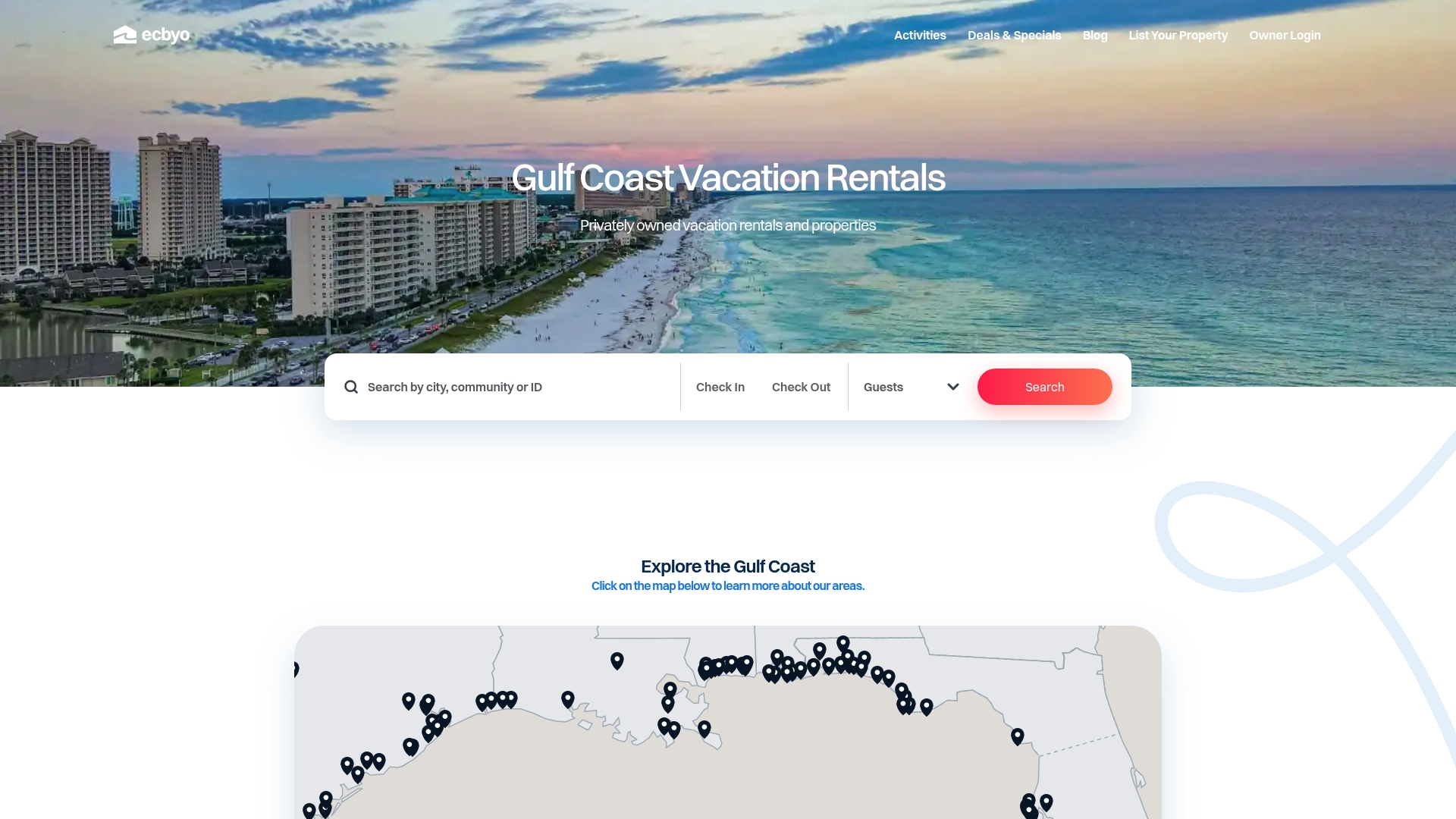
Booking directly through Emeraldcoastbyowner means no traveler fees and direct communication with the owner before you arrive. The platform lists Florida vacation rentals across the full coast, including family-sized homes with private pools, pet-friendly properties, and Gulf-front units with the views that make this region famous. Check current deals and specials before booking, especially for shoulder-season travel in May or September when savings are most significant. Properties in peak destinations like Destin book out weeks in advance during summer, so planning early gives you the best selection.
FAQ
What is the Emerald Coast in Florida?
The Emerald Coast is an unofficial name for a roughly 100-mile stretch of Florida’s Gulf Coast spanning five counties from Pensacola to Panama City Beach. The name was coined in 1983 and refers to the region’s distinctive emerald-green water and white quartz sand.
Why is the water green on the Emerald Coast?
The emerald color comes from sunlight reflecting off the white sandy Gulf bottom through exceptionally clear water, with phytoplankton contributing to the vibrant green hue. The purity of the quartz sand and the clarity of the water together produce the color.
What are the best beaches on the Emerald Coast?
Grayton Beach State Park in Walton County and Henderson Beach State Park in Destin consistently rank among the top beaches in the United States for water quality and natural preservation. Navarre Beach offers a quieter alternative with equally clear water and fewer crowds.
When should I visit the Emerald Coast?
May and the September-October shoulder season offer the best balance of warm water, pleasant weather, and lower prices. Peak season runs from Memorial Day through Labor Day, when crowds and rental rates are at their highest.
Do I need a car to get around the Emerald Coast?
A rental car is necessary for most trips. US-98 connects the major coastal communities, but public transit between towns is limited. The two main airports serving the region are Northwest Florida Beaches International (ECP) and Pensacola International (PNS).
Recommended
- What Is the Florida Panhandle Known For: Travel Guide | ECBYO
- Seaside Florida: What Every Traveler Should Know | ECBYO
- Rosemary Beach Florida: Your Complete Vacation Guide | ECBYO
- Compare Gulf Coast Beach Towns | ECBYO
About the Author
Joe Godar on the Emerald Coast by Owner Editorial Team creates destination guides, vacation planning resources, and local travel content focused exclusively on Gulf Coast vacation rentals.
Our team researches beach communities, vacation rental trends, family travel planning, local attractions, and direct-booking best practices across Florida, Alabama, Mississippi, Louisiana, Texas, and Southwest Florida. Every guide is written to help travelers make more informed booking decisions while avoiding unnecessary third-party guest service fees.
Since launching in 2016, ECBYO has helped connect travelers directly with verified vacation rental hosts across the Gulf Coast.
This article was reviewed for accuracy and updated using local destination research and current vacation rental market insights.


