


Accept direct booking payments securely by using a hosted, tokenized payment processor and documented payment and refund policies. This approach keeps fees lower than booking through an online travel agency, gives you built-in chargeback protections, and shrinks your compliance burden because you never touch raw card data. The checklist below walks through setup, security, and day-to-day operations so you can start collecting direct payments with confidence.
TL;DR:
- Using a hosted, tokenized payment processor reduces PCI scope and provides chargeback protections while keeping transaction fees lower than third-party platforms.
- Most guests prefer paying by credit card or digital wallets, with ACH or bank transfers being cheaper but slower and offering less dispute protection.
- Implementing clear policies, organized records, and basic security measures like HTTPS and strong passwords minimizes dispute risks and simplifies fraud handling.
- Reconcile payments weekly with detailed records of gross payments, fees, and deposits to maintain accurate accounting and prepare for tax reporting.
- Avoid payment methods like wire transfers, gift cards, or cryptocurrency, as these are commonly linked to rental scams and offer no recourse once funds are sent.
Table of Contents
- What direct booking payments are and how the guest checkout flow works
- Payment methods to offer and trade-offs (cards, ACH, digital wallets, bank transfer)
- Security and compliance essentials: reducing PCI scope with tokenization
- Handling disputes, cancellations, refunds, and chargebacks
- Fees, merchant-of-record options, and tax reporting basics
- Setting up secure direct payments: a step-by-step checklist
- Fraud prevention checklist and red flags to watch for
- Emerald Coast By Owner: resources for owners accepting direct payments
- Reconciliation and reporting tools for direct booking payments
- Handling failed or declined payments and retry strategies
- Author perspective: pragmatic trade-offs for adoption
- How Emerald Coast By Owner helps owners win safe direct bookings
- Sources
- FAQ
What direct booking payments are and how the guest checkout flow works
Direct booking payments are funds a guest pays straight to you, the property owner, rather than through a third-party booking platform that collects and later distributes the money. The flow still needs the same building blocks an online travel agency uses: a secure checkout, authorization, and capture, but you control the policies and keep more of the revenue.
A typical guest checkout moves through these stages:
- The guest selects dates and enters contact and payment details on a hosted checkout page.
- The processor authorizes the card, confirming funds are available without yet charging them.
- You or your booking software captures the authorized amount, either immediately or closer to arrival.
- The guest receives a confirmation email with a receipt and your rental agreement attached.
Payment schedules vary by owner. Some charge a deposit at booking with the balance due 30 days before arrival. Others split payments into installments, or simply capture full payment at the time of booking. Whichever schedule you choose, the guest should see it clearly stated before they enter any payment information.
Payment methods to offer and trade-offs (cards, ACH, digital wallets, bank transfer)
Most guests expect to pay by credit or debit card, and for good reason. Cards are familiar, widely accepted, and carry built-in dispute rights that protect both parties when something goes wrong. The trade-off is processing fees, which typically run in the range most card networks publish for card-not-present transactions.
Routing card payments through a hosted checkout page, rather than collecting numbers yourself over email or phone, keeps cardholder data off your systems entirely. Tokenization, covered in more detail in the next section, is what makes this possible.
- Credit and debit cards: Widely trusted, carry chargeback protections, but cost more per transaction.
- ACH or bank transfer: Lower fees and useful for larger balances, but settlement takes longer and dispute protections are weaker.
- Digital wallets (Apple Pay, Google Pay): Fast checkout and growing guest preference, with security that rides on the card network’s tokenization.
- Wire transfer, gift cards, or cryptocurrency: Avoid these as primary payment options.
According to the FTC, demanding payment by wire transfer, gift card, or cryptocurrency is a hallmark of a rental scam, and these methods are nearly impossible to reverse once the money is sent. That warning cuts both ways: a legitimate owner avoids them because they offer no recourse if a guest disputes a charge, and a legitimate guest should be suspicious of any host who insists on them.
Security and compliance essentials: reducing PCI scope with tokenization
Payment Card Industry Data Security Standard, or PCI DSS, compliance sounds intimidating, but for most individual owners and small property managers it boils down to one choice: let someone else hold the cardholder data. When you route payments through a hosted checkout page instead of typing card numbers into your own system, you are outsourcing the hardest part of compliance.
Tokenization is the mechanism that makes this work. According to PCI Security Standards Council guidance, tokenization replaces cardholder data with a randomly generated token that has no value if stolen, which removes the original card number from your systems and reduces your PCI audit scope. Owners who use a hosted page or iFrame combined with tokenization typically qualify for the simplest PCI self-assessment questionnaire, SAQ A, because they never handle raw card data at all.
Beyond tokenization, a handful of basic habits do most of the work:
- Keep your booking site on HTTPS, never HTTP, for every page that touches payment or personal data.
- Use strong, unique passwords and enable two-factor authentication on your processor and booking software accounts.
- Limit staff access to payment dashboards to the people who actually need it.
- Never store card numbers or CVV codes in spreadsheets, email, or text messages.
Pro Tip: Keep booking confirmations, signed agreements, and payment receipts in one organized folder per reservation, not scattered across email threads, so you can respond to a dispute in minutes instead of hours.
The FTC’s guidance for small businesses echoes this: effective protection usually starts with basic, low-cost measures like strong passwords and encrypted connections, not expensive security programs.
Handling disputes, cancellations, refunds, and chargebacks
Chargebacks usually trace back to a handful of causes: a guest disputes a charge they do not recognize, claims the property did not match the listing, or cancels outside your stated window and tries to force a refund through their bank instead of asking you directly. Clear, visible policies prevent most of these before they start.
When a chargeback does land, work through it in order:
- Pull the booking confirmation, signed rental agreement, payment receipt, and any guest communication.
- Submit that documentation to your processor within the deadline they specify, usually a matter of days.
- State plainly how your cancellation policy applied to this booking.
- Track the case until the processor issues a final decision.
Design your refund policy before you need it, not during a dispute. Decide whether deposits are refundable, how far out a full refund applies, and how that interacts with authorizations you have not yet captured. Keep records for at least as long as your processor’s dispute window allows, and longer if your own bookkeeping needs it.
Fees, merchant-of-record options, and tax reporting basics
Payment processors generally charge a percentage of the transaction plus a small fixed fee per charge. Build that cost into your nightly rate or list it as a separate line item, whichever is clearer to guests, but decide before you launch so pricing does not look like it is shifting mid-season.
- Processor fees apply per transaction and should be priced into your rate or disclosed as a line item.
- Merchant of record determines who is liable for chargebacks and refunds: you, if you process payments directly, or the platform, if it manages payments on your behalf.
- Form 1099-K reporting means payment processors and marketplaces may issue this form for payments they process on your behalf.
According to the IRS, all rental income must be reported on your tax return whether or not you receive a 1099-K from a processor. Set aside a percentage of each payment for taxes as it comes in rather than scrambling at filing time, and keep a running log of gross payments separate from the fees your processor deducts.
Setting up secure direct payments: a step-by-step checklist
Launching a direct payment flow is less about finding the perfect tool and more about making a short list of deliberate choices up front.
- Decide who will be merchant of record, meaning who legally processes the charge and bears chargeback liability.
- Choose a processor that offers a hosted checkout page or iFrame along with tokenization, so cardholder data never touches your servers.
- Configure your payment schedule in your booking engine or widget: full payment, deposit plus balance, or installments.
- Embed the hosted payment page or iFrame on your booking site and test both an authorization and a refund before going live.
- Write clear payment and cancellation policies, and attach your rental agreement to every booking confirmation email.
- Run a complete test booking from start to finish, then confirm the payout lands correctly in your bank account.
Treat the test booking as non-negotiable. A processor that works perfectly in its own dashboard can still break when embedded in your specific booking widget, so confirm the full guest experience once, end to end, before a real guest ever sees it.
Fraud prevention checklist and red flags to watch for
Most rental payment fraud follows a recognizable pattern, which means that most of it is preventable if you know what to look for.
- Pressure to move the conversation off-platform or pay by wire transfer, gift card, or cryptocurrency.
- A guest who offers to pay well above your asking price, then asks for a refund of the difference.
- Reluctance to sign a rental agreement or share a verifiable phone number and address.
- A sudden request to switch payment methods right before arrival.
Verify guests the same way every time: confirm identity against the booking name, require a signed agreement, and keep all communication inside your booking platform or a documented email thread rather than text messages that disappear. State your accepted payment methods plainly on your booking page so there is no ambiguity for a guest to exploit.
Pro Tip: If a prospective guest insists on an unusual payment method after you have already explained your accepted options, treat that as a reason to decline the booking, not negotiate further.
When something feels off, escalate early. Contact your payment processor’s fraud team for a suspicious transaction, or local law enforcement if a guest’s behavior crosses into harassment or an active scam attempt.
Emerald Coast By Owner: resources for owners accepting direct payments
Emerald Coast By Owner started in November 2016 with a simple goal: let guests book Gulf Coast vacation rentals straight from owners, without the traveler fees that online travel agencies tack on. The marketplace has grown from its original 350 listings to thousands of rentals spanning Florida, Alabama, Mississippi, Louisiana, and Texas.
Owners setting up direct payments do not have to start from scratch. A few resources worth working through alongside this checklist:
- A guide to marketing and collecting payments for direct bookings, built for Gulf Coast owners specifically.
- A practical 90-day plan for winning more direct bookings without raising your marketing budget.
- The ECBYO listing page where you can put the setup checklist above into practice.
Reconciliation and reporting tools for direct booking payments
Reconciling direct payments means matching every charge that hits your bank account against the booking it belongs to, including the processor’s fee deduction. Without that discipline, a season of bookings turns into a spreadsheet nobody trusts by October.
Most hosted payment processors generate a settlement report showing gross payment, fee deducted, and net deposit for each transaction, usually downloadable as a CSV. Pull that report weekly rather than monthly. Weekly reconciliation catches a declined refund or a missing payout while the booking details are still fresh in your memory, instead of forcing you to reconstruct a dispute from months-old email.
A simple markdown table captures what you need to track per booking:
| Field | Purpose |
|---|---|
| Booking date | Matches the reservation to the guest inquiry |
| Gross payment | Total amount the guest was charged |
| Processor fee | Deducted amount shown on the settlement report |
| Net deposit | Amount that lands in your bank account |
| Payout date | Date funds actually settle, for cash flow planning |
If you manage more than a handful of properties, a basic accounting tool like Wave or QuickBooks can import processor reports directly, saving you from re-entering numbers by hand. Whatever system you use, keep gross payment and net deposit as separate columns. Mixing the two makes it harder to catch a fee calculation error and harder to report income accurately at tax time.
Handling failed or declined payments and retry strategies
A declined card is not usually fraud. It is more often an expired card, an address mismatch, or a bank’s fraud filter flagging an unfamiliar merchant, which is common for a smaller, direct-booking business the guest’s bank has not seen before.
When a payment fails, your checkout page should tell the guest clearly what happened and invite them to try again rather than leaving them stuck on a generic error. Most hosted processors support automatic retry logic for a small number of attempts, spaced a few hours apart, which recovers a meaningful share of failed payments without any action from you.

For payments that keep failing, reach out directly rather than letting the booking quietly disappear. A short message asking the guest to confirm their card details or try a different payment method, sent within a few hours of the decline, keeps the reservation alive while the dates are still available. If a deposit fails close to arrival, have a clear internal rule for how many hours you hold the dates before releasing them, and state that window in your booking policy so guests know what to expect.
Keep a simple log of declines: date, amount, and resolution. A pattern of declines from the same card or IP address is worth treating as a fraud signal, even when each individual attempt looks ordinary.
Author perspective: pragmatic trade-offs for adoption
The owners who get the most out of direct payments are not the ones chasing the lowest possible fee. They are the ones who invest a few hours upfront in a hosted, tokenized checkout and a clearly written agreement, then spend almost no time on disputes afterward. Skipping that setup to save a percentage point on processing fees tends to cost far more later in chargebacks and chasing down missing documentation. Prioritize the boring parts: tokenization, clear policies, and organized records. They do more work than any fee negotiation ever will.
— Gail
How Emerald Coast By Owner helps owners win safe direct bookings
Emerald Coast By Owner connects guests and owners directly, with no traveler booking or service fees eating into either side of the transaction. For owners who have built the secure payment setup described above, ECBYO gives you a Gulf Coast-focused audience actively searching for a direct booking rather than an online travel agency listing.
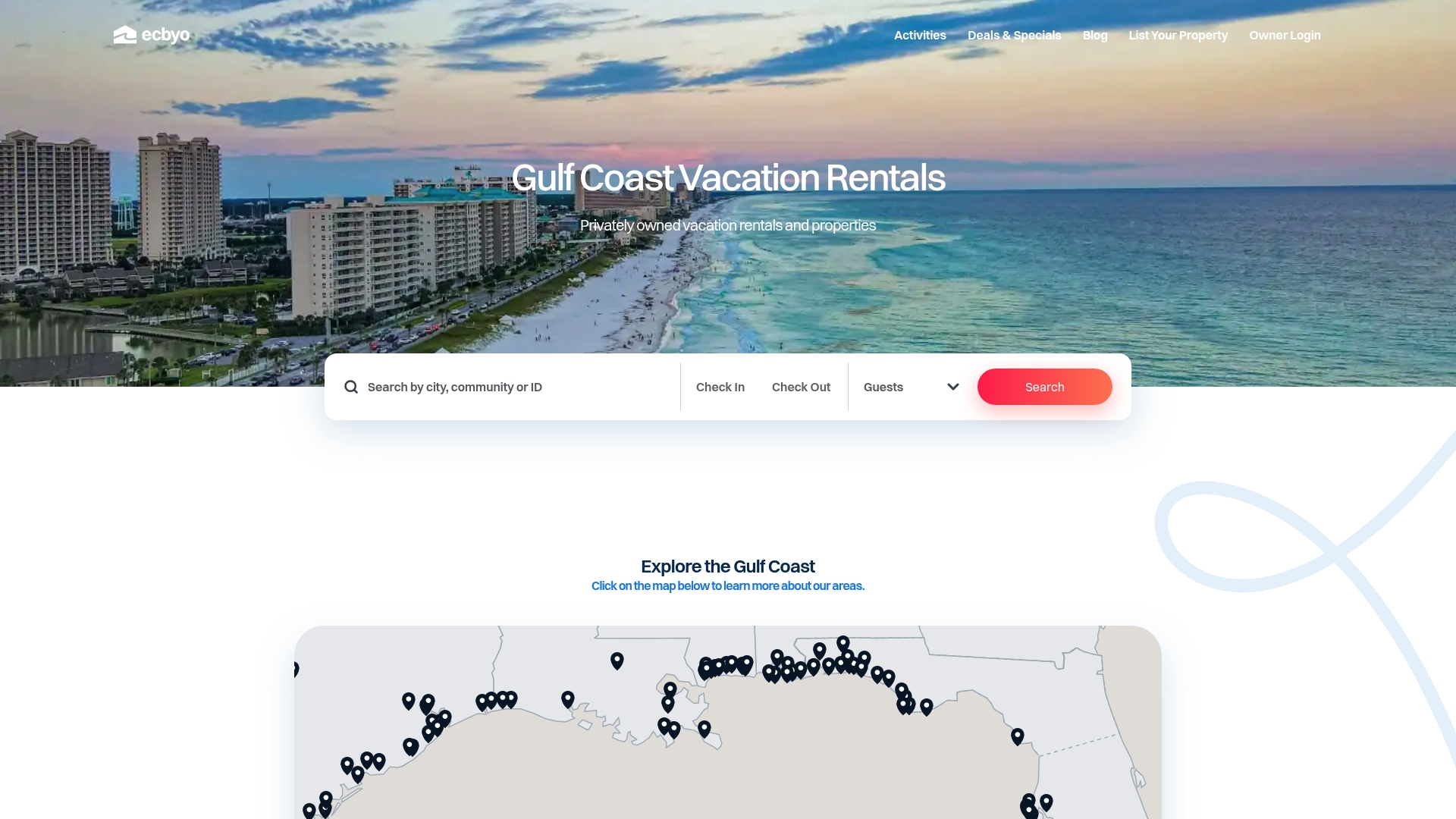
- List your property through the ECBYO subscription, which is offered at a published price by the owner.
- Browse how owners in other markets present their listings, from Florida and Texas to Louisiana.
- Check current deals and specials to see how featured placement works on the marketplace.
If you are ready to put your secure payment setup to work, start by listing your property on ECBYO.
Sources
For the primary documents behind this guide: the FTC’s pages on wiring money and rental listing scams, the PCI Security Standards Council’s e-commerce guidelines, and the IRS page on Form 1099-K. A hospitality booking system upgrade is documented in this booking system case study, and a related checklist on prepaying transportation safely covers similar fraud-prevention ground.
- What To Know Before You Wire Money | Consumer Advice (FTC)
- Protecting Personal Information: A Guide for Business | FTC
- Tokenization Guidelines (PCI SSC)
- Understanding Your Form 1099‑K | IRS
FAQ
How does booking payment work?
Many owners split this into a deposit at booking and a balance due before arrival.
Why is Booking.com taking money from my account?
Online travel agencies often act as the merchant of record, meaning they collect guest payment first and then transfer a portion to the property owner after deducting their commission and fees. That is different from a direct booking, where the owner or their processor charges the guest directly and no commission is deducted.
What is a direct booking website?
A direct booking website lets a guest reserve and pay an owner directly, without going through a third-party booking platform that charges traveler fees. Emerald Coast By Owner is one example, connecting guests with Gulf Coast rental owners with no traveler service fees added to the booking.
Is it better to prepay or pay at a hotel or rental?
That depends on the cancellation flexibility you want. Prepaying in full often secures a lower rate but limits your refund options, while paying at check-in or closer to arrival usually costs more but gives you room to change plans, so check the specific policy before booking either way.
What should I avoid when accepting payment for a vacation rental?
Avoid wire transfers, gift cards, and cryptocurrency as payment methods, since the FTC identifies these as common signals of rental scams with little chance of recovery once sent. Stick to a hosted, tokenized checkout that supports cards, ACH, or digital wallets instead.
Recommended
- Save 8–18%: Find Gulf Coast Rentals Direct From Owners Safely
- Save 12–18% When You Book Direct Gulf Coast Rentals Safely
- How to Rent a Gulf Cottage Without a Travel Agent
- How to Find Owner Direct Beach Rentals on the Gulf Coast
 |
About the AuthorGail Greiner of the Emerald Coast by Owner Editorial Team creates destination guides, vacation-planning resources, and local travel content focused exclusively on Gulf Coast vacation rentals. Our team researches beach communities, vacation rental trends, family travel planning, local attractions, and direct-booking best practices across Florida, Alabama, Mississippi, Louisiana, and Texas. Every guide is written to help travelers make more informed booking decisions while avoiding unnecessary third-party guest service fees. Since launching in 2016, Emerald Coast by Owner has helped connect travelers directly with verified vacation rental hosts across the Gulf Coast. This article was reviewed for accuracy and updated using local destination research and current vacation rental market insights. |


