


The safest way to contact a vacation rental owner is through the listing’s secure messaging system or a verified owner contact on a reputable owner-direct marketplace. From there, verify the listing before you send any money, and lean on credit card or platform payment protections rather than wire transfers, gift cards, or cryptocurrency. Those three habits alone prevent most booking problems.
TL;DR:
- Verifying the listing across multiple sites and checking property records helps identify scams that hijack real listings with fake contact details.
- Using the platform’s secure messaging or verified owner contact information ensures your communication stays tied to the property and reduces fraud risk.
- Payment should be made through the marketplace’s system or with a credit card, avoiding wire transfers, gift cards, or cryptocurrencies to protect against irreversible fraud.
- Signs such as unusually low prices, refusal of video calls, or urgent pressure to book indicate potential scams and require cautious verification.
- Keeping a folder of evidence, including screenshots and messages, can be crucial for dispute resolution or reporting scams to authorities.
Table of Contents
- Where to start when reaching out to an owner
- How to verify a listing and confirm who you’re really talking to
- Key questions to ask before you book, plus a message template
- Paying an owner without losing your deposit
- What to do if something feels wrong
- How Emerald Coast By Owner supports safe owner-direct contact
- A few habits I’ve come to rely on
- Find and contact Gulf Coast owners directly on ECBYO
- Sources
- FAQ
Where to start when reaching out to an owner
Most owner-direct marketplaces build secure messaging directly into the listing page, and that’s the best place to send your first message. It keeps every exchange tied to the property and creates a written record that both sides can reference if a question comes up later about dates, pricing, or house rules.
A verified owner phone number or business email is the next-best option, especially once you’re deep into planning and need faster answers. On a legitimate listing, this contact information usually sits next to the owner’s profile or property description rather than arriving unprompted in a text message from an unfamiliar number. If an owner asks you to move the conversation to a personal email address or a messaging app you’ve never used, that’s worth a second look rather than an automatic red flag, but it changes how carefully you should verify everything else.
When something about a listing feels off, a short video call or a request for a live walkthrough clears up a lot. Owners who actually manage the property can usually hop on a video call within a day or two and show you the space in real time.
Watch for these signs before you trust an unsolicited contact method:
- The owner asks you to email or text a number that doesn’t appear anywhere on the listing.
- Pricing is noticeably lower than similar properties nearby with no explanation.
- The owner refuses a video call or any way to confirm they actually manage the property.
- Messages arrive with urgent pressure to book immediately or lose the reservation.
Scammers often hijack real listings, keep the photos and description intact, and swap in their own contact details, according to the Federal Trade Commission. That’s exactly why the platform’s built-in messaging matters more than it might seem.
How to verify a listing and confirm who you’re really talking to
Before you send a deposit or share personal details, spend ten minutes confirming the listing is what it claims to be. This step catches most problems before they cost you anything.
- Search the property address along with the owner’s or management company’s name and see whether the same listing shows up on multiple sites with different contact information.
- Compare the owner’s name and any business name across every platform where the property is listed and flag mismatches.
- Check your county’s property records or tax-assessor website to confirm who actually owns the address, since most of these records are public and searchable online.
- Save every URL, message thread, screenshot, and payment confirmation as you go, before you need them.
The FTC recommends this kind of reverse search specifically because scammers frequently repost real listings and duplicate real photos while quietly changing who receives the payment. A quick search for the address plus the owner’s name and a comparison across sites often finds mismatched names or duplicate ads within minutes, according to FTC guidance on avoiding rental listing scams.
County assessor sites won’t always show a private owner’s name if the property sits inside an LLC or trust, and that’s normal for legitimate rentals too. Treat it as one data point rather than a dealbreaker, and weigh it against how the owner answers your direct questions.
Pro Tip: Screenshot the listing the moment you find it, before you start messaging. If it disappears or changes later, you’ll have proof of what you originally saw.
Keeping a simple folder of evidence costs you nothing up front and saves real time if you ever need to dispute a charge or file a report. Owners with nothing to hide rarely mind a few verification questions, and most will answer them without hesitation.
Key questions to ask before you book, plus a message template
A good first message is short, specific, and easy for the owner to answer quickly. Start with your dates and party size, then ask two or three questions that actually affect your decision.
Confirm these logistics early:
- Sleeping capacity, bed configuration, and whether the listed maximum occupancy matches your group.
- Parking availability, especially for multiple vehicles or larger vehicles.
- Exact check-in and check-out times and any early or late arrival options.
- House rules on pets, noise, smoking, and additional guests.
Payment details deserve their own round of questions:
- Deposit amount, due date, and whether it’s refundable under any circumstances.
- Accepted payment methods and whether a rental agreement or receipt is provided.
Clear, detailed messaging upfront reduces disputes later and sets expectations both sides can point back to, a practice Rent Responsibly’s communication guidance recommends for hosts and travelers alike. A message that states dates, party size, and one or two direct questions tends to get a faster, more complete answer than a vague inquiry, since it gives the owner everything they need to reply once.
Try something like this for your first message:
“Hi, I’m interested in your property for [dates] for [number] adults and [number] children. Could you confirm parking availability and your deposit policy? Also, is there a rental agreement you send once we book?”
If a few days pass with no response, a short, polite follow-up works better than repeating your original message word for word: “Just following up on my message from [day]. Happy to answer any questions on my end too.”
Paying an owner without losing your deposit
Credit cards and built-in platform payment systems offer real protections that direct bank transfers simply don’t. If a charge turns out to be fraudulent, most card issuers let you dispute it, and that dispute process is often the only way to get your money back.

Wire transfers, gift cards, and cryptocurrency payments are a different story entirely. Once that money leaves your account, there’s typically no way to reverse it, and the FTC specifically warns against these payment methods for exactly this reason.
Keep these payment habits in mind:
- Pay through the marketplace’s built-in system or a credit card whenever the owner offers either option.
- Treat any request for wire transfer, gift card, or cryptocurrency as a reason to stop and verify further before paying anything.
- Ask for a receipt or rental agreement that spells out the total cost, deposit, and refund terms.
- Never send full payment before you’ve confirmed the listing and owner check out.
A legitimate owner rarely insists on one narrow, hard-to-trace payment method and will usually work with you on a card payment or platform checkout instead.
If you’ve already sent money and something feels wrong, contact your bank or card issuer immediately to ask about reversing the charge, then report the incident to ReportFraud.ftc.gov. Deposits are typically due at booking or shortly after, with the balance due somewhere between two and eight weeks before arrival depending on the property, so a request for full payment far in advance of that window is worth questioning.
What to do if something feels wrong
A handful of warning signs should push you to slow down and dig deeper rather than keep messaging. The same property listed twice with two different owner names, sudden pressure to pay outside the platform, or contact details that don’t match anything else on the listing all deserve the same response: stop and verify before you send anything.
If you suspect you’re dealing with a scam, take these steps:
- Report the listing to ReportFraud.ftc.gov, keeping the listing URL, messages, and any payment records ready to submit.
- Use Usa, which walks you through a short set of questions about where the incident happened and what type of scam it involved.
- If the issue involves a legitimate rental business rather than outright fraud, check USA.gov’s travel-complaints page, which links to state consumer-protection offices that handle business disputes.
- Contact your bank or card issuer directly if you paid by card and believe the charge is fraudulent, since most issuers have a limited window for disputing charges.
Reporting doesn’t just protect you. It builds a paper trail that can help investigators spot repeat offenders using the same hijacked listings across multiple platforms.
How Emerald Coast By Owner supports safe owner-direct contact
Emerald Coast By Owner was built to facilitate direct contact between guests and property owners, without adding traveler booking or service fees on top of the rental price. Every listing includes a way to message the owner directly, which keeps your questions and their answers in one place tied to that specific property.
Because ECBYO focuses on the Gulf Coast region, verifying a listing can be more straightforward than searching across a wider national marketplace. Properties are listed directly by owners, so the contact information on the page connects guests to the person managing the rental rather than a third-party booking agent.
A few ways this shows up for guests exploring the region:
- Search owner-direct listings across multiple Gulf Coast states from one regional marketplace.
- Message property owners directly through each listing page before booking.
- Read additional guidance on finding Gulf Coast rentals safely and tips specific to owner-direct beach rentals.
If you’re still deciding whether booking direct makes sense for your trip, our guide on what vacation rental by owner actually means covers the basics.
A few habits I’ve come to rely on
I keep my first message to an owner short on purpose: dates, party size, and one or two questions that actually matter to my decision. Owners are busy, and a focused message gets a faster answer than a long list of everything I might want to know eventually.
I also ask about deposits and check-in details before I get attached to a property, not after. Knowing the refund policy and exact check-in window up front means no surprises later, and I keep every message and receipt in one folder just in case.
House rules deserve early attention too. If I know I’m bringing a dog or arriving late, I say so in my first message rather than waiting until check-in day. It’s a small courtesy that tends to make the rest of the conversation easier for both sides.
— Gail
Find and contact Gulf Coast owners directly on ECBYO
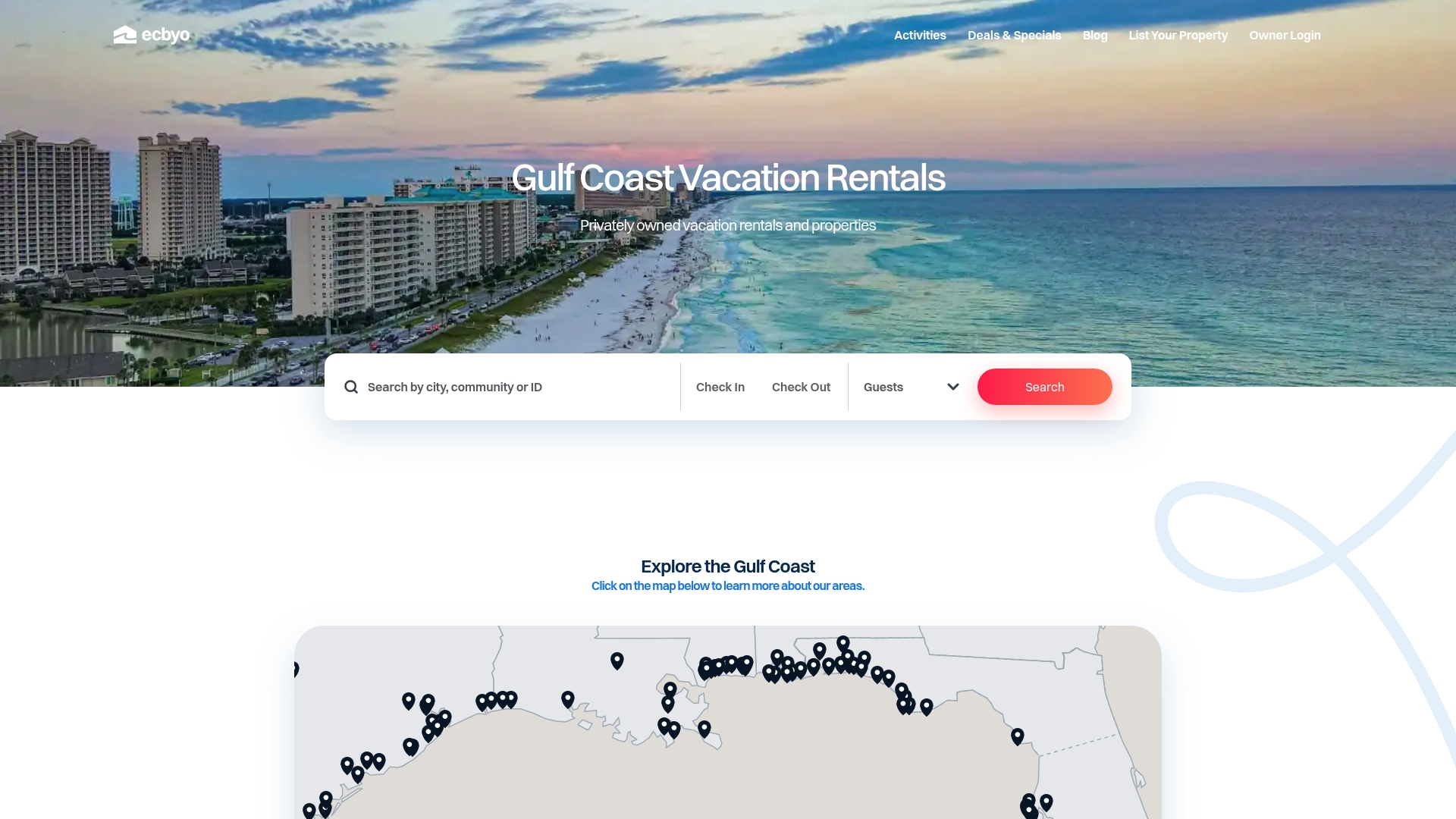
Once you know how to verify a listing and start a conversation the right way, finding the right property is the easier part. Emerald Coast By Owner lists a large selection of Gulf Coast vacation rentals with no traveler booking or service fees, and every property page connects you straight to the owner who manages it.
Browse Florida, Alabama, Mississippi, Louisiana, or Texas listings, or start your search from the ECBYO home page. If you’re a property owner interested in listing your own rental, you can learn more about the ECBYO subscription.
Sources
- Getting a vacation rental? Watch out for scams. | Consumer Advice
- Usa
- Communication Playbook: Guest Messaging for 5-Star Reviews - Rent Responsibly
FAQ
How do I contact a vacation rental owner safely?
Use the secure messaging system built into the listing, or a verified phone number and business email listed directly on the owner’s profile. Avoid switching to an unfamiliar contact method an owner sends you out of the blue, and verify the listing’s address and owner name before sending any payment, as recommended by the FTC.
How do I file a complaint about a vacation rental company?
Start with USA.gov’s travel-complaints page, which connects you to state consumer-protection offices that handle disputes with legitimate rental businesses. If you suspect outright fraud rather than a standard business dispute, report it separately through ReportFraud.ftc.gov.
How does booking a vacation rental directly from the owner work?
Owner-direct booking means you search listings on a marketplace, message the property owner directly, and arrange payment and details without going through a traditional agency. Marketplaces like Emerald Coast By Owner connect travelers with Gulf Coast property owners directly and charge no traveler booking or service fees.
What payment methods are safest when paying a rental owner?
Credit cards and built-in platform payment systems generally offer stronger dispute protections than wire transfers, gift cards, or cryptocurrency. The FTC warns against wire and gift-card payments specifically because that money is difficult or impossible to recover once sent.
What should I do if a vacation rental owner won’t respond?
Send one polite follow-up message referencing your original inquiry and dates rather than repeating your full message. If several days pass with no response at all, treat that as a reason to verify the listing further or consider a different property before committing any payment.
Recommended
- Find Gulf Coast Rentals Direct From Owners Safely
- Save 12–18% When You Book Direct Gulf Coast Rentals Safely
- Avoid Fines and Booking Suspensions: Gulf Coast Rental Agreement
- How to Find Owner Direct Beach Rentals on the Gulf Coast
 |
About the AuthorGail Greiner of the Emerald Coast by Owner Editorial Team creates destination guides, vacation-planning resources, and local travel content focused exclusively on Gulf Coast vacation rentals. Our team researches beach communities, vacation rental trends, family travel planning, local attractions, and direct-booking best practices across Florida, Alabama, Mississippi, Louisiana, and Texas. Every guide is written to help travelers make more informed booking decisions while avoiding unnecessary third-party guest service fees. Since launching in 2016, Emerald Coast by Owner has helped connect travelers directly with verified vacation rental hosts across the Gulf Coast. This article was reviewed for accuracy and updated using local destination research and current vacation rental market insights. |


