



A vacation rental community is a planned residential environment designed specifically for short-term stays, where guests access shared amenities, professional management, and a cohesive neighborhood experience under one roof. Unlike booking a standalone home through Airbnb or a similar platform, these communities function more like small, self-contained resorts with the comfort of a private home. Understanding the difference matters whether you are planning a family trip to the Gulf Coast or evaluating a property investment. This guide breaks down how these communities work, what they offer, and how to choose the right one.
What is a vacation rental community vs. a standalone rental?
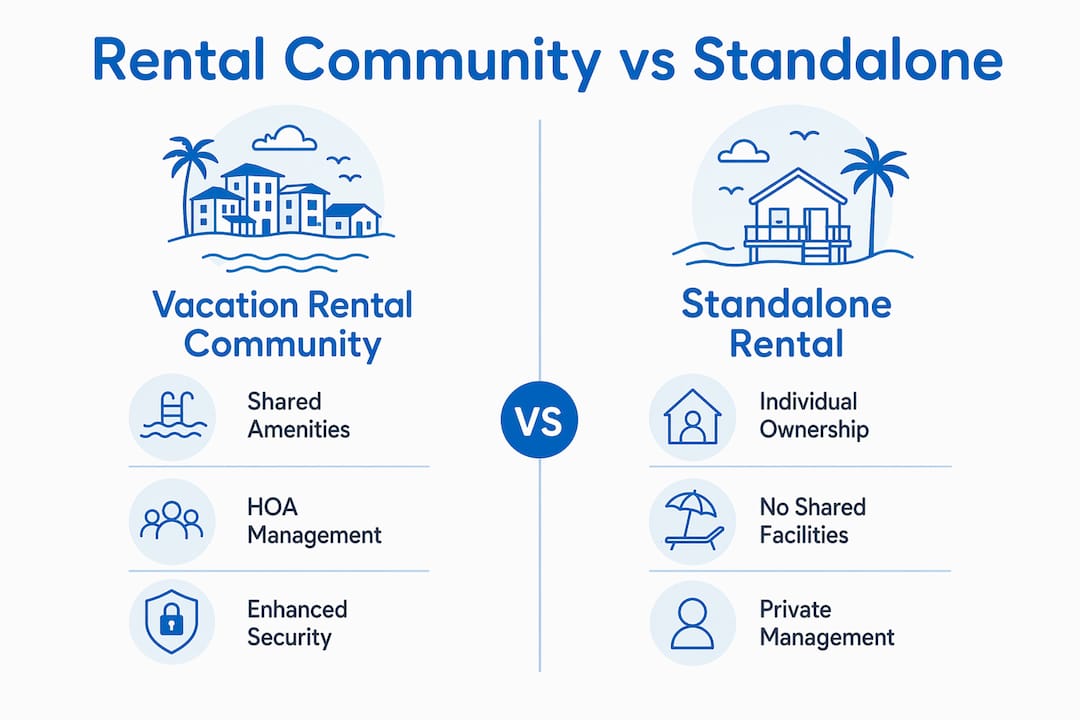
A vacation rental community is defined as a planned short-term stay environment with shared managed amenities and HOA governance, distinguishing it clearly from a single vacation home rented in isolation. That distinction shapes everything from the guest experience to the nightly rate.

Standalone vacation rentals are individual homes or condos listed independently, often without shared infrastructure or consistent management standards. A vacation rental community, by contrast, operates under unified rules. Guests at communities like WaterColor on 30A Florida or Margaritaville Resort Orlando arrive to find pools, fitness centers, and concierge services already in place, managed by a professional team rather than a solo property owner.
The table below captures the core differences at a glance.
| Feature | Vacation rental community | Standalone vacation rental |
|---|---|---|
| Shared amenities | Pools, clubhouses, beach access | Rarely included |
| Management structure | HOA or professional management company | Individual owner |
| Guest consistency | Standardized experience across units | Varies by property |
| Security | Gated access, on-site staff | Depends on owner |
| Pricing | Premium nightly rates | Wider price range |
Pro Tip: When comparing listings, look for HOA disclosures in the property description. Their presence almost always signals a managed community with shared amenities rather than a standalone rental.
The HOA or management layer is what separates these communities operationally. It sets noise policies, parking rules, check-in procedures, and maintenance standards that apply to every unit. For travelers, that means fewer surprises. For owners, it means a protected investment environment.
What are the benefits of vacation rental communities?
The benefits of vacation rental communities extend well beyond a shared pool. Enhanced security and premium amenities like golf courses, lazy rivers, and gated access drive higher occupancy rates, particularly during shoulder seasons when standalone rentals struggle to compete. That occupancy advantage translates directly into more predictable rental income for owners.
For travelers, the appeal centers on what a hotel cannot offer. Vacation rental communities provide large multi-bedroom homes suited to multi-generational travel, group reunions, and extended family trips. A six-bedroom home inside a gated community with a private pool, beach access, and an on-site restaurant delivers an experience no standard hotel room can match.
Here is what travelers and owners consistently gain from these communities:
- Resort-style amenities including pools, lazy rivers, golf courses, fitness centers, and private beach access
- Professional management that handles maintenance, guest services, and property upkeep
- Gated security with controlled entry points and sometimes 24-hour monitoring
- Community atmosphere that encourages repeat visits and builds guest loyalty
- Flexibility compared to traditional long-term leases, with short-term stays available year-round
The MHM Communities Holiday model illustrates how this flexibility extends even further. Their approach blends affordable, flexible living with shared amenities and a genuine sense of community, appealing to travelers who want more than a one-week stay. This model addresses a growing demand for lifestyle-oriented short-term living that sits between a vacation and a second home.
Owners benefit from the community’s reputation as much as from their individual property. A well-managed community with strong reviews attracts guests who are already sold on the destination before they even read the individual listing.
What types of vacation rental communities are there?
Vacation rental communities span a wide range of models, and the amenity packages and management structures vary significantly between them. Knowing the types helps travelers set accurate expectations and helps owners identify the right investment category.
Master-planned resort villages are the most expansive model. These communities create a destination within a destination by incorporating restaurants, wellness facilities, and retail inside the perimeter. Guests never need to leave the property to eat, shop, or relax. Margaritaville Resort Orlando is a strong example, offering branded detached vacation homes with access to resort amenities and professional on-site management along the US-192 tourism corridor.
Beachfront communities focus on controlled coastal access. These properties, common along Florida’s Gulf Coast destinations like Siesta Key and Naples, prioritize private beach access, waterfront pools, and proximity to the water as their primary value proposition. Management tends to be tighter because beach access is a premium asset requiring maintenance and scheduling.
Holiday home communities like MHM Communities Holiday represent a more affordable, flexible tier. These communities blend manufactured or modular homes with shared amenities and a neighborhood feel, targeting extended stays or seasonal living rather than peak-week tourism.
The table below outlines how these types differ in key areas.
| Community type | Primary amenity focus | Management model | Best for |
|---|---|---|---|
| Master-planned resort village | Full resort ecosystem | On-site professional team | Families, group travel |
| Beachfront community | Coastal and water access | HOA with property managers | Beach-focused travelers |
| Holiday home community | Shared social amenities | Community association | Extended stays, seasonal living |
| Branded STR community | Brand-driven experience | Integrated booking and management | Investors, repeat guests |
Communities that integrate their own booking platforms reduce commission fees and build loyal repeat guests, a key differentiator in performance compared to communities that rely entirely on third-party platforms like Airbnb or Vrbo. For owners evaluating types of vacation rentals, this infrastructure detail often determines long-term profitability.
How to choose a vacation rental community
Choosing the right vacation rental community requires evaluating several factors beyond the amenity list. The most important starting point is compliance. Vacation rental communities face stringent local regulations including permits, lodging taxes, noise ordinances, and parking rules. Noncompliance can cost an owner their operating license, and travelers should confirm that any community they book operates legally within its municipality.
Follow these steps when evaluating a community:
- Verify licensing and permits. Ask whether the community holds the required short-term rental permits for its location. Florida, Louisiana, and Texas each have distinct regulatory frameworks.
- Review HOA rules. Read the community’s guest policies, occupancy limits, and noise restrictions before booking or buying. These rules directly affect your stay or your rental income.
- Assess proximity to attractions. A community’s location relative to beaches, restaurants, and local landmarks affects both guest satisfaction and occupancy rates.
- Evaluate management quality. Look for communities with professional on-site or third-party management rather than self-managed HOAs. Consistent management drives consistent reviews.
- Understand ownership restrictions. Some communities limit how many nights per year an owner can rent their property. Others restrict rental platforms or require exclusive use of the community’s booking system.
Pro Tip: Request the community’s average occupancy rate and recent guest review scores before committing. A well-run community will share this data openly, and it tells you far more than the amenity list.
The managed setting that defines vacation rental communities like WaterColor on 30A is precisely what drives premium nightly rates and guest satisfaction. Travelers who understand this dynamic choose communities with confidence rather than hoping a standalone rental delivers a consistent experience.
Key takeaways
Vacation rental communities outperform standalone rentals in guest experience, security, and occupancy because their shared amenities, professional management, and HOA governance create a consistent, resort-quality stay.
| Point | Details |
|---|---|
| Core definition | A vacation rental community is a planned, managed environment with shared amenities and HOA governance. |
| Amenity advantage | Gated access, pools, beach access, and resort facilities drive higher occupancy and premium pricing. |
| Community types | Master-planned villages, beachfront communities, holiday home communities, and branded STR communities each serve different traveler needs. |
| Compliance matters | Local permits, lodging taxes, and HOA rules must be verified before booking or investing in any community. |
| Booking infrastructure | Communities with integrated booking platforms reduce fees and build repeat guest loyalty over time. |
Why vacation rental communities are the future of short-term travel
Having followed the Gulf Coast vacation rental market closely for years, I find the shift toward managed communities genuinely compelling, and not just for the obvious reasons.
The conventional wisdom says travelers choose vacation rentals for privacy and independence. That is true, but it misses the bigger picture. What most travelers actually want is predictability. They want to know the pool will be clean, the check-in will be smooth, and the neighborhood will feel safe. Standalone rentals deliver that inconsistently. Vacation rental communities deliver it by design.
What I find underappreciated is the investment angle. Owners who buy into well-governed communities like WaterColor or Margaritaville Resort Orlando are not just buying a property. They are buying into a managed ecosystem that protects their asset, fills their calendar, and maintains the neighborhood standard that justifies premium rates. That is a fundamentally different proposition from owning a standalone beach house and hoping Airbnb keeps the bookings coming.
The regulatory trend also favors communities. As municipalities tighten short-term rental rules across Florida, Louisiana, and Texas, standalone rentals face growing compliance risk. Communities with established HOA structures and legal operating frameworks are far better positioned to absorb regulatory changes without disruption.
The travelers who discover this model rarely go back to booking isolated rentals. The experience is simply more reliable, more comfortable, and more worth the trip.
— Joe
Explore vacation rental communities on the Gulf Coast
Emeraldcoastbyowner connects travelers directly with property owners across the Gulf Coast’s best vacation rental communities, with no traveler fees and thousands of listings to choose from.
Whether you are drawn to the white-sand beaches of Florida’s Gulf Coast, the laid-back shores of Louisiana, or the sunny coastline of Texas, Emeraldcoastbyowner features curated rentals in managed communities with the amenities and consistency that make a vacation worth taking. Book directly with owners, skip the platform fees, and find a community that fits your travel style. Browse current listings and Gulf Coast deals to plan your next stay with confidence.
FAQ
What is a vacation rental community?
A vacation rental community is a planned residential area designed for short-term stays, featuring shared amenities like pools and beach access, professional management, and HOA governance that ensures a consistent guest experience across all properties.
How does a vacation rental community differ from a hotel?
Vacation rental communities offer private homes with full kitchens, multiple bedrooms, and resort-style shared amenities, giving travelers more space and flexibility than a hotel room while maintaining managed service standards.
What amenities do vacation rental communities typically include?
Common vacation rental community amenities include pools, fitness centers, gated security, private beach access, clubhouses, and in larger resort villages, on-site restaurants, retail, and wellness facilities.
Are vacation rental communities regulated differently than standalone rentals?
Yes. Vacation rental communities must comply with local permits, lodging taxes, noise ordinances, and HOA rules. Municipalities increasingly regulate these communities to balance tourism growth with residential quality of life.
What should I look for when choosing a vacation rental community?
Prioritize verified licensing, clear HOA rules, professional management, proximity to key attractions, and transparent occupancy data. Communities that share performance metrics openly are typically the best-run options.


