



Gulf Coast high season is defined as the peak summer travel period from June through August, when beach demand, accommodation prices, and crowd levels all reach their annual maximum. For anyone planning a Gulf Coast vacation, understanding this cycle is the difference between a trip that exceeds expectations and one that strains the budget. The right timing affects everything: what you pay, how crowded the beach is, and whether your preferred rental is even available. This guide breaks down the high season dates, how they compare to shoulder and low seasons, and the practical moves that help travelers get the most from any Gulf Coast trip.
What is high season on the Gulf Coast?
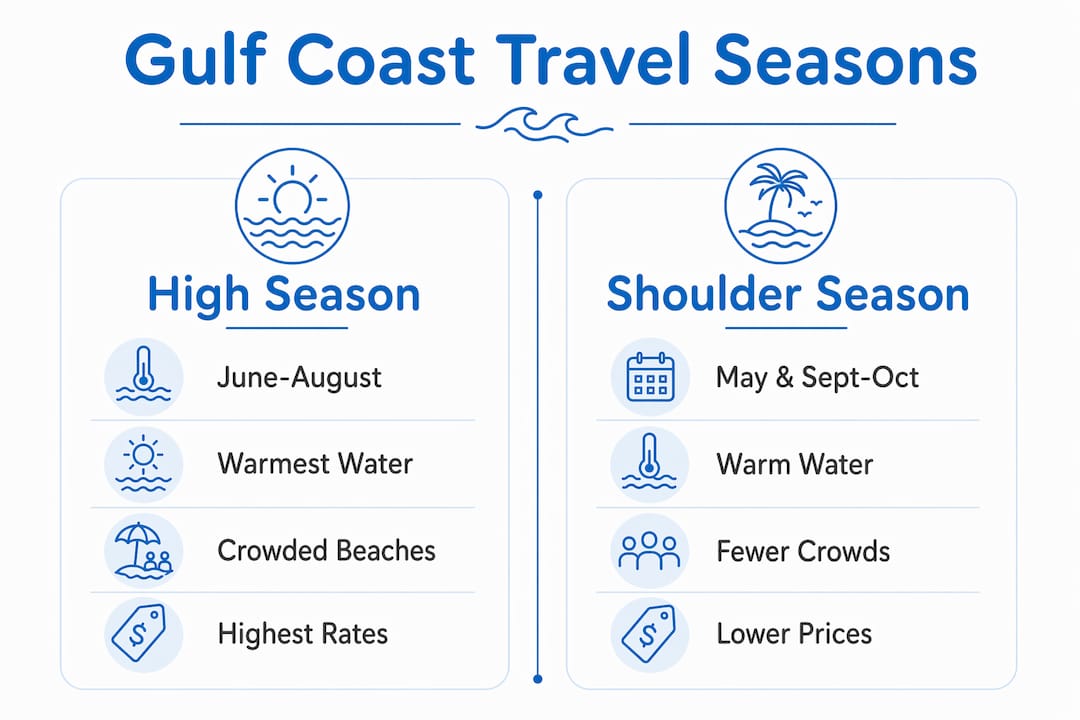
Gulf Coast high season runs from June 1 through August 31, with July 4th weekend and the weeks immediately following representing the absolute peak. This is the period when summer temperatures exceed 90°F across destinations like Gulf Shores, Destin, and South Padre Island. Those temperatures drive the highest beach attendance of the year, meaning parking lots fill by 9 a.m. and beachfront rentals book out months in advance.
Several factors define the high season experience:
- Crowds: Families with school-age children dominate the visitor mix, creating the densest foot traffic of the year at popular spots like Destin Harbor and Orange Beach.
- Pricing: Nightly rental rates spike significantly above off-season levels, and minimum stays average 5 to 7 nights during summer, which raises the total cost of any trip.
- Full services: Restaurants, water sports operators, beach chair rentals, and local tour companies all operate at full capacity, so the full Gulf Coast experience is available.
- Events: Summer brings festivals, fireworks, and outdoor concerts across the region, from the Hangout Music Festival in Gulf Shores to Fourth of July celebrations along the entire coast.
- Water conditions: Gulf water temperatures reach the mid-80s°F, making swimming, paddleboarding, and snorkeling genuinely comfortable.
Pro Tip: Book accommodations at least three to four months ahead for any July or August travel. The most desirable beachfront properties in Destin, 30A, and Gulf Shores are often claimed by February.
The high season label is the travel industry’s standard term for this period, though locals and rental managers also call it “peak season” or “summer season.” All three phrases describe the same window of maximum demand.

How do Gulf Coast travel seasons compare?
Understanding the full seasonal picture helps travelers decide whether high season is actually the right fit for their trip. The Gulf Coast operates on four distinct seasonal phases, each with a different price point, crowd level, and weather profile.
| Season | Months | Avg. Water Temp | Crowd Level | Rental Rates |
|---|---|---|---|---|
| High season | June to August | 84°F to 86°F | Very high | Peak rates |
| Shoulder (spring) | March to May | 68°F to 78°F | Moderate | 20 to 30% below peak |
| Shoulder (fall) | September to October | 77°F to 82°F | Low to moderate | 25 to 35% below peak |
| Low season | November to February | 60°F to 65°F | Low | Lowest rates |
The shoulder seasons in May and September through October offer warm Gulf water around 77°F alongside rental prices that run 25 to 35% lower than the July peak. That price gap is substantial on a week-long stay. A rental that costs $4,000 in July might run $2,600 to $3,000 in October, with far fewer people on the beach.
Fall shoulder season has a particular advantage that most travelers overlook. October is widely considered the best overall month on the Gulf Coast, combining warm water, reduced humidity, lighter crowds, and post-summer price drops. Businesses remain open, the water is still swimmable, and the beach has breathing room. For travelers who are not locked into school-year schedules, October delivers a genuinely superior experience at a lower cost.
Low season from November through February attracts a niche audience. Winter provides a unique cultural experience with quieter beaches and a more local atmosphere, though water temperatures drop to 60°F to 65°F, making swimming uncomfortable for most visitors. Snowbirds from the Midwest and Northeast make up a large share of winter visitors, drawn by mild Gulf Coast winters compared to their home climates.
Pro Tip: Travelers coming from the Midwest who want warm water without peak-season prices should target the first two weeks of June or the entire month of October. Both windows offer genuine summer conditions at noticeably lower rates.
How does Gulf Coast weather shape the high season experience?
Gulf Coast weather during high season is defined by heat, humidity, and afternoon storms. The region operates under a subtropical climate with a wet season from May through October, which means the peak travel window and the peak weather risk window overlap almost perfectly.
Key weather patterns travelers should know:
- Heat and humidity: July and August temperatures regularly reach the mid-90s°F with high humidity, making midday beach time genuinely taxing. Most experienced Gulf Coast visitors plan outdoor activities for early morning or late afternoon and retreat indoors during the 1 p.m. to 4 p.m. heat window.
- Afternoon thunderstorms: Brief but intense storms are a daily occurrence during summer. They typically roll in from the north between 2 p.m. and 5 p.m. and clear within an hour. Planning water activities for the morning avoids most disruptions.
- Hurricane season: Hurricane season runs from June 1 through November 30, with the highest risk concentrated between August and October. This overlap with high and shoulder seasons is the most important weather fact for Gulf Coast travelers to understand. A direct hit is statistically rare for any single destination, but the threat is real enough to warrant travel insurance on any summer booking.
- Water clarity: Early June and September tend to offer the clearest Gulf water, before summer algae blooms and after storm season churns sediment. Snorkelers and divers often prefer these windows for visibility.
The subtropical pattern also means that dry season from November through April brings the most predictable, storm-free weather. That reliability is one reason winter visitors accept cooler water temperatures as a trade-off.
What practical tips help you plan around Gulf Coast high season?
Smart high season planning comes down to timing, booking strategy, and budget awareness. These steps make a measurable difference.
-
Book early and book direct. Demand for beachfront properties in Destin, 30A, and Gulf Shores peaks in February and March for summer travel. Waiting until May means accepting whatever inventory remains. Direct booking with property owners saves 15 to 20% by eliminating online travel agency service fees, which is especially valuable when base rates are already at their annual high.
-
Consider early June as a strategic entry point. Early June offers warm water and full services with fewer crowds and lower prices than July and August. Schools are still in session in many states through mid-June, which keeps family traffic lower during that window. It is the closest thing to a high season discount that still delivers the full summer experience.
-
Plan around the 5 to 7 night minimum stay. Summer rentals across the Gulf Coast require minimum stays averaging 5 to 7 nights, compared to 1 to 3 nights in winter. Budget for a full week rather than a long weekend. Travelers who cannot commit to a full week will find far more flexibility in shoulder season.
-
Factor in hurricane risk and get travel insurance. Any trip booked between June and October should include travel insurance that covers weather cancellations. The cost is modest relative to a week-long rental, and the peace of mind is worth it given the overlap with peak hurricane risk from August through October.
-
Use local events to your advantage. High season brings the Gulf Coast’s best festivals and outdoor events. Check destination-specific event calendars for Gulf Shores, Destin, and Pensacola Beach before finalizing travel dates. Aligning your trip with a local festival adds real value to the experience. You can also check Destin tourist activity guides for current event schedules and crowd management tips.
-
Arrive on off-peak days. Saturday is the most congested check-in day across the Gulf Coast during summer. Arriving on a Sunday or Monday reduces traffic stress and sometimes unlocks slightly better availability on rental platforms.
Pro Tip: Travelers who book directly and arrive mid-week in early June consistently report the best combination of value and experience on the Gulf Coast. It is not a secret, but most people do not act on it.
Key takeaways
Gulf Coast high season runs June through August and delivers the warmest water and most complete experience at the highest prices and crowd levels of the year.
| Point | Details |
|---|---|
| High season dates | June through August, with July peak representing maximum prices and crowds. |
| Minimum stay requirements | Summer rentals average 5 to 7 nights, raising total trip costs significantly. |
| Best value alternative | Early June and October offer near-peak conditions at 25 to 35% lower rental rates. |
| Hurricane overlap | Peak hurricane risk from August to October overlaps with high and shoulder seasons; travel insurance is a must. |
| Direct booking savings | Booking directly with owners saves 15 to 20% by avoiding OTA service fees. |
Why I think most travelers misread Gulf Coast high season
Most people treat Gulf Coast high season as a fixed target, either committing to it fully or avoiding it entirely. After years of watching how travelers plan these trips, I think that framing misses the real opportunity.
The Gulf Coast does not flip a switch on June 1. The transition from shoulder to high season is gradual, and the first two weeks of June sit in a genuinely undervalued window. Water temperatures are already in the low 80s°F, every restaurant and rental shop is open, and the beach has room to breathe. Prices have not yet hit their July ceiling. That window is where I would send any traveler who asks me how to get the most out of a summer Gulf Coast trip.
I also think the hurricane conversation gets handled poorly in most travel content. The risk is real but manageable. Buying travel insurance and checking the Gulf Coast travel blog for seasonal updates costs almost nothing relative to a week-long vacation. The travelers who skip that step and then face a cancellation situation are the ones who end up with the worst stories.
High season is worth it for the right traveler. If you want the full energy of the Gulf Coast, with packed beaches, live music, and every water sport available, summer delivers that experience completely. Just go in with clear expectations about cost and crowds, and plan your days around the afternoon heat.
— Joe
Book your Gulf Coast rental direct and save this high season
Emeraldcoastbyowner connects travelers directly with property owners across the entire Gulf Coast, from the white-sand beaches of 30A and Gulf Shores to the sunny shores of South Padre Island in Texas. Booking direct means no traveler service fees, which translates to real savings during an already expensive high season. The platform lists thousands of Gulf Coast vacation rentals with full availability calendars, direct owner contact, and no middleman markup. Whether you are targeting peak July weeks or the smarter early June window, you can also browse current deals and specials to find properties that fit your budget and timeline.
FAQ
When exactly does Gulf Coast high season start and end?
Gulf Coast high season runs from June 1 through August 31, with the July 4th week representing the absolute peak for prices and crowds.
How much more expensive is high season compared to other times?
Rental rates during high season peak in July and August, with shoulder season prices running 25 to 35% lower. Summer also requires minimum stays of 5 to 7 nights, which raises total trip costs beyond just the nightly rate.
Is it safe to travel to the Gulf Coast during hurricane season?
Hurricane season overlaps with high season from June through November, with peak risk from August through October. Travel insurance that covers weather cancellations is strongly recommended for any booking in this window.
What is the best month to visit the Gulf Coast for value?
October is widely regarded as the best overall month, offering warm water around 77°F, reduced crowds, lower humidity, and rental prices 25 to 35% below the July peak.
Can travelers find shorter stays during Gulf Coast high season?
Summer minimum stay requirements average 5 to 7 nights across most Gulf Coast rentals. Travelers who need a shorter stay will find far more flexibility by targeting shoulder season months like May, September, or October, when minimum stays drop to 1 to 3 nights.
Recommended
- Deals & Specials | Emerald Coast By Owner
- Beach Time! An ECBYO blog about all things Gulf Coast
- Gulf Coast Vacation Rentals | Book Direct Vacation Rental by Owner
- Gulfport Mississippi Vacation Rentals | ECBYO
About the Author
The Emerald Coast by Owner Editorial Team creates destination guides, vacation planning resources, and local travel content focused exclusively on Gulf Coast vacation rentals.
Our team researches beach communities, vacation rental trends, family travel planning, local attractions, and direct-booking best practices across Florida, Alabama, Mississippi, Louisiana, Texas, and Southwest Florida. Every guide is written to help travelers make more informed booking decisions while avoiding unnecessary third-party guest service fees.
Since launching in 2016, ECBYO has helped connect travelers directly with verified vacation rental hosts across the Gulf Coast.
This article was reviewed for accuracy and updated using local destination research and current vacation rental market insights.


