



A beachfront access rental is defined as a vacation property that gives guests direct physical access to the beach, meaning you can walk straight from the accommodation to the sand without crossing major roads, other properties, or locked gates. This term is often confused with “beachfront” or “oceanfront,” but each describes a meaningfully different experience. Understanding the distinction before booking saves you from arriving at a property only to discover the “beach access” is a 10-minute walk through a public parking lot. This guide breaks down exactly what these terms mean, how to verify them, and what to expect from beach access properties along the Gulf Coast.
What is a beachfront access rental, exactly?
A beachfront access rental is a property where the path from your front door to the sand is clear, short, and unobstructed. The industry term most commonly used is “direct beach access,” and it describes a practical, physical connection between the rental and the shoreline. Direct beach access means guests can reach the sand without crossing major public barriers like roads or other properties.
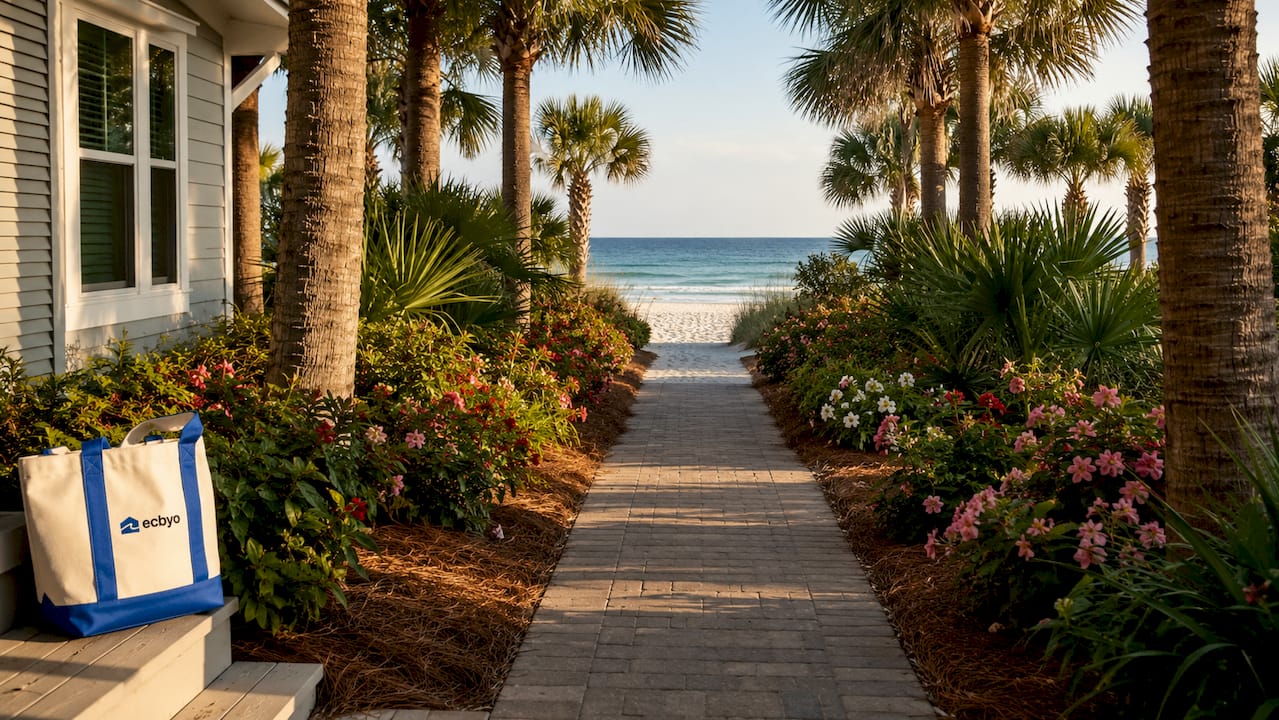
The phrase “beachfront access rental” is an informal, descriptive term that travelers use when searching online. The recognized industry standard is “direct beach access” or “deeded beach access,” and you will see these phrases in professional property listings. Both terms point to the same core feature: a property where the beach is genuinely reachable on foot from the rental itself.
Knowing this distinction matters because listing platforms use these terms inconsistently. A property described as “beachfront” may still require you to walk through a shared community path, cross a street, or pass through a gate that closes at sunset. Verifying the actual access type before you book is the single most important step in choosing a coastal vacation rental.
How does beachfront access differ from oceanfront and beachfront?
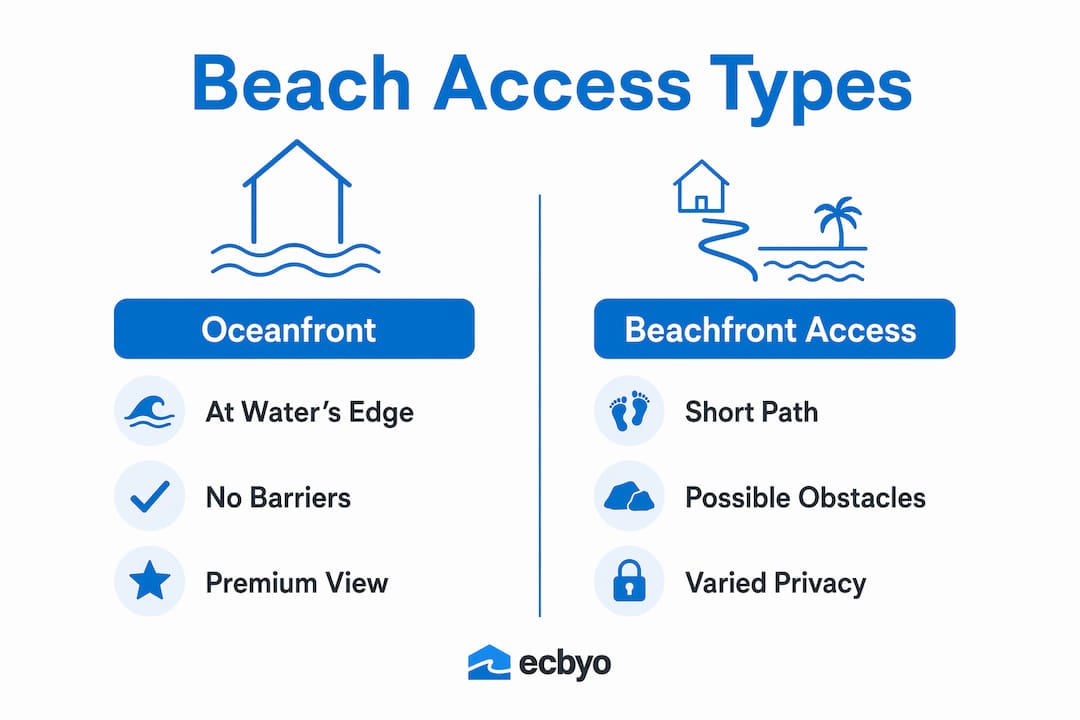
These three terms describe three different levels of proximity and access. Confusing them is the most common mistake vacation renters make when searching for coastal properties.
| Property Type | Location | Beach Access | Typical Experience |
|---|---|---|---|
| Oceanfront | Sits at the water’s edge | Direct, no barriers | Unobstructed water views, immediate sand access |
| Beachfront | Close to or facing the beach | Possible, but not guaranteed | May require short walk or crossing a shared path |
| Beachfront Access | Varies, but access is the focus | Direct pathway confirmed | Practical sand access is the defining feature |
Oceanfront on Vrbo means the property sits at the edge of the water with no roads or buildings between it and the sea. Beachfront means within walking distance but may have barriers. A beachfront access rental, by contrast, focuses on the confirmed pathway rather than the exact distance from the water.
The practical difference shows up most clearly for families. A property labeled “beachfront” in Panama City Beach might sit across a two-lane road from the Gulf. An oceanfront condo in the same area might have a private walkover directly to the sand. The label alone does not tell the full story. Photos and maps help distinguish oceanfront from beachfront and beach access rentals, and you should use both before committing to a booking.
Pro Tip: Open Google Maps in satellite view and drop a pin on the property address. Look for roads, fences, or other structures between the building and the waterline. This 60-second check reveals more than most listing descriptions.
How do you verify true beach access before booking?
Confirming a property’s access type before arrival prevents the most common vacation disappointment. Follow these steps to verify what you are actually booking.
-
Check satellite maps. Satellite mapping tools help travelers verify if a rental is truly oceanfront or simply near the beach. Google Maps satellite view identifies barriers like roads or structures between the property and the water.
-
Read the listing description carefully. Look for the phrases “deeded beach access,” “private beach access,” or “direct beach access.” These terms carry specific meaning. “Deeded access” means the right to use a beach path is legally attached to the property title. “Private access” means the path is exclusive to guests of that rental.
-
Ask the host direct questions. Clarifying access rights helps avoid surprises at arrival. Ask whether beach access is available from the backyard or requires passing through common areas. Ask if the access point is gated and what the hours are.
-
Study the listing photos. Look for photos of the actual path to the beach, not just the view from the deck. A walkover, a private gate, or a direct staircase to the sand are all positive signs. A photo showing a street or parking lot between the property and the water is a red flag.
-
Look for community path disclosures. Some rentals advertise “beach access” when the access point is a shared community path used by dozens of neighboring properties. This is technically accurate but far from private or convenient during peak season.
Pro Tip: When messaging a host, ask: “Can guests walk directly from the property to the sand without crossing a public road or entering another property?” A yes or no answer tells you everything.
What are the benefits and trade-offs of beachfront access rentals?
Beachfront access rentals carry real advantages, but they also come with trade-offs worth knowing before you pay the premium.
The benefits
- No packing or driving required. Vacationers benefit from beachfront rentals by not needing to pack or drive to the beach, enabling spontaneous and frequent access during the day. Guests with children cite this as a major factor in choosing beachfront access.
- Ideal for families and guests with mobility challenges. Families especially prioritize easy beach access for children or those with mobility challenges. A short, flat walkway to the sand changes the entire vacation experience for these groups.
- Repeat guests consistently upgrade. First-time visitors often opt for ocean-view rentals as lower-cost entry points, but repeat guests upgrade to beachfront access for greater convenience and quality of stay.
The trade-offs
- Higher nightly rates. Beachfront rentals cost 30–50% more than non-beachfront accommodations. That premium reflects real demand, but it is a significant budget factor.
- Reduced privacy. Public beach traffic past beachfront patios may reduce privacy and affect guest experience, especially during peak seasons. If a quiet, secluded retreat is the goal, a property set back from the beach with a short walk to the water may serve better.
- More maintenance exposure. Beachfront properties require more upkeep due to corrosion from salt air and sand penetration. Interior finishes degrade faster than in inland rentals. This affects the condition of the property you will stay in, not just the owner’s costs.
“We stayed in an ocean-view condo our first trip and spent 20 minutes loading the car every morning just to get to the beach. The next year we booked direct beach access and never looked back. The convenience alone was worth the extra cost.” — Gulf Coast repeat vacationer
What types of beachfront access rentals are available?
The range of beachfront access rental options is wide, from private single-family homes to large condo complexes. Knowing the types helps you match the right property to your group’s needs.
Single-family homes with deeded access
These properties are the most private option. Deeded beach access means the legal right to use a specific pathway to the beach is attached to the property title. Guests at Mexico Beach, Florida vacation rentals often find this type of access in quieter, residential stretches of the Gulf Coast. The path is typically exclusive to the property, and there is no shared foot traffic.
Condos with shared beach pathways
Condo complexes often provide beach access through a shared walkover or community path. This is common in high-density areas like Panama City Beach, where multi-story buildings sit close together along the Gulf. The access is real and convenient, but you will share the path with other guests in the complex.
Features to look for by traveler type
| Traveler Profile | Priority Features | Recommended Access Type |
|---|---|---|
| Families with young children | Short, flat path; safety railings; no road crossings | Deeded or private direct access |
| Seniors or guests with mobility needs | Paved or boardwalk path; minimal stairs | Ground-floor condo with walkover |
| Couples seeking privacy | Gated entry; low foot traffic; secluded setting | Single-family home with deeded access |
| Large groups or reunions | Multiple access points; nearby amenities | Condo complex with shared walkway |
| Budget-conscious travelers | Shared community path; short walk acceptable | Community beach access within 200 feet |
Accessibility and safety features matter more than most listings advertise. If anyone in your group has limited mobility, ask specifically about the surface type of the beach path, the number of steps involved, and whether a ramp or boardwalk is available. For families planning kid-friendly water activities, proximity to calm, supervised water is equally worth confirming.
For travelers checking out the Texas Gulf Coast, Jamaica Beach, Texas offers a mix of private homes and community-access properties at a range of price points, making it a practical destination for first-time beachfront renters.
Key takeaways
A beachfront access rental is defined by the confirmed, physical pathway from the property to the sand, and verifying that access before booking is the most important step in planning a coastal vacation.
| Point | Details |
|---|---|
| Definition matters | “Beachfront access” means a confirmed path to sand, not just proximity to the water. |
| Terms differ significantly | Oceanfront, beachfront, and beach access describe three distinct levels of proximity and access. |
| Verify before booking | Use Google Maps satellite view and ask hosts direct questions about access type and restrictions. |
| Premium is real | Beachfront access rentals cost 30–50% more, but repeat guests consistently find the convenience worth it. |
| Match type to traveler | Deeded access suits families and privacy seekers; shared walkovers work well for budget-focused groups. |
Why true beach access changes the whole trip
From what I have seen working with Gulf Coast travelers over the years, the single biggest source of vacation disappointment is the gap between what a listing says and what guests actually experience at arrival. “Beachfront” is the most abused word in coastal rental marketing. Properties use it to describe everything from a direct walkover to a unit that faces the general direction of the water from three blocks away.
The travelers who have the best experiences are the ones who do the 10-minute verification work before booking. They check the satellite map, they ask the host two direct questions, and they look for photos of the actual path, not just the view. That small effort eliminates almost every access-related surprise.
My honest advice: if beach access is the reason you are booking a coastal property, treat it as a non-negotiable feature and confirm it the same way you would confirm the number of bedrooms. Do not assume the listing description is complete. The Destin area best practices for 2026 reinforce this point, noting that travelers who clarify property details in advance report significantly higher satisfaction with their stays.
For families especially, direct beach access is not a luxury. It is the feature that determines whether the vacation is relaxed or logistically exhausting. The difference between loading up a beach cart and crossing a road versus walking out the back door and stepping onto sand is the difference between a good trip and a great one.
— Joe
Find your perfect beachfront access rental on the gulf coast
Emeraldcoastbyowner connects travelers directly with property owners across the Gulf Coast, from the white-sand shores of Florida to the sunny beaches of Texas and Louisiana. Every listing on the platform includes detailed property descriptions, owner-verified photos, and direct contact with the host so you can ask the access questions that matter most before you book.
Browse thousands of Florida vacation rentals with confirmed beach access, including private homes with deeded walkways and Gulf-front condos with shared boardwalks. If Texas is calling, Gulf Coast vacation rentals across the region offer a wide range of beach access options at every price point. Emeraldcoastbyowner also posts seasonal deals regularly, so you can find beachfront access properties without paying peak-season rates. Book direct, skip the traveler fees, and spend that savings on the beach.
FAQ
What does “beachfront access rental” mean?
A beachfront access rental is a vacation property with a direct, unobstructed pathway from the accommodation to the beach. Guests can walk to the sand without crossing major roads, other properties, or locked barriers.
Is beachfront the same as direct beach access?
No. A beachfront property is located close to or facing the beach, but it may not have a direct path to the sand. Direct beach access confirms an unobstructed route from the property to the shoreline.
How much more do beachfront access rentals cost?
Beachfront access rentals typically cost 30–50% more than comparable non-beachfront accommodations. The premium reflects the convenience and demand for direct sand access, particularly among families and repeat visitors.
What is deeded beach access?
Deeded beach access means the legal right to use a specific pathway to the beach is attached to the property title. This type of access is typically private and exclusive to guests of that rental.
How can I verify beach access before booking?
Use Google Maps satellite view to check for roads or structures between the property and the water. Ask the host directly whether guests can walk from the property to the sand without crossing a public road or entering another property.
Recommended
- Jamaica Beach Texas Vacation Rentals | ECBYO
- Surfside Beach Texas Vacation Rentals | ECBYO
- North Redington Beach Florida Vacation Rentals | ECBYO
- Panama City Beach Vacation Rentals | Beach Houses & Condos
About the Author
The Emerald Coast by Owner Editorial Team creates destination guides, vacation planning resources, and local travel content focused exclusively on Gulf Coast vacation rentals.
Our team researches beach communities, vacation rental trends, family travel planning, local attractions, and direct-booking best practices across Florida, Alabama, Mississippi, Louisiana, Texas, and Southwest Florida. Every guide is written to help travelers make more informed booking decisions while avoiding unnecessary third-party guest service fees.
Since launching in 2016, ECBYO has helped connect travelers directly with verified vacation rental hosts across the Gulf Coast.
This article was reviewed for accuracy and updated using local destination research and current vacation rental market insights.


